:max_bytes(150000):strip_icc():format(jpeg)/Elevation-Affect-Alcohol-Consumption-FT-DGTL1225-01-45f5809956db405395c59abf526b6ebd.jpg)
There are two main objectives to skiing: Having fun and staying safe. After all, skiing is a physical sport, and nobody wants to spend the bulk of their getaway to the slopes holed up in a cabin in a cast. Reliable equipment and accessories, a respect for the rules of the slopes, and a knowledge of your limitations are relatively easy ways to mitigate the chances for disaster.
The differing effect of alcohol at elevation, and the potential for altitude sickness, is an entirely different beast.
Altitude sickness is significantly sneakier than a nasty spill over a berm. To ascend from a low- to high-elevation environment can do funky things to your body, but the ailment may be something that you don’t think about until after it hits you. When it does, altitude sickness could leave you in a world of hurt, akin to severe migraine or a post-bender hangover.
Fortunately, these difficulties at altitude can be avoidable. If you ski on the regular, or if you have a penchant for visiting elevated places, it’s important to take precautions to guard against its onslaught.
Stuart Weaver, Lady Jane
“Many guests don’t fully understand how elevation affects their body and often assume their usual drinking habits will translate directly to higher altitudes. That’s not quite the case.”
— Stuart Weaver, Lady Jane
What are the symptoms of altitude sickness?
Altitude sickness doesn’t immediately slam your body. It creeps in haphazardly. Trouble begins with typically a headache, either a few hours or a full day after you arrive at a higher elevation. This sets the table for other symptoms to follow, like nausea, dizziness, and fatigue. Physical activity exacerbates things, and it’s particularly treacherous if it starts in the middle of a ski session.
There’s no rhyme or reason behind altitude sickness. Anyone can come down with the condition, although some may be more prone to its intrusion.
“People who experience migraines are more susceptible, as low oxygen levels at altitude can trigger headaches and vascular changes similar to migraine physiology,” says Allie Buttarazzi MD, a double board-certified lifestyle and internal medicine physician based in Cumberland, Maine. “Genetics also plays a role. Some people naturally adapt more easily to lower oxygen levels.”
Buttarazzi says that altitude sickness can intertwine with other pre-existing conditions. “People with diabetes may also find blood sugar control more challenging at altitude, as symptoms of altitude sickness — fatigue, dizziness, nausea — can overlap with those of hypoglycemia or hyperglycemia,” she says. “And while altitude sickness isn’t directly linked to heart or lung disease, underlying cardiopulmonary conditions can be aggravated by the lower oxygen environment and make recovery more difficult.”
While altitude sickness can morph into something more serious, and potentially life-threatening, after a few days or at elevations above 9,800 feet, these instances are rare. More likely, you will just deal with feeling dizzy, tired, and sick to your stomach. If symptoms include difficulty breathing, getting confused, or coughing up viscous fluid, seek medical help immediately.
no_limit_pictures / Getty Images
Altitude sickness and alcohol consumption
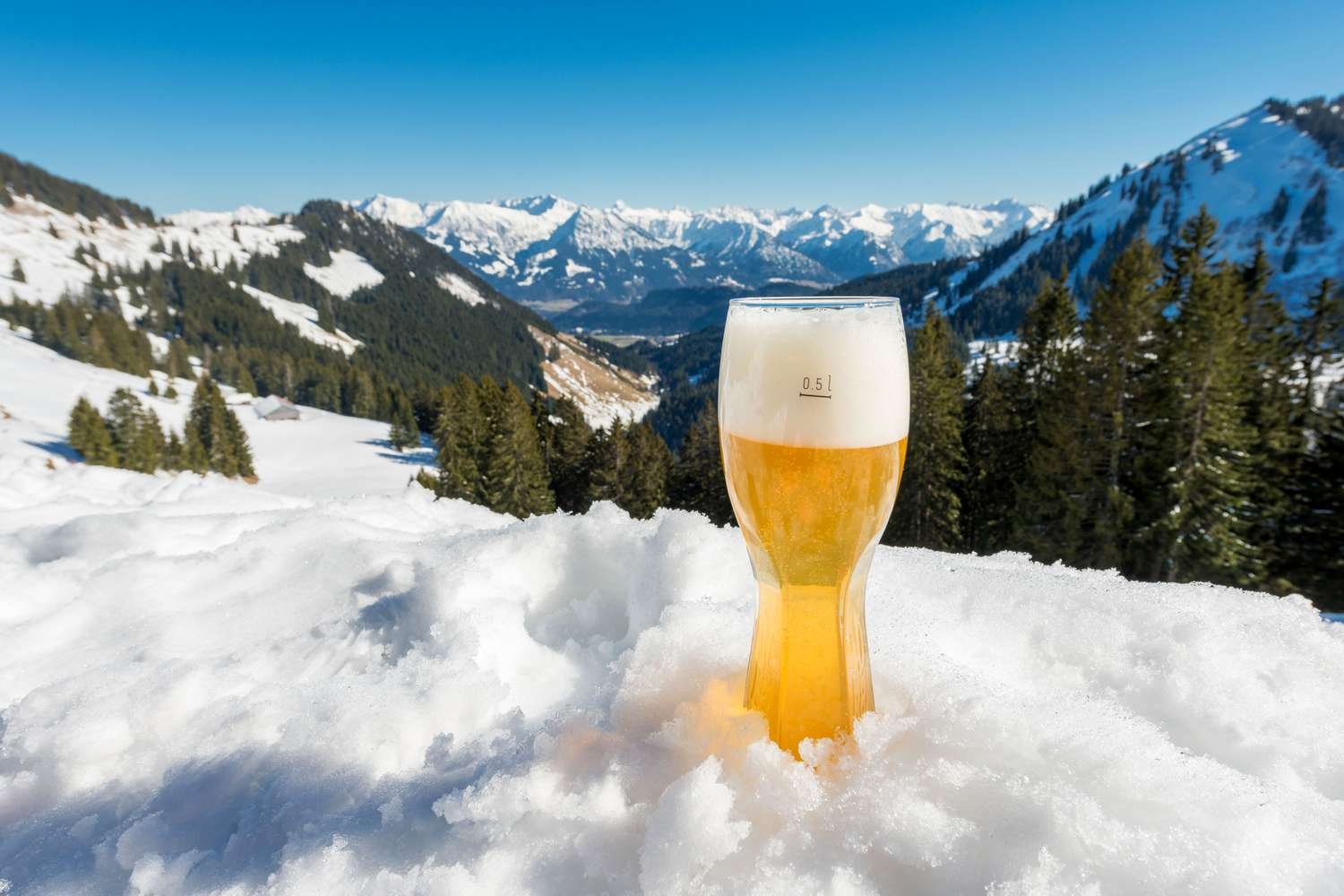
Alcohol and altitude are sworn enemies. This may not be what some après-ski enthusiasts want to hear, but it’s a conflict rooted in science.
“Alcohol interferes with acclimatization, dehydrates you, and suppresses breathing, which lower oxygen levels even more,” says Buttarazzi. “I usually recommend avoiding or limiting alcohol, especially in the first few days at altitude, because even a couple of drinks can make symptoms like headache, nausea, and fatigue more intense.”
Oxygen levels are reduced at higher altitudes. This, combined with alcohol’s ability to accelerate dehydration, can accelerate the effects of drinking dramatically. A cocktail enjoyed at 5,000 feet is not the same as a drink sipped at sea level. Bars in high-elevation environments tend to be conscientious to this.
“Many guests don’t fully understand how elevation affects their body and often assume their usual drinking habits will translate directly to higher altitudes. That’s not quite the case,” says Stuart Weaver, partner and general manager of Lady Jane in Denver. “While true altitude sickness is uncommon in Denver, our elevation absolutely influences how quickly out-of-state guests may feel the impact of what they’re drinking, whether they realize it or not. It’s something we keep in mind every day, because understanding how our environment affects the body is part of responsible hospitality.”
Such commitment to hospitality involves educating visitors to Denver about the importance of slowing their roll and staying hydrated, especially on the first night when they may be eager to get the party started. This is further reinforced for guests that use Denver as a pit stop before ascending to Aspen, Vail, or Breckenridge for a skiing excursion.
“Experienced skiers are generally well aware of the effects of high elevation and tend to pace themselves accordingly,” says Weaver. “Beginners, however, are often less familiar with how altitude can impact their body. Regardless, I always encourage guests to take it easy and drink plenty of water. We also love to recommend low-ABV options or anything from our lineup of nonalcoholic cocktails so they can still have a full experience while remaining mindful of our elevation’s impact.”
Treating altitude sickness
If altitude sickness hits, the best action is to stop ascending and find a place to rest. In mild cases, an over-the-counter pain reliever or anti-nausea medication can ease discomfort. If you’re at a reputable hotel, lodge, or similar venue, there’s a decent chance that they’ll have portable oxygen containers on hand, either for purchase or to hand to guests. Don’t be afraid to ask for assistance: Yours won’t be the first case of altitude sickness they’ve seen, and you certainly won’t be the last.
Thanks to advances in medicine and medical technology, it’s a little more bearable to deal with altitude sickness than in the past. It’s even possible to use medicine to take a preventative approach to treating the condition.
“We now have medications like acetazolamide to help prevent altitude sickness, and dexamethasone or nifedipine to treat severe cases,” says Buttarazzi. “If you’ve had altitude sickness before, or are traveling rapidly to high elevation, ask your doctor about acetazolamide, which can help your body acclimate more smoothly.”
There are also several simple preventative steps to consider. Ascend gradually, keep hydrated, sleep well, and limit alcohol intake. These tactics can be especially important if you’ve had the condition previously, as you’re more likely to experience altitude sickness again.
Altitude sickness interferes with high-elevation fun. But it doesn’t have to derail your ski adventure. If you listen to your body and take care of yourself, the condition may be nothing more than an annoying bump in an otherwise smooth and delightful getaway. Even if you’re not prone to altitude sickness, self-care is fundamental to a proper ski trip. While fun is one of skiing’s main objectives, staying safe is the other main goal.