:max_bytes(150000):strip_icc():format(jpeg)/The-Trick-to-Prepping-Thyme-FT-DGTL1125-01-2cfcd001279b49cfa2a4255704730c0e.jpg)
- Source young, soft-stemmed sprigs of thyme. Chop them whole, stems and all, to save time picking leaves.
- Look for thyme with young stems that are yellow to light green; these are tender enough to chop whole.
- If using woody-stemmed thyme, add the whole sprigs (ideally bundled or tied) and remove before serving.
Even though I’m a chef and a nimble prep cook, I still get a sinking feeling when I read a recipe that calls for “chopped, fresh thyme leaves.” Nothing against the herb — I happen to love it (and all fresh herbs, like sage and oregano, for that matter.) But prepping thyme becomes a labor of time. Plucking each little leaf from its stem is laborious, especially around Thanksgiving when it’s the herbal backbone of seemingly every recipe on my prep list. So what is the trick to prepping thyme quickly? Hint: It’s less about the prep and more about procurement.
What are the two types of herbs?
Herbs usually fall into one of two categories: herbaceous or woody.
Herbaceous herbs, like parsley, basil, and cilantro, have soft, tender, green stems. Because their stems are delicate, they can be chopped and used in their entirety along with the leaves without leaving any noticeable texture in a finished dish. These herbs should be added at the end of cooking or used as a final garnish in order to preserve their bright, fresh flavor.
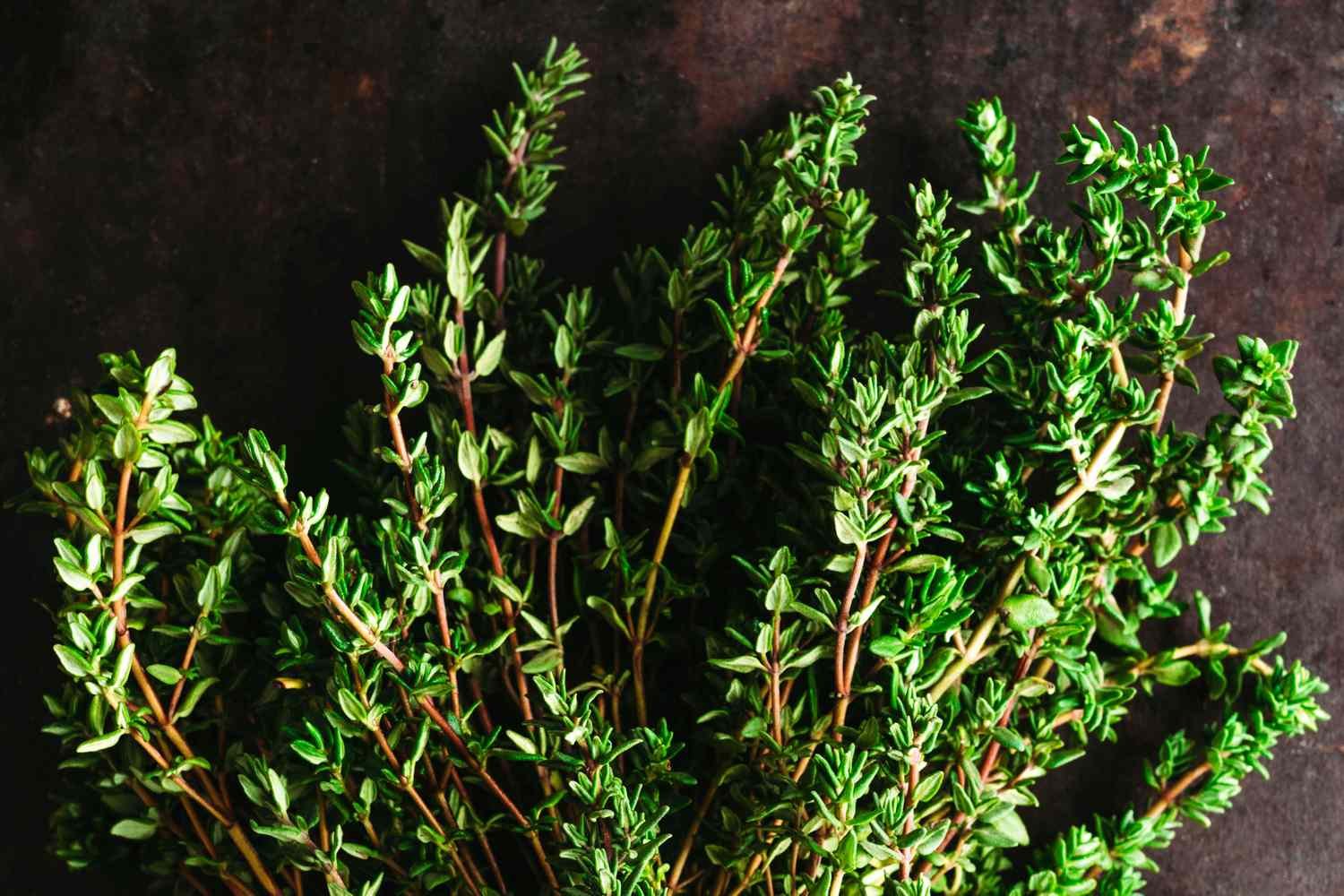
Woody-stemmed herbs are those like rosemary, lavender, and thyme. Their main stems look brown in color and have a twiggy, fibrous texture. These herbs are bushy perennials that regenerate each year, but after subsequent cycles of regrowth their stems become sturdier to survive more challenging growing conditions. When you use them, it’s best to pluck and chop just the leaves and discard the stems, as they will leave an unpleasant texture in a dish. For an herb like thyme, with its tiny leaves, this becomes a lengthy project.
Yulia Naumenko / Getty Images
Why you should buy soft-stemmed thyme
Here’s the secret: Soft-stemmed thyme does exist. When sourcing, look carefully to spot a young thyme plant or package that sports soft, flexible, tender stems. This is likely a new plant, grown in a greenhouse or at home, that hasn’t yet experienced regrowth. The stem will look thinner, delicate, and yellow to light green in color. For prep efficiency, this is the type of thyme you hope to find. Like tender parsley, these sprigs can be chopped whole — stems, leaves, and all — and added to a dish, resulting in no fibrous texture at the end. You’ll save time and impart more of that signature thyme savoriness — it’s a holiday miracle!
The easiest way to cook with woody-stemmed thyme
Should you find yourself with a bundle of thick-stemmed thyme, you have a couple of options to use it efficiently. If making a soup, stew, or sauce, create a simple bouquet garni: Bundle the sprigs in butcher’s twine or a thin layer of cheesecloth, then simmer the whole packet, removing at the end so none of the woody bits end up in somebody’s bowl later.
If you’re roasting or sautéing, throw a few whole sprigs into the pan. Stir occasionally to incorporate the thyme and watch the little leaves fall from the stems as the whole dish cooks. Just before serving, pluck the residual stems from the dish.
But if you can find soft-stemmed thyme, I advise stocking up. Run a sharp chef’s knife through the whole bundle, then get on with your Thanksgiving plan. There’s plenty more to conquer.