:max_bytes(150000):strip_icc():format(jpeg)/Ways-to-Make-Pie-crust-FT-DGTL1125-Hero-3fda3439ed72499081be6b6c3c4dbb2f.jpg)
- Adding buttermilk to your piecrust instead of water results in well-balanced flavor, enhanced flakiness and tenderness, and rich golden color.
- If you’re worried about a tough piecrust, substituting 50% of your water with chilled vodka will ensure you achieve flakiness without spending extra time or energy.
- If all you have are your baking pantry staples and butter, you can make an exceptional piecrust with the proper technique.
Piecrust is little more than a careful blending of flour, fat, and liquid. But you have a variety of options when it comes to each of these elements. As such, debates abound over which ingredients are essential for the ultimate piecrust.
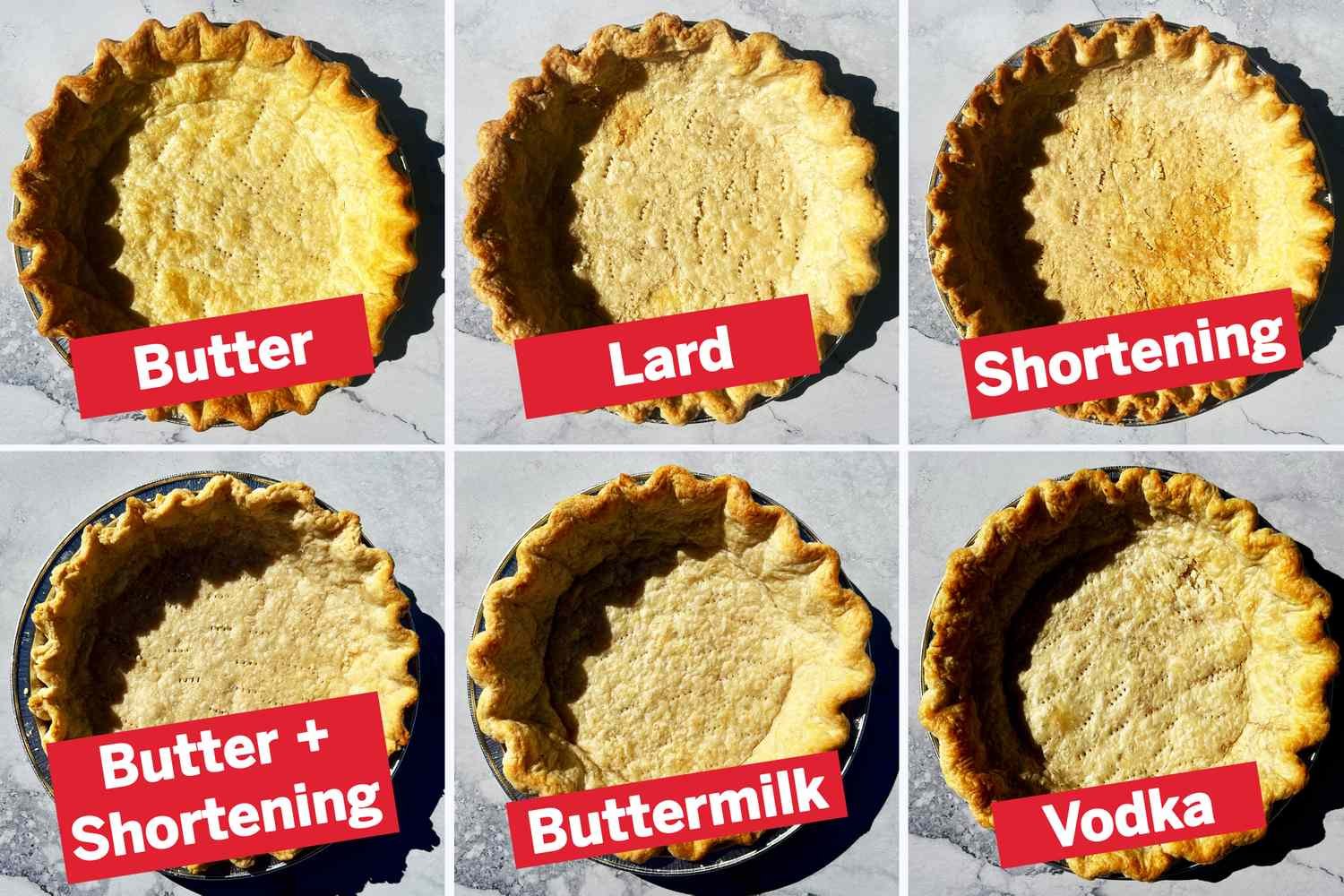
As a professional baker who likes to play around with ingredient substitutions and additions, I seized the opportunity to challenge my pie baking biases. I tested six different piecrust ingredient substitutions (or additions) to find the best method for making piecrust. In my testing, I confirmed some biases — but I also met the one ingredient I’ll never leave out of my piecrusts again.
A word about my method
To standardize the mixing and blending process as much as possible, I used our master pie dough recipe that calls for all-purpose flour and butter, subbing out ingredients as applicable. I froze the different fats I used (butter, shortening, and lard) overnight. I used Gold Medal bleached all-purpose flour, Cabot Creamery Sweet Cream Unsalted Butter, Crisco All-Vegetable Shortening Sticks, and Morrell Snow Cap Lard.
For my testing, I baked empty crusts — a method commonly known as blind-baking or parbaking — to evaluate the texture and flavor without other influences. I also baked miniature apple pies to see how the crusts held up to the fillings and complemented their flavor. I baked the empty crusts and mini pies for the same amount of time and maintained consistent oven temperatures as much as possible.
While several of the finished crusts and pies had similarly flaky end results, one method was a definite winner for me.
All-shortening crust
Charlotte Rutledge
Charlotte Rutledge
Flavor: Neutral with a chemically aftertaste
Texture: Sandy, dry, melty
Appearance: Dull, even golden color when baked
Rating: 5/10
Method: I used shortening in place of butter in the base pie crust recipe, but I needed about a third less ice water to bring it together than I did with the all-butter pie dough. This is likely because the shortening does a better job of coating the flour (shortening being 100% fat), which means there’s less flour available to absorb the water.
Results: I found this piecrust to be lackluster in flavor and texture and also a challenge to handle. Although it’s solid at room temperature and has a higher melting point than butter, shortening is much softer than butter, both at room temperature and when cold. This results in a dough that is softer and more malleable but also quite fragile and prone to cracking and tearing when it’s rolled out. Once baked, the all-shortening crust had a texture more sandy and tender than flaky, and the baked miniature pie crumbled to pieces. Although it melted in my mouth, the crust left behind some dry grittiness on the finish.
Pros: An all-shortening piecrust is a good option if you’re baking for someone who is vegan or has a dairy allergy or sensitivity, or if a physical condition limits your ability to work with a firmer all-butter dough.
Cons: The flavor of your pie won’t be enhanced with an entirely shortening-based crust. You also might find the dough frustratingly fragile.
All-lard crust
Charlotte Rutledge
Charlotte Rutledge
Flavor: Neutral to subtly meaty/porky and savory
Texture: Tender with minimal flakiness
Appearance: Warm, even golden color when baked
Rating: 7/10
Method: I substituted lard for butter in the base recipe. The all-lard dough needed a bit less hydration than the all-butter dough, but more than the all-shortening dough. There were more discernible pieces of fat (lard) in this dough than I noticed in the shortening dough, which I attribute to the fact that the lard froze more firmly than the shortening did.
Results: Like the all-shortening piecrust, the all-lard version was quite tender and lacked flakiness. It was not as fragile or challenging to work with as a shortening dough thanks to lard’s more solid structure when cold or frozen. Because lard doesn’t contain any liquid like butter, though, it’s smoother and easier to roll out than a butter-based crust. Where this crust lost points was in its flavor. Its subtle meaty savoriness was less noticeable with the apple filling, but I would still recommend opting for a savory filling rather than a sweet or fruit-based one when using only lard for the crust.
Pros: For bakers in the tender piecrust camp, lard is a preferable choice. It is also an easier fat to work with (for the various reasons noted above) than both butter and shortening.
Cons: Some sources suggest that you can find lards with neutral flavor, or that a flavorful filling will overpower any of the lard’s meatiness, but even if that’s the case, the flavor won’t match that of a butter crust. It’s also not vegetarian-friendly.
Half-butter, half-shortening crust
Charlotte Rutledge
Charlotte Rutledge
Flavor: Hint of butteriness
Texture: Tender and somewhat crispy, with inconsistent flakiness
Appearance: Variable muted golden color when baked
Rating: 8/10
Method: I swapped half of the butter in the base recipe with shortening. As with the all-shortening method, this dough needed less ice water than the all-butter and all-lard doughs, though a bit more than the all-shortening dough. Otherwise, this produced a dough with visible pieces of butter amid the smaller pieces of shortening.
Results: This method offers something for everyone. The shortening ensured the crust is easier to roll out, while the butter promoted flavor and browning. I still found this 50/50 dough to be rather fragile to work with, though more so when I was shaping and crimping it in the pan than when I was rolling it out. It was also not vulnerable to crumbling apart once it was baked. For some people the ease of a somewhat softer dough may be enough to win them over.
Pros: This dough makes a something-for-everyone kind of crust that many people will find appealing due to the ease of rolling it out.
Cons: The overall flavor of this crust is muted by the shortening. It is not the best choice here if flavor is a priority for you.
All-butter crust
Charlotte Rutledge
Charlotte Rutledge
Flavor: Buttery
Texture: Flaky, tender, crispy, sturdy
Appearance: Warm, variably golden color when baked
Rating: 9/10
Method: I followed the base recipe with no substitutions or additions. I used the pulse feature of a food processor, which meant this dough came together very quickly. (There is no way I could have used a pastry cutter or my hands to work the rock-hard frozen butter into the flour, although it would be possible with refrigerated butter.) Using the pulse feature is critical to this method: It ensured I didn’t overwork my butter, a key factor to achieving a flaky crust.
Results: Flavor-wise, an all-butter dough is the holy grail of piecrust: Butter produces a superior flaky and flavorfully rich crust. But it’s notoriously tricky to work with at times, especially if you live in a warm home or environment. If butter warms up too much, it can lead to a dough that is too soft and sticky to work with and a crust that is tough and greasy. Cold butter is ideal, though that too can pose challenges — as it did a bit in my case — as the water content of butter makes it very firm when it’s cold. For me, the frozen butter made the pie dough difficult to roll out initially.
Pros: A piecrust made with butter has a flavor and texture that is unmatched, and an ingredient list that is as straightforward as can be.
Cons: Butter has a low melting point and is an emulsification of fat, water, and milk solids. This means that if butter starts to melt as you’re working with it, the emulsification can break, leaving you with a very soft, greasy dough (from the fat) and a tough crust (from the water combining with the gluten-forming proteins in the flour). These properties can also make butter stiff and difficult to work with when it’s cold, so it’s not always the best option for home bakers — especially if you’re new to baking piecrust.
All-butter crust with vodka
Charlotte Rutledge
Charlotte Rutledge
Flavor: Buttery
Texture: Flaky, tender, crispy, sturdy
Appearance: Variable muted golden color when baked
Rating: 9.5/10
Method: Instead of using all ice water in the base recipe, I substituted half the ice water with chilled vodka. The idea here is that the alcohol inhibits gluten formation, resulting in a dough that is both easy to roll out and less prone to getting tough if it’s handled more than necessary.
Results: If you find yourself excited about a crust that’s easier to roll out but don’t want to miss out on buttery flavor, vodka may very well be the solution for you. Although the vodka dough was still fairly stiff, rolling it was noticeably easier than the all-butter dough. The texture of the baked crust was also a touch lighter and flakier than the all-butter crust. This is because alcohol evaporates more quickly than water, resulting in more steam getting injected into the crust earlier in the baking process.
Pros: If you have any anxiety around making piecrust, vodka may just give you the extra insurance you’re looking for when making your next pie. It will guard against toughness and enhance flakiness, all while making the process easier on you, the baker.
Cons: You need to have vodka on hand, which may not be possible or realistic for everyone.
All-butter crust with buttermilk
Charlotte Rutledge
Charlotte Rutledge
Flavor: Buttery with a nuanced, balanced tang
Texture: Flaky, tender, crispy, sturdy
Appearance: Deep golden color when baked
Rating: 10/10
Method: For this test, I hydrated the base recipe with chilled buttermilk instead of water. Because buttermilk contains more than just water (e.g. milk proteins and sugars), I needed to add a bit more buttermilk (about 2 additional tablespoons) to my dough to bring it together. This is the only additional modification I made to the crust.
Results: Like the dough hydrated with half vodka, I found that this winning buttermilk dough was stiff but surprisingly easy to roll out. The acidity of the buttermilk helped to inhibit the formation of gluten, making it possible to roll out almost immediately after mixing it. The extra components of the buttermilk — the milk sugars and proteins — helped this piecrust stand out from the rest. Thanks to these elements that promote browning, this crust looked as rich and delicious as it tasted. The caramelization around the whole crust was noteworthy, and as someone who gravitates toward that “bien cuit” (well-done) look in baking, this method sold me.
Pros: Buttermilk in place of water will give you a beautifully golden crust that’s extra flaky and light. It will also give your crust a flavor boost from the caramelization and tangy buttermilk itself.
Cons: Buttermilk is not as readily available as water you might get from your tap.
Final takeaways
The beautiful thing about piecrust is that you need very few ingredients to make a great one. Adding buttermilk to the list won’t cost you much, and might very well take your pie baking to new heights.