There’s something unsettling about hitting your retirement number and still worrying about money. I had the spreadsheets, the financial projections, and the sense of accomplishment that comes from watching that retirement account hit seven figures. Two million dollars seemed like more than enough to ride off into the sunset. Yet here I am, staring at a pile of tax forms and wondering why my financial cushion suddenly feels more like a tightrope.
You generally must start taking withdrawals from your traditional IRA, SEP IRA, SIMPLE IRA, and retirement plan accounts when you reach age 73. That’s when Required Minimum Distributions kick in, and honestly, nothing prepared me for how dramatically they would reshape my financial landscape. It’s hard to say for sure, but I think most people imagine retirement as this peaceful phase where your money just sits there, ready to be used as needed. RMDs shattered that illusion faster than you can say “tax bracket.”
The Tax Trap That Two Million Dollars Creates
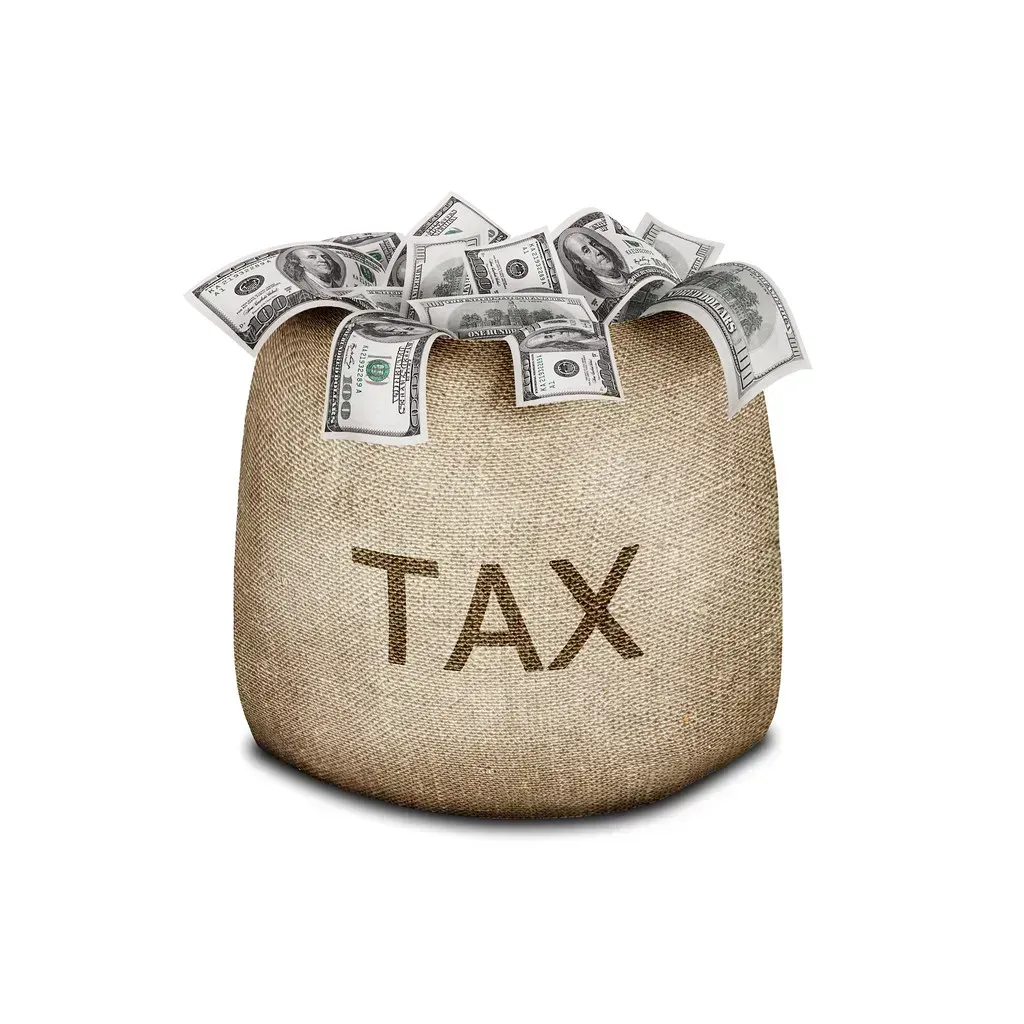
Let’s be real: having two million dollars sounds incredible until you realize most of it is locked in tax-deferred accounts. It’s not unusual for retirees to find themselves in the same or even a higher tax bracket when required minimum distributions (RMD) kick in. Think about that for a second. You spend decades saving diligently, deferring taxes, and building this nest egg, only to discover that Uncle Sam has been patiently waiting for his cut.
If you have a significant amount of tax-deferred savings when you hit RMD age, you could be in for a bit of a tax shock when required distributions start. My first RMD calculation was sobering. With roughly two million sitting in my traditional IRA, the math meant pulling out tens of thousands annually whether I needed the cash or not. Suddenly, my carefully planned budget had to account for mandatory withdrawals that pushed me into a higher tax bracket. Every dollar I withdrew came with an immediate tax liability, and that’s before we even talk about how it affected my Social Security benefits.
The Social Security Taxation Domino Effect

Here’s where things get messy. As you add other forms of income, the taxation of your benefit climbs to as high as 85%. In a situation like that, they almost have to assume that 85% of their Social Security is going to be taxable every year because they don’t have any other pieces to move around the chess board. I hadn’t factored this in during my pre-retirement planning, assuming Social Security would be this reliable, mostly tax-free income stream.
Wrong. The combination of RMDs and Social Security created a perfect storm of taxable income. I found myself in this bizarre situation where the money I’d saved so responsibly was actually costing me more in taxes than if I’d diversified my accounts differently decades ago. Social Security replaces around 39% of the past earnings of a 65-year-old who retired in 2024. Yet the system is progressive, so that high earners can expect Social Security to replace just 25% to 30% of their pre-retirement income. Combined with my RMDs, I was sitting on substantial assets but feeling the squeeze on actual spendable income.
Medicare Premiums Pile On the Pain

Just when I thought I had wrapped my head around the tax implications, Medicare entered the picture. RMDs increase taxable income, which can push retirees into higher tax brackets, affect Social Security taxation, and even raise Medicare premiums. Part B and D premiums are subject to an Income-Related Monthly Adjustment Amount (IRMAA), which is determined based on your modified adjusted gross income (MAGI).
The standard monthly premium for Medicare Part B enrollees is $185.00 for 2025, an increase of $10.30 from $174.70 in 2024. That’s the baseline. But because my RMDs pushed my income above certain thresholds, I’m paying significantly more than the standard premium. Roughly 8% with higher incomes (over $106,000 for an individual and $212,000 for a married couple) are subject to IRMAA. It feels like a penalty for saving successfully. Healthcare costs were always part of my retirement budget, but I drastically underestimated how my own success would inflate those premiums.
The Inflexibility of Being Cash-Rich but Cash-Flow Poor

This might sound absurd to someone struggling to save for retirement, but having two million dollars in tax-deferred accounts created a strange kind of inflexibility. The biggest problem here is they have no flexibility. Every time that they want to spend a dollar, there’s going to be a dollar of taxation riding with that. Want to buy a car? Take a special trip? Help a grandchild with college? Every expense requires pulling out more than you actually need because taxes eat a chunk immediately.
If you don’t manage that $2 million correctly, you risk running out of cash during your golden years. That scenario is more likely than you may think, considering U.S. retirees may easily live 20 or 30 years in their golden years. The realization hit me hard: I had accumulated wealth, but I hadn’t structured it in a way that gave me true financial freedom. My money was there, substantial and real, but accessing it came with strings attached that made simple financial decisions complicated.
What I Wish I’d Done Differently

Looking back, I realize my mistake wasn’t saving too much, it was saving everything in the wrong buckets. If you already have a large amount of tax-deferred savings, starting withdrawals before you reach RMD age could be a tax-smart approach. By lowering your balance before you reach RMD age, your RMDs may not be as large when it’s finally time to start them. This concept of strategic early withdrawals was foreign to me during my peak earning years.
I also should have explored Roth conversions more aggressively in my sixties, before RMDs kicked in. If your charitably inclined and have reached age 70½, a third option to reduce or entirely satisfy your RMDs opens up: a qualified charitable distribution (QCD), in which funds are transferred directly from an IRA to a qualified charitable organization. Unlike RMDs, QCDs are not taxable, and each individual can donate up to $108,000 from their IRA for tax year 2025. Charitable giving has always been important to me, but I didn’t realize it could serve double duty as a tax strategy.
The biggest lesson? Two million dollars isn’t automatically a comfortable retirement. If you do reach it, whether it’s enough for your retirement depends on your lifestyle, healthcare needs, and broader economic factors. While it’s often seen as a financial milestone, the answer depends on your lifestyle, goals, and long-term expenses. I’m not broke, and I’m genuinely grateful for what I’ve accumulated. Still, the RMD wake-up call changed everything. It forced me to confront the gap between net worth on paper and actual financial flexibility in retirement. Maybe I should have paid more attention to the fine print decades ago, but hindsight is clearer than foresight.
Now I’m recalibrating, working with advisors to minimize the tax damage, and figuring out how to make this substantial nest egg work smarter. It’s possible to retire comfortably with two million dollars, absolutely. You just need to understand that the IRS considers itself your retirement partner, and their share might be bigger than you ever imagined. Did you factor in RMDs when planning your retirement? What would you do differently?