
The Magic Number That Defines Elite Retirement Wealth

As of 2025, retirees in the top 5% typically have a net worth of $3 million or more, according to recent analysis from retirement planning experts. This figure represents a significant milestone in retirement wealth, placing individuals well above the vast majority of their peers. Federal Reserve data shows that a net worth of at least $3.795 million places households among the coveted top 5%, though this varies depending on specific age brackets and how wealth is calculated.
Understanding What Net Worth Really Means in Retirement

Let’s be real, net worth isn’t just about the cash in your bank account. Net worth is everything you own minus everything that you owe, making it a better snapshot of financial health than savings balance or monthly paycheck. Think of it this way: your home equity, retirement accounts, investments, vehicles, and even business interests all count as assets. On the flip side, mortgages, credit card debt, and any other liabilities get subtracted from that total. The median net worth of households aged 65 to 69 is $394,000 according to the Federal Reserve, which means roughly half of senior households fall below this benchmark.
How Retiree Wealth Stacks Up Across Different Percentiles

To crack the top 10% of retirees, your net worth needs to hit around $1.9 million, according to Federal Reserve Board survey data. The distribution gets steeper as you climb higher. The top 5% of retirees starts around $7 million in net worth for both 65 to 69 and 70 to 74 age groups, while the top 1% threshold is even more dramatic. To be in the top 1% for retirement wealth requires a net worth of $16.7 million. These figures include more than just investment portfolios. They factor in primary home equity, which can be a major driver of wealth for older Americans.
Why Only a Tiny Fraction Have Million Dollar Nest Eggs

Here’s something that might surprise you. Only 3.2% of retirees have over $1 million in their retirement accounts, with the number of those with $2 million or more falling somewhere between this 3.2% and the 0.1% who have $5 million or more saved. That’s shockingly low when you consider how much financial experts insist you need for a comfortable retirement. Less than 10% of households in each age group have retirement assets exceeding $1 million, with households aged 55 to 64 having the highest rates at 9.2%. The gap between what people have and what they might actually need creates some uncomfortable realities for many approaching their golden years.
Where the Wealthy Keep Their Money

Home equity made up a larger share for families in the bottom half of the wealth distribution, while retirement assets and nonretirement financial assets made up larger shares of wealth for families in the top half. The composition matters enormously. A typical portfolio for someone in the top 10% might hold around 60% stocks, 35% bonds and just 5% cash or cash-like investments. They’re not playing it entirely safe in retirement, which allows their wealth to continue growing even after they stop working. Many retirees own their homes outright, and with decades of appreciation baked in, real estate often explains the leap between upper-middle and upper-class net worth.
The Surprising Truth About Who Becomes Wealthy

Most wealthy retirees are regular people who had regular jobs and just saved diligently and invested wisely over a long period of time. I know it sounds crazy, but the data backs this up. The top five professions for millionaires are engineers, accountants, teachers, managers, and attorneys, with most graduating from public universities and state schools, and only 20% receiving an inheritance. Teachers, making an average salary around sixty thousand annually, can become millionaires through consistency and resolve. The most important factors for reaching the top 5% of households by net worth are saving and investing, not necessarily how much you earn.
How Americans Feel About Wealth Versus Reality
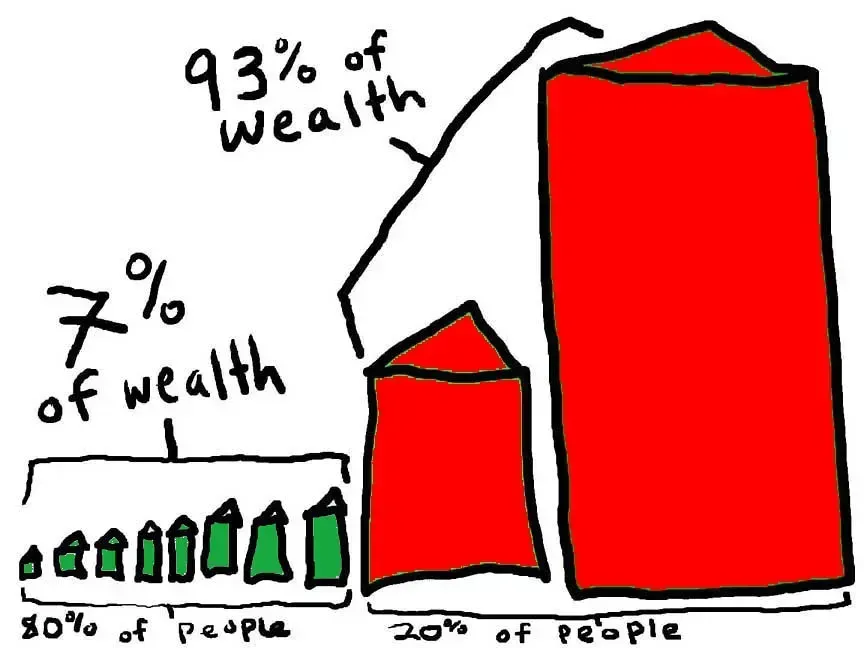
There’s this interesting disconnect between perception and reality. Americans said that it takes an average net worth of $2.5 million to qualify a person as being wealthy, according to Schwab’s 2024 Modern Wealth Survey. Yet the actual top 5% threshold sits somewhere between three and four million depending on which data source you consult. Meanwhile, the average net worth for those aged 65 to 74 was $1,794,600, which is more than four times the median net worth of $409,900 because the super-wealthy skew the average much higher. This massive gap shows just how concentrated wealth really is at the very top.
The Role of Age in Retirement Wealth Accumulation

The wealthiest households dramatically increase their net worth in their forties and fifties, while top-tier net worth doesn’t climb as fast in people’s sixties and actually declines later in life because households typically spend down or donate their retirement savings. It’s a natural progression. Median net worth dipped to $335,600 for those 75 and older, given how many people in this age bracket have retired and are withdrawing from their savings for living expenses, healthcare and other costs. Peak wealth typically occurs in the late sixties before gradually declining as retirees tap into their reserves to fund their lifestyle.
What It Takes to Actually Join the Top 5%

Top retirees often follow disciplined spending strategies and track housing, healthcare, inflation, and unexpected costs carefully. They’re not just lucky or born into wealth. They started saving and investing early in their careers, though it’s worth noting it’s never really too late to begin building wealth. The path involves maximizing employer 401(k) matches, contributing to IRAs, investing in diversified portfolios that include both stocks and bonds, and maintaining discipline around spending even as income rises. Among those ages 55 to 64 who were nearing common retirement ages, 70 percent had tax-preferred retirement savings accounts.
The Bottom Line on Elite Retirement Status

The average net worth for those aged 65 to 74 was $1,794,600, yet this figure masks enormous variation. The median net worth for Americans aged 65 to 74 was $409,900, dropping to $335,600 for those 75 and older. To truly rank among the elite top 5% requires roughly three to four million in total net worth, placing you far above typical retirement wealth levels. Whether this number feels attainable or impossibly distant depends entirely on where you’re starting from and how much time remains before retirement. The good news? The journey to building substantial wealth follows predictable patterns: save consistently, invest wisely, minimize debt, and give your money time to compound. Even if the top 5% remains out of reach, understanding these benchmarks helps clarify what financial security in retirement actually looks like. What’s your target number, and how close are you to reaching it?