:max_bytes(150000):strip_icc():format(jpeg)/Chefs-Best-Value-Steak-FT-DGTL1225-076f15da210640f7a3a7e4fb68bf96ba.jpg)
It doesn’t take an economist to tell you the cost of beef is high right now. Just go to the grocery store, and you’ll find that your favorite roasts, steaks, and even ground beef are pricier than usual.
Beef prices have risen steadily since 2020 thanks to the rules of supply and demand. In addition to the drop in beef production due to COVID, several years of severe drought forced many ranchers to sell off parts of their herds, reducing the number of cattle available today as demand for beef remains high. In mid-2025, cattle prices set new record highs, according to the United States Department of Agriculture (USDA). The agency also forecast “further tightening” of calves available for placement into 2026. Tariffs and other trade policies have added some upward pressure on beef prices, too.
Joshua Turka, owner of 5th Quarter Butcher and Provisions in Waitsfield, Vermont
““My first recommendation for anyone looking to avoid the current price inflation with beef would be, if possible, to find a local farmer.”
— Joshua Turka, owner of 5th Quarter Butcher and Provisions in Waitsfield, Vermont
Bottom line: You shouldn’t expect beef prices to drop anytime soon. But that doesn’t mean you have to give up steak night. Now is a great time to build a relationship with your local butcher and/or farmer and explore some alternatives to traditionally expensive cuts like rib eye and filet mignon.
“My first recommendation for anyone looking to avoid the current price inflation with beef would be, if possible, to find a local farmer,” says Joshua Turka, owner of 5th Quarter Butcher and Provisions in Waitsfield, Vermont.
“There’s a lot of interconnected reasons for the increase in beef prices but a big one is that cattle prices at national cattle auctions have been skyrocketing,” Turka says. Buying local, if possible, supports farms close to home, plus “these farmers are insulated from national market fluctuations, meaning a more consistent price for the consumer.”
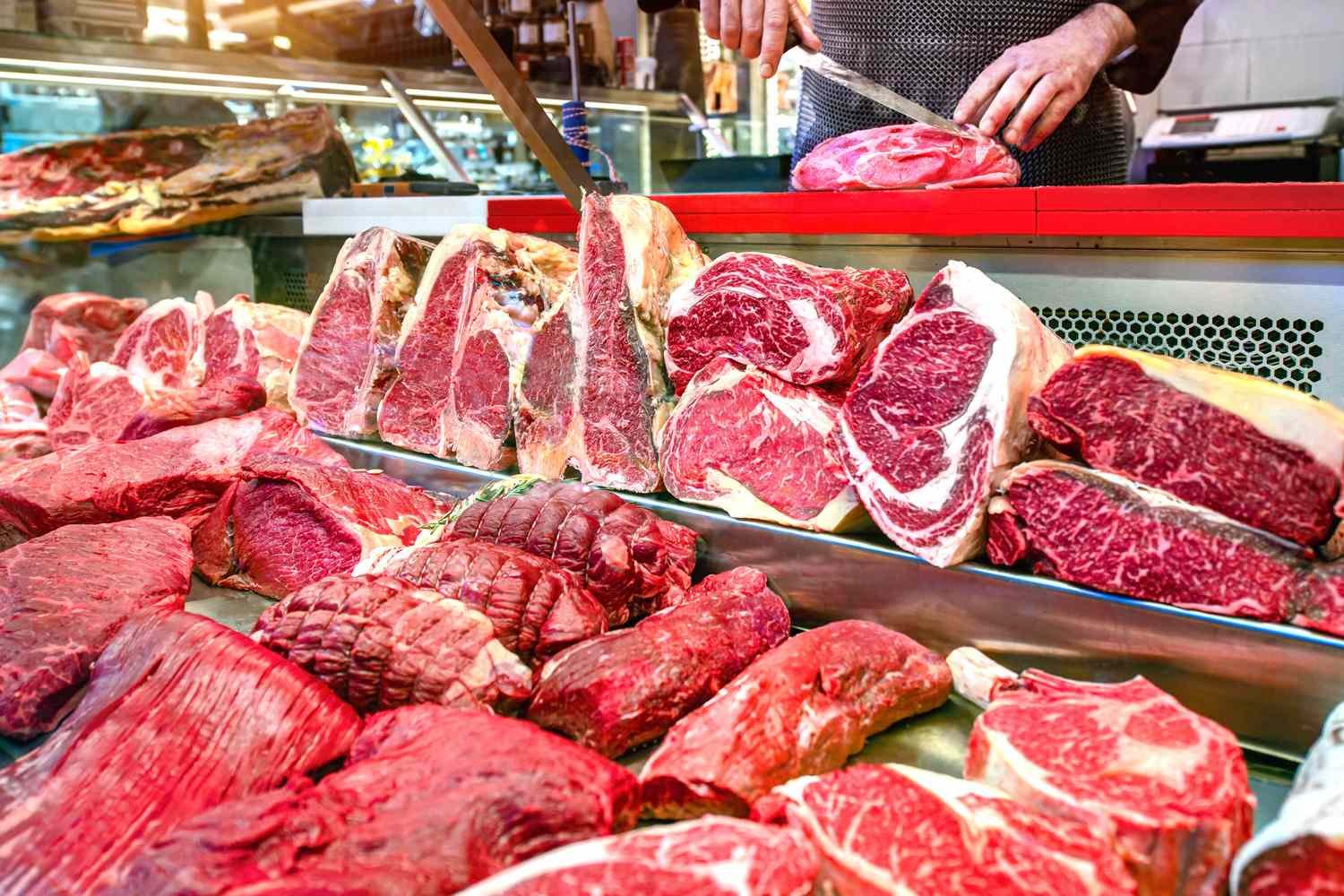
Whether you go to your local butcher shop, farmer, or a grocery store, here are chefs’ and butchers’ recommendations for lesser-known cuts that provide a great value.
Bavette
Food & Wine / Getty Images
“I’ve been championing this one for years and years to the point of exhaustion, and I’ll keep shouting about it: It’s the sirloin flap, also known as bavette, if you are fancy,” says Sean Froedtert, chef de cuisine of Manuela in New York City. “Located on the bottom of the sirloin, this cut is like a flank but has a bit more marbling and is thicker, making it ideal to sear like a steak.
Andrew Black, chief culinary officer of Counter Service in New York City, also recommends bavette for its good marbling and deep red color. He advises cooking it to an internal temperature of about 130°F to 135°F for medium-rare to medium.
Black notes that you might not find this specialty cut at your regular grocery store, and recommends asking a local butcher to cut it ahead of time.
It typically comes as a whole piece rather than individually portioned, says Froedtert. “This makes it great for entertaining, and its quick cooking time allows you to spend more time with friends and family — or counting all the money you just saved, as it comes in at about $8 to $9 cheaper per pound than your old friends rib eye and New York strip.”
Denver
Food & Wine / Getty Images
Often compared to rib eye due to its marbling, this cut typically costs 20% to 30% less. “The Denver steak is great,” says Rand G. Packer, chef and founder of Evoke 1923 in Evergreen, Colorado, among other restaurants in the state. “The flavor of the Denver steak is fabulous, with its cut coming from the beef chuck, beneath the shoulder blade. It’s very tender, and has deep, rich marbling, which makes for a more juicy steak.”
It’s not quite as tender as a rib eye, but you can generally cook a Denver steak like you would its more expensive cousin. Season it well with salt and pepper, and sear over a moderately high heat for medium-rare. Be sure to let it rest after.
Flatiron
Food & Wine / Getty Images
The flatiron steak comes from the inside shoulder blade, Turka explains, “but it’s actually the second-most tender cut on the animal.” It has a relatively uniform rectangular shape and thickness. It’s another great option for marinating and cooking over a high heat, but you can also simply season this relatively rich steak with salt and pepper.
Turka offers flatiron, Denver, and flap steak in his Vermont shop and notes these are all solid, affordable cuts of steak. “All three of these cuts are available in our case for 30% less than a rib eye or strip.”
Skirt
Food & Wine / Getty Images
Of all the steaks on the list, this thin, textured steak may be the easiest to find in your grocery store. Cattle have four skirt steaks each: two inside and two outside. The inside tends to be narrower and tougher than the more desirable outside skirt, which is wider and more tender. At the store, these look like balls packed in cryovac packages, as they are often rolled instead of sold laid out flat.
“One of my favorite underrated cuts is the outside skirt steak,” says Jon Urbana, founder of KOW Steaks, a direct-to-consumer American wagyu steak delivery company. “It has rich internal marbling that delivers flavor and tenderness comparable to a rib eye, but at a fraction of the price.”
Skirt steak is often the go-to cut for fajitas or steak tacos and performs particularly well when marinated and grilled or seared over a high heat until it reaches medium-rare. Carefully slice it against the grain and you’ll get a meaty, rich, and juicy steak.
Hanger
Food & Wine / Getty Images
Similar to skirt, hanger is a relatively odd-shaped steak that comes from the short loin primal and hangs from the cow’s trailing rib. Because the cow only has one hanger steak, this cut can be tricky to find. Traditionally, butchers would save this tender cut for themselves, earning it the nickname “butcher’s steak.”
Because of its unique grain structure and muscle fibers, a hanger steak can actually benefit from a slightly higher final temperature. Consider cooking to medium doneness, even if you typically prefer rare to medium-rare. If you can find or request one at your local butcher shop, you’ll be rewarded with a unique, affordable steak, with prices about $9 per pound.
“I think if you take a cheaper cut like hanger steak, and marinate them really well, they will come out great,” says Sophina Uong, chef-owner at Mister Mao in New Orleans.
Coulotte
Food & Wine / Getty Images
Also known as picanha, the coulotte steak is another great value, Packer says. This cut, which comes from the top sirloin cap, “[is] tender because the muscle doesn’t get used much, but it’s also somewhat lean, making it a truly unique cut of meat.” It’s often the cut of choice for Brazilian barbecue.
Call ahead to your butcher to request a coulotte, or picanha, and try throwing it on a hot grill. As it’s relatively lean, you’ll want to cook it to about medium-rare doneness to avoid toughness. Simply season it with some coarse sea salt and black pepper before giving it a good sear.
Or cut your own steak
If you’re willing to spend a bit more up front, you may want to consider buying whole subprimals instead of individual steaks. That is what Shawn Matijevich, lead chef-instructor of Online Culinary Arts & Food Operations at the Institute of Culinary Education, recommends.
“My suggestion is to go to Costco and buy whole strip loins or whole rib eyes and cut them yourself,” Matijevich says. “It’s way easier than you think. Flatiron steaks at my local Walmart are $14 per pound and New York strips are $19.97 per pound. I just bought a whole strip loin at Costco for $9.99 per pound and cut it into multiple steaks. That’s the same price as stew meat at Walmart.”
Use a sharp chef’s knife to cut individual steaks from a whole loin or ribeye to save money. Simply trim off excess fat to your preference, Matijevich says, and remove any silver skin. Slice steaks to your desired thickness, vacuum-seal them individually, and freeze for up to 12 months.