:max_bytes(150000):strip_icc():format(jpeg)/Sweet-Potato-Pie-with-Cocoa-Crust-slice-FT-MAG-RECIPE-1125-c02cdc64d65745588e559fe16b9e6949.jpg)
- Roasting sweet potatoes is an easy way to deepen the vegetable’s natural sweetness and flavors, and it helps to create a velvety pie filling that’s easy to prepare ahead.
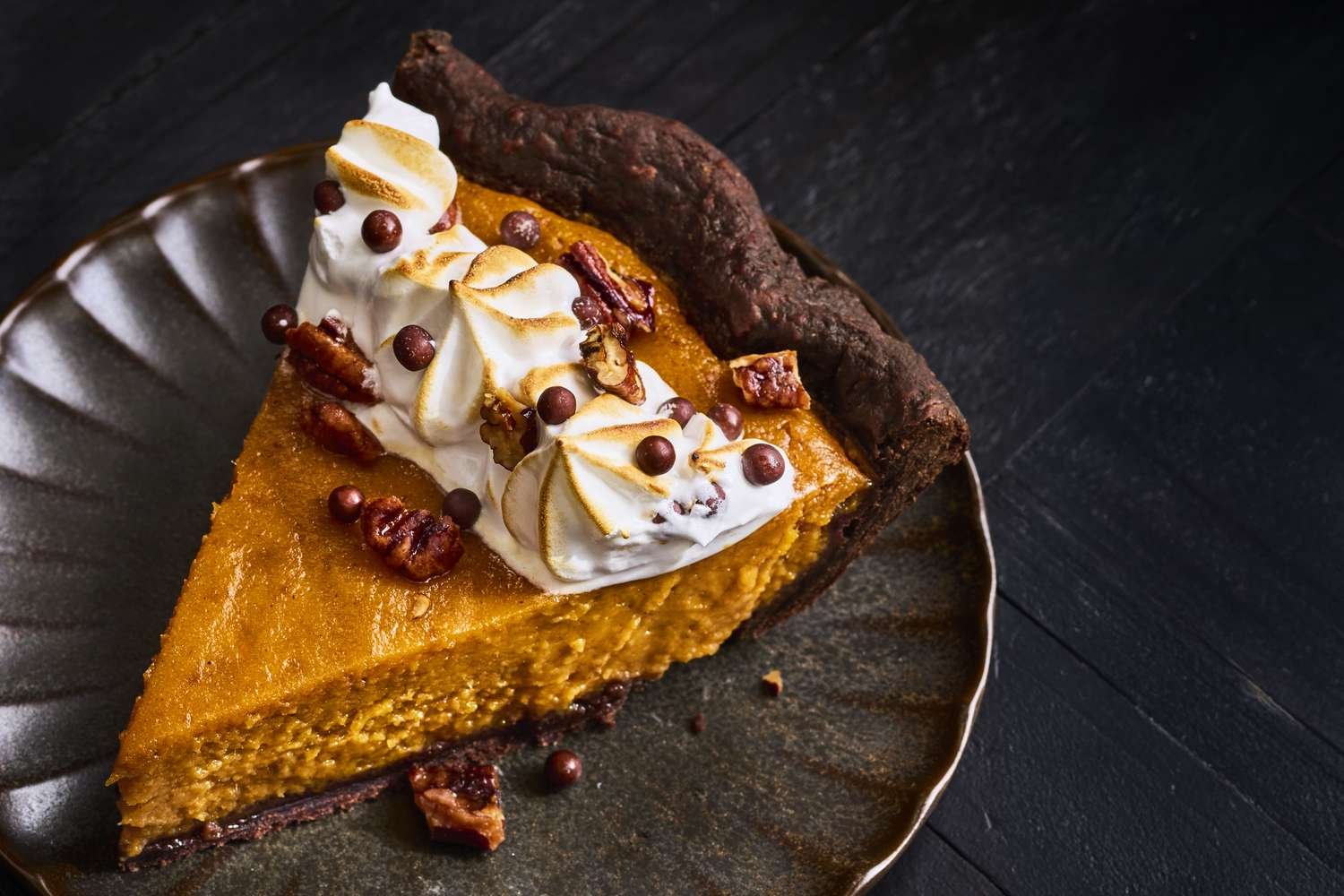
- The flaky, crisp crust has fruity notes and a pleasant bitterness from cocoa that also balances the sweetness of the filling.
- The toasted meringue is a nod to the nostalgia of sweet potato casserole, but the additional toppings make it feel fresh and modern.
If you’re the person who’s looking forward to a slice (or two) of pumpkin pie each year, you’ll love this pie’s silky texture and warming spices. Sweet potatoes, roasted to bring out their caramel notes and natural sweetness, form the base of a filling spiced with cinnamon, clove, and ginger.
The cocoa crust adds an intense chocolate flavor that balances the pie’s sweetness. It’s fully baked to ensure it stays crisp and flaky even after being filled and put back in the oven. Make sure to use quality cocoa, and take care to avoid overbaking the crust to avoid developing bitter notes. When rolling out the cocoa dough, use only a small amount of flour — overdoing it will make for a tough crust.
A swath of marshmallowy toasted meringue gives a nod to classic sweet potato casserole, but here the sweetness is more restrained. A final flourish of crunchy chocolate pearls and pecans makes this pie a wow-worthy finale to a Thanksgiving feast.
What components can you make in advance?
Make the dough ahead: The cocoa crust benefits from resting, which allows the flour to fully hydrate. After the dough rests in the refrigerator, you can freeze it for up to a month. The crust can also be blind-baked, cooled, and stored (well-wrapped) a day or two ahead. While the filling is very straightforward, you can roast the sweet potatoes a day in advance to save you some time on Thanksgiving day.
What’s the best way to know that the pie is fully set?
An instant-read thermometer can take the guesswork out of telling when your pie is ready to pull. It will set nicely if the center is temping between 170 to 175F. This can also help you visually gauge when your pie is done in the future. If you’re worried about the hole this makes in the center, you can always cover it with some meringue and/or garnish.
Notes from the Food & Wine Test Kitchen
- Fill the pie shell with pie weights all the way up the sides of the crust during blind baking to prevent shrinking and slumping.
- If you’re not a fan of meringue, swap in softly whipped cream or leave the pie plain — the cocoa crust and spiced filling shine on their own.
- Make sure to use Dutch-process cocoa: It has a smoother, less acidic, and fudgier flavor than natural cocoa and lends the crust deep dark color.
This recipe was developed by Camille Cogswell; the text was written by Cheryl Slocum.