:max_bytes(150000):strip_icc():format(jpeg)/Cheese-So-Creamy-Doubles-As-a-Dip-FT-DGTL1225-07-ca0e55d5ac634bbdb1ef8c649be26f8d.jpg)
When most people think about autumnal agriculture, apples, pumpkins and cranberries probably come to mind. For dairy farmers, however, fall means a harvest of extra milkfat as their cattle begin to eat dry hay instead of grazing on pasture.
For nearly a decade, a family-owned Wisconsin farm simply sold this rich autumn milk as is. That is, until 2008, when Andy Hatch, now owner and cheesemaker of Uplands Cheese, returned to his home state of Wisconsin fresh off a cheesemaking apprenticeship in France. After learning how to make Vacherin Mont d’Or, a spruce-wrapped soft cheese that is celebrated in Europe, Hatch began experimenting with a similar recipe for the autumn milk that was otherwise being sold at a commodity price. In 2010, Uplands Cheese released its first batch of Rush Creek Reserve, which became an immediate sensation after a rave in The New York Times praised it as “a cheese for scooping.”
“It was a turning point for me and for the farm,” says Hatch. It was a chance for him to make his mark on the Dodgeville-based business — founders Mike Gingrich and Dan Patenaude have since retired, and Hatch purchased the farm with business partner Scott Mericka in 2014 — and also a way to complete the circle of Uplands’ seasonal model.
Prior to Rush Creek Reserve, Uplands Cheese prioritized its Pleasant Ridge Reserve, an Alpine-style cheese crafted from grass-fed summer milk and aged for 12 months. From a cheesemaker’s perspective, Hatch explains, the recipe is a light-handed approach. “We’re not using ripening techniques to develop flavor; we rely on the milk itself to generate the flavor as the proteins break down and express themselves in aroma and flavor.”
Conversely, Rush Creek Reserve is only aged for two months. “Instead of emphasizing the milk itself, we emphasize the cave environment,” says Hatch.
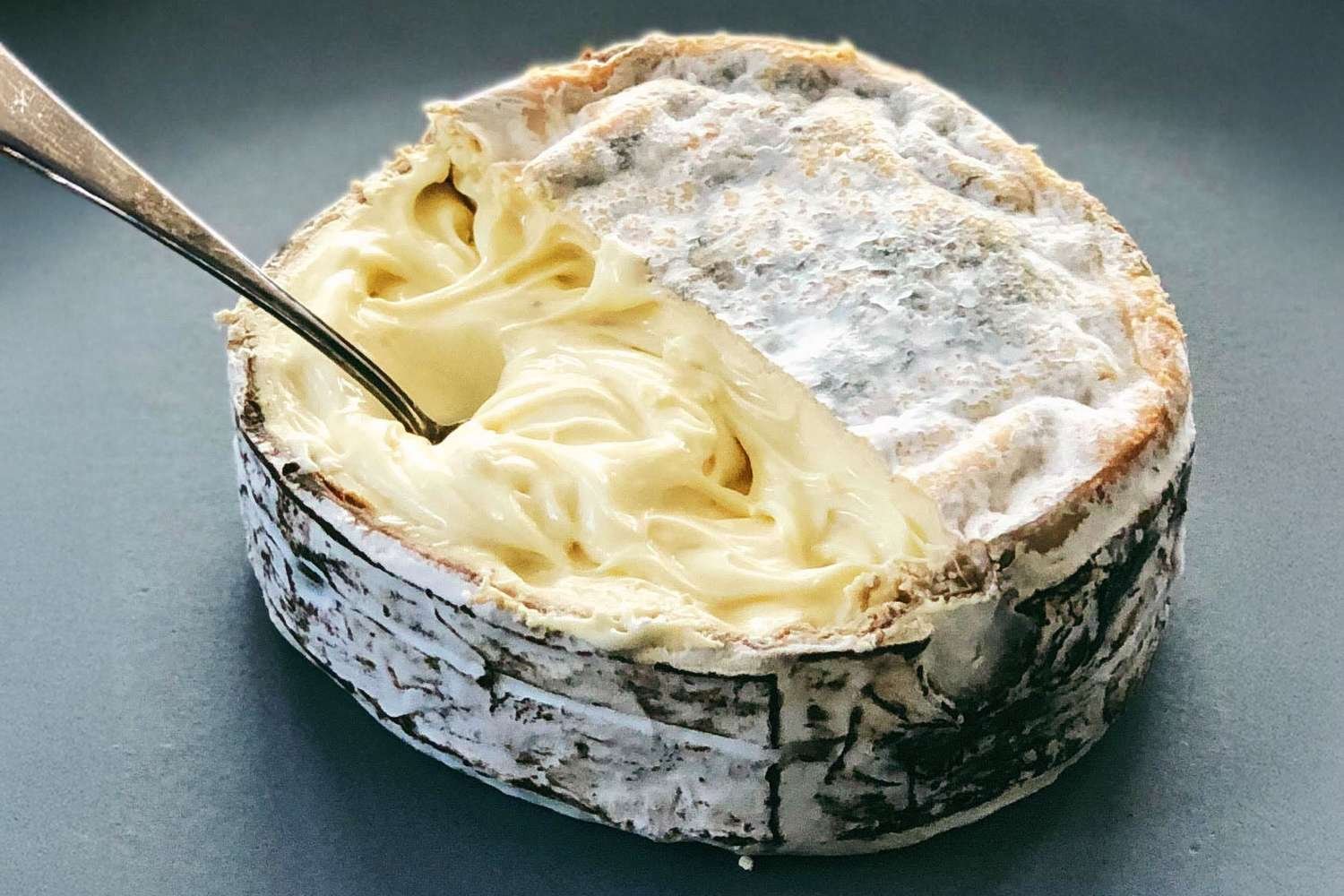
Each wheel of Rush Creek Reserve cheese is wrapped in spruce bark the day after it’s made before being laid to rest in the caves for 60 days. At this point, the caves have soaked up a season’s worth of Pleasant Ridge Reserve microbes so they’re “teeming with character,” which only continues to develop as Rush Creek Reserve ages alongside Pleasant Ridge Reserve and is washed in the same brine. These ripening techniques result in Rush Creek Reserve’s profoundly rich flavor: layers of subtle earthy notes from the spruce bark, nutty notes from the Pleasant Ridge environs, and an umami savoriness from the brine.
Andy Hatch, owner and cheesemaker of Uplands Cheese
“Like Champagne, [Rush Creek Reserve has] become a marker for gathering people on an important moment — the end of the year, the holidays.”
— Andy Hatch, owner and cheesemaker of Uplands Cheese
While there are other soft-washed cheeses available year-round, like Jasper Hill Farm’s Harbison, “nobody is doing cheese like Rush Creek Reserve,” says Charlie Foster, chef of Woods Hill Pier 4 in Boston. “There’s an extreme amount of precision needed to make this style of cheese, and on top of that to do it with unpasteurized milk — it’s only possible with the best possible product handled with great care and expertise.”
Every year, Hatch follows the calendar for Mont d’Or, beginning to age the season’s first batches of Rush Creek Reserve on August 15 for the initial release just before Halloween. Despite adding “a couple hundred wheels” to the inventory each year to keep up with the cult-like demand from consumers and restaurants across the country, Hatch says they typically sell out around Christmas. Foster preordered 96 wheels four months ahead of time and is still expecting to sell through them in under a month.
“People have always celebrated this time of year with delicious food and drink,” says Hatch, likening Rush Creek Reserve to a bottle of Champagne as a wheel is meant to be shared and consumed in one sitting.
“And like Champagne, it’s become a marker for gathering people on an important moment — the end of the year, the holidays.”
Photo by Kevin J. Miyazaki
How to serve Rush Creek Reserve
Rush Creek Reserve is best when served at room temperature or after being gently warmed in the oven. For the latter, be sure to remove the paper wrapping and either replace it with tinfoil or cover it in a small ceramic crock pot to bake at 225°F for 15 minutes. Once the wheel is warm, gently peel back the spruce bark on top with a spoon so you don’t waste any cheese.
Here are a few ideas for enjoying Rush Creek Reserve — while it lasts.
Crackers & cured meats
The most classic way to present Rush Creek Reserve is before the meal, with bubbles or white wine, served alongside crackers, olives, and cured meats. “The rich and salty flavors give everyone the savory hit they crave this time of year, and the bubbles or acid in the wine refresh your mouth and make you crave another bite,” says Hatch.
Fondue
“Treat it like a fondue pot,” says Foster. At the restaurant, he serves the warm wheel with grilled semolina bread and seasonal spreads like truffled red onion jam. For at-home chefs, he recommends using whatever you have on hand to dip into the “warm and gooey cheese,” whether that’s raw vegetables or a spoon to eat it straight out of the wheel.
Spicy dip
Before you warm the Rush Creek Reserve wheel, add some chiles or pickled jalapeños to the top, suggests Lizzie Roller, director of merchandising at Murray’s Cheese. Then heat it up, stir it around, and make it into a dip to serve with crispy toast pieces or breadsticks.
A Brie dupe
Roller also recommends preparing the cheese like a baked Brie. “Slice off the rind and wrap it in phyllo then top it with any jam you like,” she says, suggesting a fig onion confit from Three Little Figs as a place to start for contrasting sweet and savory flavors.
A condiment for roasted meats
It’s no secret that this time of year sees many roasted meats and vegetables on the table. For Hatch, this is where he uses Rush Creek Reserve as a dipping sauce. “Everyone lands a dollop of cheese on their plate, and every other brussels sprout, potato, or carrot is dabbed into it,” he says.
Crème brûlée
As savory as Rush Creek Reserve can be, there’s also a place for it after dinner with a dessert wine, says Hatch. He points to North Pond Restaurant in Chicago, where the cheese is scooped out from the bark, added to a ramekin, and topped with sugar in the raw, which is then torched until caramelized; the result is like an umami-rich crème brûlée. “The cheese’s velvety, custard-like texture reminds me of a chocolate ganache, and its subtle savoriness adds balance to our desserts,” says César Murillo, the restaurant’s chef.