:max_bytes(150000):strip_icc():format(jpeg)/Potato-Garlic-Rosemary-Foccacia-FT-Recipe1025-e1171c1aa2aa4fe5bd754d85c97f270a.jpg)
• The confit garlic infuses the dough and oil with gentle, rounded garlic flavor without a harsh bite.
• The crust bakes remarkably crisp while the interior stays soft and airy, making stellar sandwiches.
• Pecorino cheese and cracked pepper add subtle cacio e pepe vibes that complement rosemary and potato.
There are plenty of hypnotic focaccia-dimpling videos, but recipe developer Helen Goh wasn’t convinced to jump on the focaccia train until she had some leftover garlic confit. After gently poaching whole cloves in extra-virgin olive oil, she folds the softened garlic into a simple dough and saves every drop of that aromatic oil for slicking, dimpling, and finishing. The overnight chill, anywhere from eight hours to two days, does the heavy lifting, developing flavor and an open, springy crumb with almost no kneading.
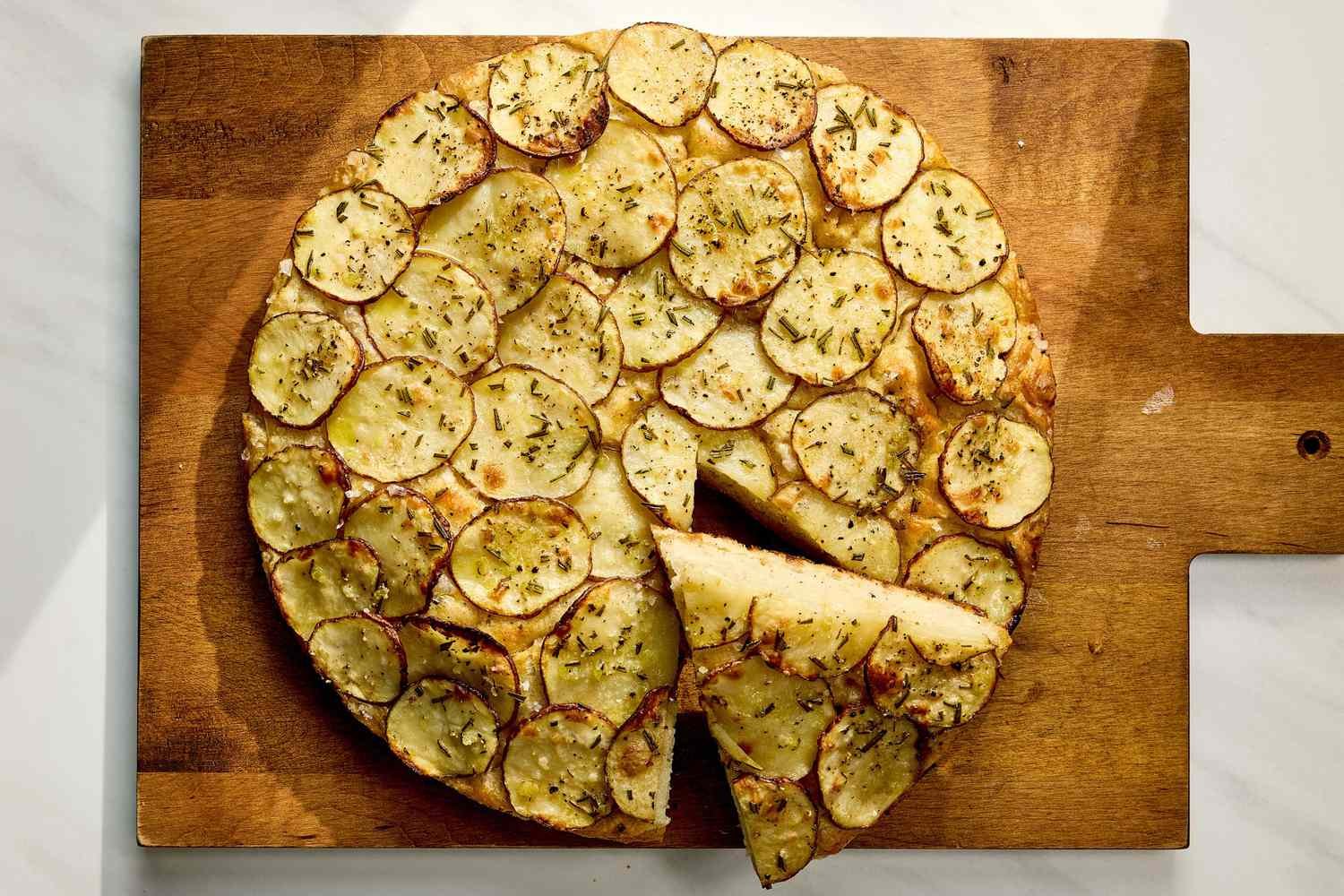
What takes this loaf from great to unforgettable is the topping. Using a single red potato, Goh slices it thin so the edges crisp like chips while the centers stay tender. Rosemary is tucked into the dimples so the needles perfume the bread without scorching, and a final sprinkle of flaky sea salt brings all the flavors to the top. Pecorino Romano and cracked black pepper echo the comfort of cacio e pepe, but never overwhelm the garlic and rosemary.
Baked in a well-oiled round or rectangular pan, the focaccia emerges with a sizzling, bronzed underside and a puffy, dimpled top. Serve the focaccia with cured meats and pickles, or slice into sturdy squares for sandwiches. If you can, serve it warm when the crust is at its crispiest, and be prepared for the tug-of-war between those lacy potato edges and the plush interior.
Why is bread flour important to focaccia?
Bread flour is essential for making perfect focaccia because of its high protein content, which builds strong gluten networks. This structure traps air bubbles during fermentation, giving focaccia its signature chewy texture and airy crumb. The extra strength also helps the dough rise higher and hold its shape while baking, resulting in a beautifully golden crust with a soft, pillowy interior — the ideal balance of crisp and tender that makes focaccia so irresistible.
How long can you keep garlic confit?
Garlic confit can be stored in an airtight container in the refrigerator for up to two weeks. Keep the cloves fully submerged in oil to prevent spoilage. For longer storage, freeze the garlic and oil in small portions. Always avoid keeping garlic confit at room temperature to prevent botulism risk.
Notes from the Food & Wine Test Kitchen
• Cover the dough during the cold proof to prevent a skin that inhibits the bread from rising in the oven.
• Lifting the focaccia out of the pan after five minutes and transferring it to a cooling rack preserves the crunchy bottom.
• Opt for King Arthur bread flour for a consistent rise and open crumb.
This recipe was developed by Helen Goh; the text was written by Breana Killeen.