:max_bytes(150000):strip_icc():format(jpeg)/Spices-India-Meets-Lowcountry-Maneet-Chauhan-FT-DGTL1125-f5ed5cefc91941daa0ae338eaecc9e97.jpg)
Born in India and trained in the U.S., celebrated chef and television personality Maneet Chauhan has a culinary career that’s steeped in various cultural influences, and her many restaurants and cookbooks reflect a diverse array of international and regional sensibilities. “The more I explore different cuisines, the more I realize that there is no cuisine in this world which stands by itself,” says Chauhan, as human elements of migration, colonization, and trade have scattered various ingredients and techniques across the planet.
“There is a lot more commonality in food that brings people together,” says Chauhan. “It is the cross migration of different cuisines which have resulted in what we revere as Indian, or Chinese, or Italian, or whatever it is,” she says. “It is a constant evolution that makes things more interesting.”
To underline that notion, she will explore the intersection between two seemingly disparate culinary profiles — Indian cuisine and Lowcountry cooking — in an upcoming session at the 2025 Food & Wine Classic in Charleston, entitled “The Spices That Bind: India Meets Lowcountry Cuisine.”
Understanding Lowcountry cuisine
“Lowcountry” in the U.S. refers primarily to the region along the coast of South Carolina and Georgia. While its cuisine shares some personality traits with Louisiana’s Cajun, it is regionally distinctive, given influence from the Gullah Geechee people — African descendants whose isolated work among the islands along the low-lying southeastern coast helped them to retain many of their ancestral traditions and foodstuffs.
In addition to its West and Central African culinary influence, which brought several key elements such as peanuts, rice, and sturdy greens to the forefront, “Lowcountry cuisine also demonstrates French and even English influences,” says Chauhan — a literal melting pot of ingredients and techniques that resulted in marquee dishes that couldn’t have come from anywhere else, such as shrimp and grits, she-crab soup, and frogmore stew, a Lowcountry version of a seafood boil.
The intersection of Indian and Lowcountry cuisines
“You think of Lowcountry cooking, and you think of India, and of course your first obvious reaction is to assume that there is no connection,” says Chauhan. “But when you start delving into both cuisines, all of these commonalities really start popping up,” she says, reflective of their respective, varying influences.
Beyond the seafood, sausage, corn, and potatoes that comprise the staple ingredients of Lowcountry cuisine, Chauhan’s session at the Food & Wine Classic will demonstrate several dishes whose primary ingredients and flavors are integral to both cultures.
Black pepper
Spices such as dried garlic, dried onion, paprika, ginger, and cumin are common across numerous culinary cultures, including Indian and Lowcountry cooking, and an important spice that truly binds both is black pepper, and not just as a default seasoning agent.
“Black pepper has an Indian origin,” says Chauhan, featured heavily in garam masala and the driver of flavor in a Lowcountry seafood boil, used in a higher proportion than the typical pinch. “It stands out on its own, because it doesn’t have a hot heat but a pungent heat.” Black pepper is more of a starring flavor than a supporting character in both cuisines.
Peanuts
“Boiled peanuts are something I wasn’t familiar with before I went to Charleston,” says Chauhan, but peanuts are prevalent in many Indian sauces and condiments, not to mention popular street snacks. Taking cues from both cultures, Chauhan devised a boiled peanut chaat.
“Chaat is Indian comfort food whose meaning is ‘to lick,’” says Chauhan. Indian street snacks in this category are typically seasoned with a distinctively tart seasoning blend. Soft and savory boiled peanuts, common as a Lowcountry snack, are given the chaat treatment with chaat masala, rendered tart with dried mango powder.
Okra
Okra is indigenous to Africa and in its migration has become as central to Lowcountry cooking as it is in Indian cuisine, with deep fried versions appearing in both. While cornmeal-battered okra is common in the Southeastern U.S., Chauhan will be demonstrating kurkuri bhindi at the Food & Wine Classic.
“The okra — bhindi — is cut longitudinally, and then it’s tossed with besan, which is chickpea flour with spices and a little bit of rice flour, and then it’s deep fried,” says Chauhan. “So it’s almost like okra chips, but with Indian flavors to it, presenting okra to people who are familiar with it, but transformed in a completely different way.”
Black-eyed peas
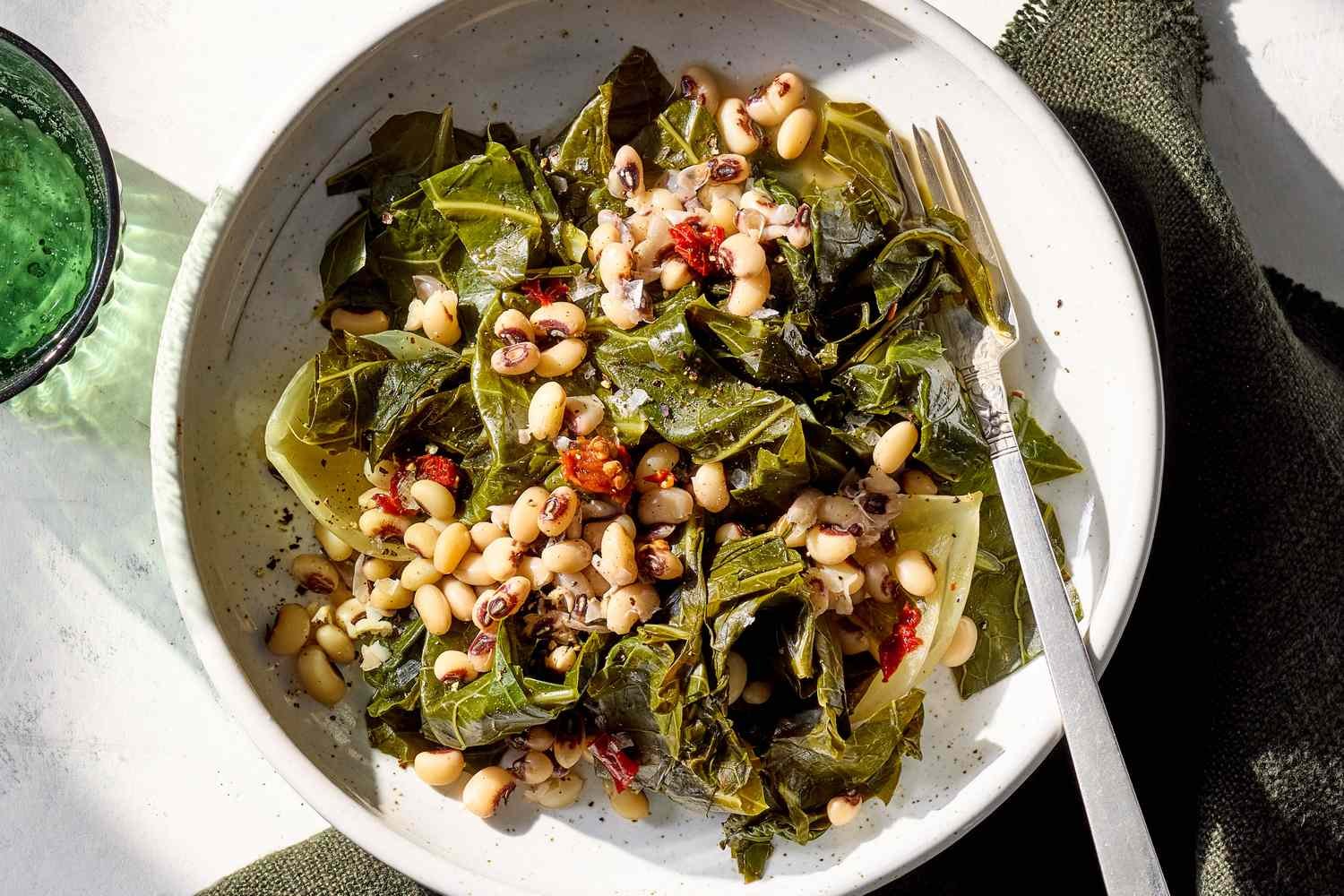
“One of the things that I really love about Lowcountry cuisine is the Hoppin’ John,” says Chauhan of the aromatic, Carolina expression of beans and rice studded with pork. Its particular legume component, black-eyed peas, is also a staple of Indian cuisine. “Black eyed peas were something that mom used to make every Sunday afternoon,” she says. So for her own interpretation of Hoppin’ John, “I am going to be doing it with an Indian twist, which is a Hoppin’ John biryani,” she says, layering the Lowcountry classic with an aromatic biryani rice, “bringing the Indian flavors to something which is so familiar in the South.”