:max_bytes(150000):strip_icc():format(jpeg)/What-Is-Iowa-Sushi-FT-DGTL1225-01-c83fa8a2c8774396b3aaffc455ac1e25.jpg)
If you throw a Midwestern Christmas party without a plate of pickle wraps, someone will likely clock the absence immediately: Huh. No pickle wraps this year?
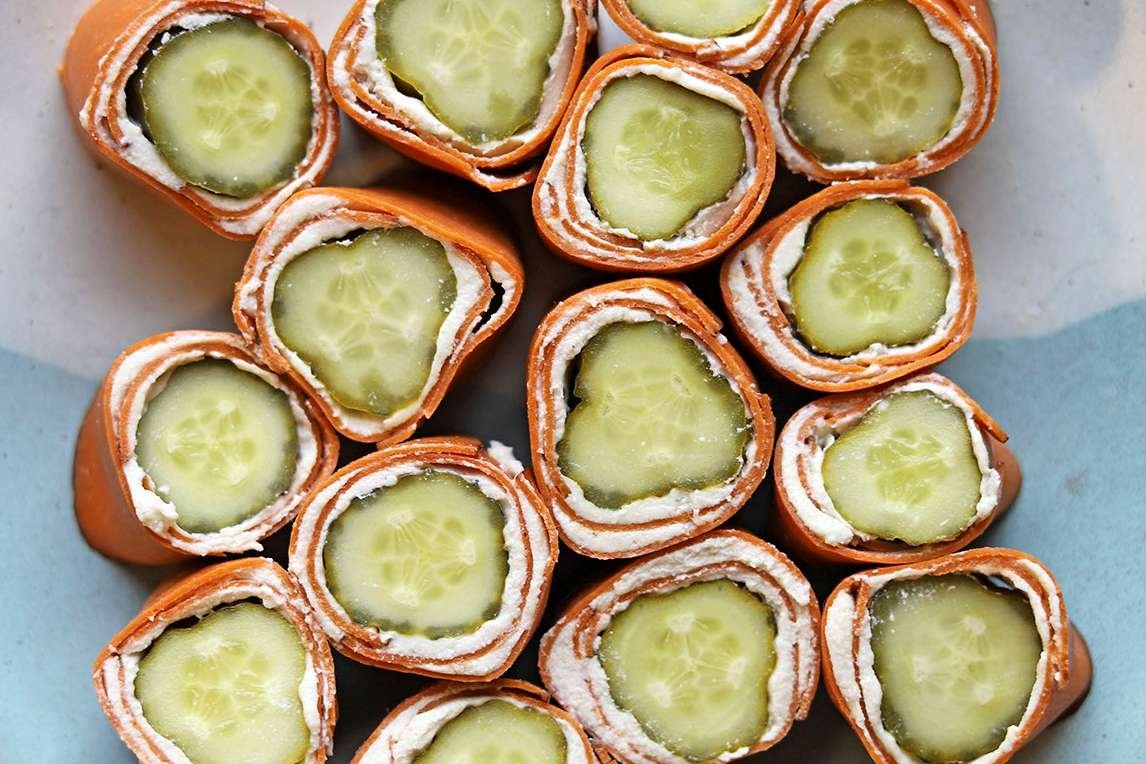
Sometimes called Iowa sushi, Minnesota sushi, Midwest sushi, or Lutheran sushi, these retro roll-ups — dill pickles slathered with cream cheese, then wrapped in thin slices of deli ham or corned beef — are the kind of dish that inspires both delighted squeals and deeply confused stares. They’re salty, tangy, creamy, and wildly beloved. They are also, depending on who you ask, a cherished holiday essential or a crime against appetizers.
Their origins are murky. Church basements? Junior high home ec classes? The shadowy cocktail party era of the 1950s, when cream cheese and deli meat reigned supreme? What’s clear is that pickle wraps have become a staple of holiday spreads and potlucks across the Upper Midwest, popping up everywhere from graduation parties to funerals, deck beers to Christmas Eve buffets.
Hannah Agran, executive editor of Midwest Living
“Calling it sushi reveals something about our region’s default mode to being humble and self-deprecating and eschewing snobbery of any kind.”
— Hannah Agran, executive editor of Midwest Living
Salt, fat, acid, and heat
From a flavor standpoint, pickle wraps are doing exactly what good food has always done: balancing salt, fat, and acid in a way that makes your hand keep reaching for the platter. “Pickles add loads of flavor, and the addition of an acid works to pull together any dish,” says Niki Toscani, cofounder of Philadelphia’s Fishtown Pickle Project.
It’s why the combo of pickle, cream cheese, and ham works so well. “They’re all classic sandwich ingredients,” Toscani says. “Bread is just the vessel — the innards are what make it delicious.”
Pickles themselves carry an outsize emotional charge, especially in the Midwest. “Pickles are so nostalgic,” Toscani says. “Pickles have been around and in food since before the Industrial Revolution, simply as a means to preserve harvest. But because of their craveworthy flavor, they’ve become a household staple.”
That nostalgia shows up not just in cravings, but in conviction. Families debate pickle thickness, cream cheese quantity, and whether spicy pickles are welcome. (Often: no. Sour or kosher dills are standard.) Ratios are guarded. Preferences are inherited. This is not casual eating.
Cadry’s Kitchen blogger and cookbook author Cadry Nelson remembers her first encounter, via a middle school classmate, vividly. “Pickle roll-ups were a niche favorite,” Nelson says. “Their popularity largely varied by family, church, and friend group. Over the years, they seem to have faded out of rotation, but people still have a lot of affection for them when they do make an appearance.”
The playful nicknames are part of the dish’s charm. They’re both funny and revealing. Hannah Agran, executive editor of Midwest Living, sees something else at play, too. “Calling it sushi reveals something about our region’s default mode to being humble and self-deprecating and eschewing snobbery of any kind,” she says. “It’s a winking acknowledgement that the Midwest is decidedly not coastal, in geography or in spirit. We don’t have fresh seafood, but we sure have pigs, so deli meat is how we do sushi. (Except it’s really not! Please believe me!)”
The “Lutheran” qualifier, she adds, is even more geographically specific, anchoring the dish in the Upper Midwest’s church-centric potluck culture. These aren’t dishes meant to impress. They’re meant to feed people reliably, cheaply, and with a sense of humor.
Strong feelings, no apologies
If pickle wraps inspire strong reactions, that’s partly because unfamiliar foods always do, partly because they’re fodder for internet dunks — and partly because Midwestern food culture has spent decades being misunderstood.
“I spend my professional life trying to elevate people’s idea of Midwestern food culture,” Agran says. “So my first impulse is to be defensive. Here in the Midwest, we get really weary of being dismissed as bland, boring, untrendy, unhealthy.”
Cadry Nelson, cookbook author and blogger
“Pickle roll-ups reveal how Midwesterners have a sense of fun and novelty with their food, while not taking it too seriously.”
— Cadry Nelson, cookbook author and blogger
On the flip side, there’s pride in liking something unabashedly uncool. “For the people who love dishes like this,” she says, “being anti-elitist feels like a little rebellion. Or we like it because we’re nostalgic for simpler times. That last part is how most of us feel right now.”
Nelson puts it more bluntly: “Pickle roll-ups reveal how Midwesterners have a sense of fun and novelty with their food, while not taking it too seriously.” She points to Iowa’s taco pizza, oversized pork tenderloins, gas station breakfast pizza, and loose meat sandwiches as proof. “Iowans tend to be pretty pragmatic about food. So pickle roll-ups fit right in. They’re easy. A kid could make them.”
Remixing the classic
Like any enduring dish, pickle wraps are evolving. There are dips now — arguably even more popular than the roll-ups themselves — where the same three ingredients are chopped and stirred together for maximum efficiency. There are spicy versions, vegan variations, flavored cream cheeses, and swapped-in cornichons.
Toscani sees the experimentation as inevitable. “Pickle culture is seemingly taking over,” she says. “People love pickles so much that they want to put them in damn near everything!”
For anyone looking to riff on the classic without losing its soul, Toscani offers practical advice: “Pickle roll-ups are often a dish made to share, so it may be important to pick a flavor that is more balanced and expected.” When there are only three ingredients, the quality of each makes all the difference.
And if you’re feeling bold? “[Try] habanero dill with a honey goat cheese and a fruity jam,” she suggests.
However you prepare them, pickle wraps persist for the same reason so many potluck classics do: They’re tasty, easy, and reliably crowd-pleasing. “Plus, they’re easy to pop in your mouth, one after the other. It’s almost like a handheld charcuterie board,” says Nelson.