:max_bytes(150000):strip_icc():format(jpeg)/What-Exactly-Is-Frog-Eye-Salad-FT-DGTL1125-3509d2af7e454f8f9470ea7b6dce5fc8.jpg)
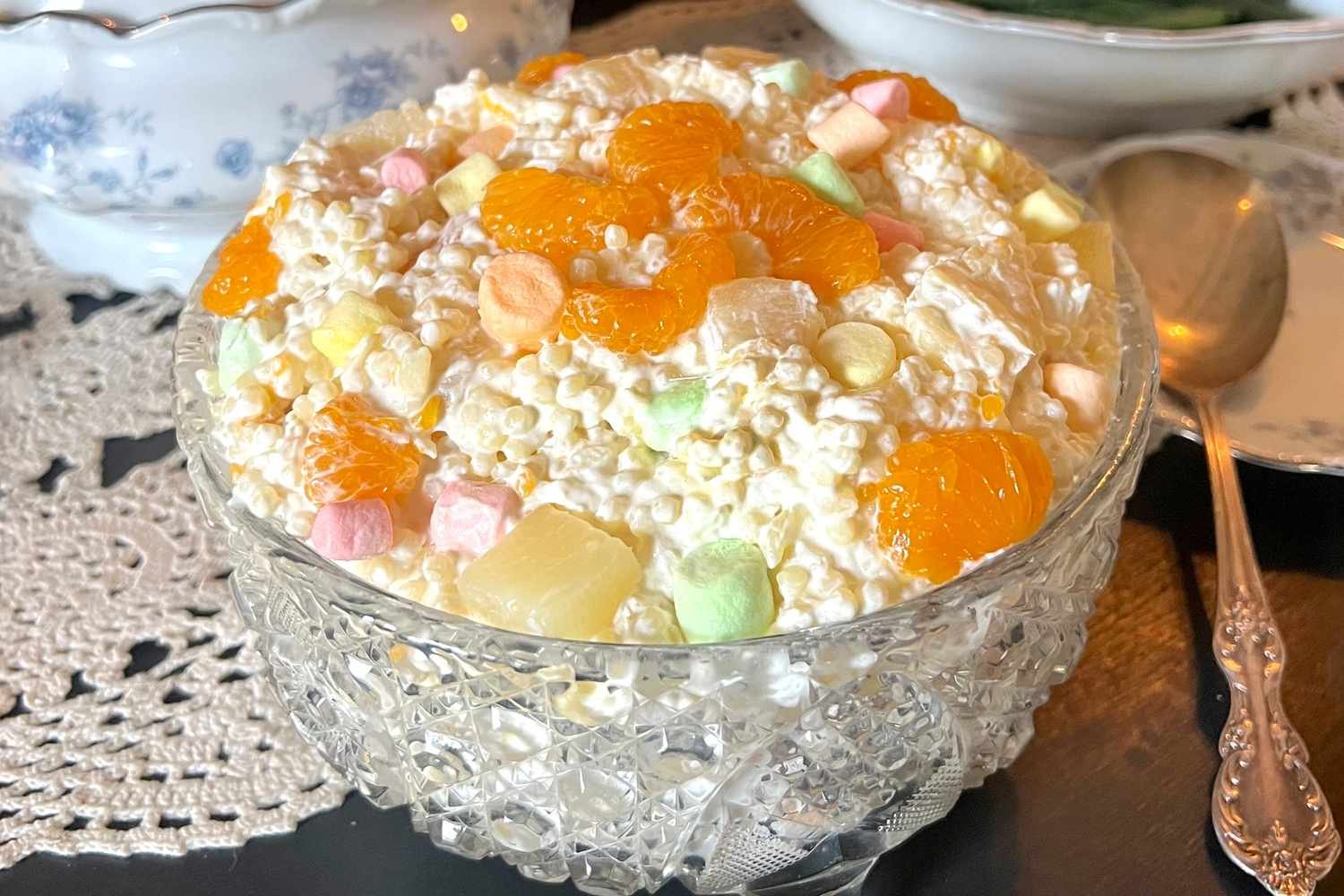
On Thanksgiving tables across the country, you’ll find cranberry sauce, stuffing, mashed potatoes, and — if you happen to be in Utah or the Rocky Mountain West — a bowl of frog eye salad. Don’t worry: No amphibians were harmed in the making of this dish. Instead, it’s a sweet concoction of pasta, fruit, marshmallows, and whipped topping that might bring to mind other midcentury dessert salads like Watergate or ambrosia. Equal parts side dish and dessert, this American Western classic is one of those foods that, once you’ve encountered it, you never quite forget.
What’s in a name?
The “frog eye” part of the moniker comes from acini di pepe (Italian for “grains of pepper”) pasta — tiny round noodles that, when cooked, resemble frog eyes. They’re typically folded into a custard base with canned pineapple, Cool Whip, coconut, and marshmallows.
Courtesy of Sarah Peterson / Vintage Dish & Tell
Pinning down frog eye salad’s exact origins isn’t easy, but the breadcrumbs (or pasta pearls) tell a familiar story. In a 2020 blog post, Sarah Peterson of Vintage Dish & Tell shared a recipe from St. Philip’s Favorites, a 1992 church cookbook from St. Philip the Deacon Lutheran Church in Minnesota.
Sarah Peterson, creator of Vintage Dish & Tell
“[Frog eye salad is] a perfect snapshot of mid-20th-century American food culture, when home cooks began to use more packaged foods like canned fruit or Cool Whip in imaginative ways for entertaining.”
— Sarah Peterson, creator of Vintage Dish & Tell
Peterson interviewed the recipe developer, Marlene Roberts, who said she remembered first spotting the recipe on a box of Creamette acini de pepe — a very late-1960s or ’70s kind of origin story, born in the heyday of brand-sponsored convenience cooking. (Creamette still offers a recipe today, which includes instant vanilla pudding mix instead of custard.)
“I love that connection, as many of the most cherished and enduring ‘American classics’ came from food manufacturer recipe promotions or packaging,” says Peterson. “Green bean casserole is another famous example.”
Peterson adds that frog eye salad offers “a perfect snapshot of mid-20th-century American food culture, when home cooks began to use more packaged foods like canned fruit or Cool Whip in imaginative ways for entertaining.”
A Mormon staple
Courtesy of Ned Adams / DutchOvenDaddy.com
By the early 1990s, recipes for frog eye salad were appearing in community cookbooks across the country, but the dish found its most devoted following in the Mormon and Western potluck and holiday canon.
“I remember frog eye salad at almost every family reunion and church potluck,” says Utah-based food blogger Ned Adams of Dutch Oven Daddy. “It was a dish that served a lot of people, so if you had leftovers, you could enjoy the rest of the week and it just got better every day.”
His family’s version always featured pineapple tidbits, fine coconut instead of coarse, and a flourish of maraschino cherries on top. “No competition,” Adams says. “Ours was always the best and no one shared the recipes because everyone had been making them for years. It is one that my mom and grandma would make without having to look at a printed recipe.”
Christine Clark, writer and Utah native
“Mormons love to eat together. They know the power of feeding their community. While I don’t hugely love the stuff, I associate it with kindness and community, so I think of it fondly.”
— Christine Clark, writer and Utah native
If you’ve never eaten frog eye salad, the texture might be your biggest surprise. “Smooshy food is comforting,” says writer and cheese educator Christine Clark, who grew up Mormon. “From risotto to pudding, smooshy food feels homey and filling. Most people don’t want smoosh food all the time, but, as the kids say, when it hits, it hits. That’s how I feel about frog eye salad. The pasta was always overcooked, the pineapple was always soggy, and there were probably more marshmallows than were technically called for. I never put a lot of it on my plate, but I did enjoy the helpings I took.”
Beyond its quirky name and unusual texture, frog eye salad carries layers of nostalgia and belonging. “Mormons love to eat together. They know the power of feeding their community,” says Clark. She remembers the dish appearing at ward gatherings, especially funerals. “While I don’t hugely love the stuff, I associate it with kindness and community, so I think of it fondly.”
Frog eye salad today
Beyond Utah, Colorado chef and restaurateur Frank Bonanno has observed frog eye salad’s enduring role at gatherings. “I’ve been cooking in Colorado for more than 20 years, and frog eye salad is one of the recipes that seems to embody Rocky Mountain comfort food,” he says. “It’s not even a salad: It is more like a sweet pasta casserole that someone passed off as salad.”
“What I think is so interesting about it is how it very much epitomizes this American way of cooking — taking something like pasta and making it totally our own,” Bonanno reflects. “It tastes sweet enough that kids adore it, hearty enough that you feel like you are eating something and, if you want to, you can whip up a giant vat to feed 50 people. Honestly, there is something beautiful about a dish like this. They are not trying to be trendy or Instagrammable — they are just simple American comfort food that gets people together.”
Adds Peterson, “It’s one of those signature potluck salads people bring when they want to share the very ‘best of the best’ from their home kitchens. I think that’s part of why it’s endured — it’s sweet, colorful, and just a little bit silly, but it means something to the people who make it.”
Frog eye salad may not appear on as many Thanksgiving tables today as it once did, but for those who grew up with it, it remains a sweet relic of community and comfort — proof that the strangest food traditions often tell the sweetest stories.