:max_bytes(150000):strip_icc():format(jpeg)/ginger-sesame-chicken-with-bok-choy-and-mushrooms-FT-RECIPE0825-05-998ff18a4056417d8cdc9b07fb5a174b.jpg)
- Each component is cooked separately over high heat for maximum flavor and texture.
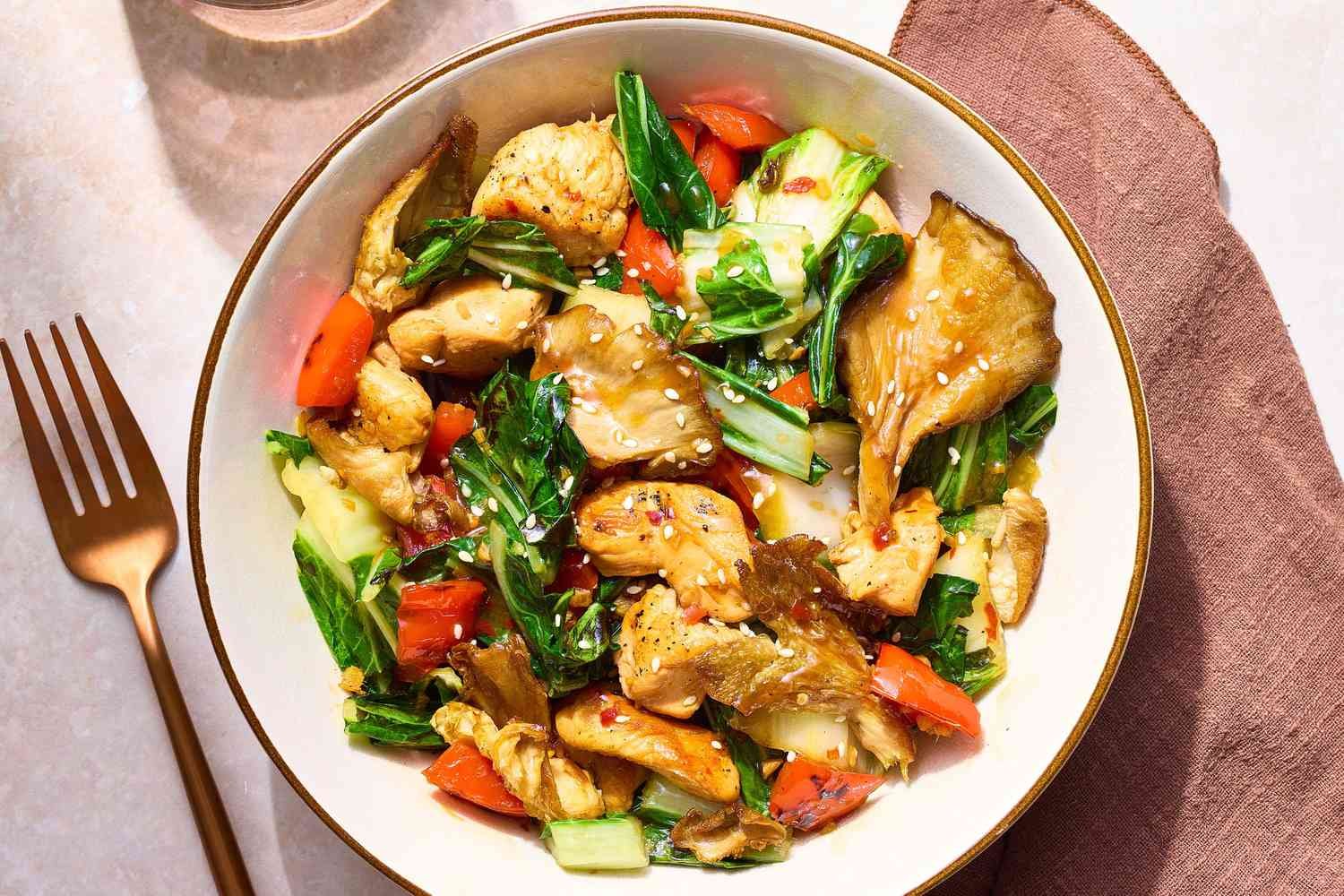
- Oyster mushrooms, bite-sized chicken pieces, crisp‑tender bok choy, and red bell pepper are united in a fragrant ginger‑garlic base before being coated in a glossy sauce that’s perfectly balanced with sweet, savory, tangy, and toasty notes.
- This one‑pan meal comes together in about half an hour.
Though bok choy is available year-round, it’s at its sweetest and most tender in the fall through early spring. With such a long season, it’s easy to keep this quick, wholesome, and flavorful recipe in rotation for most of the year. It comes together in only 30 minutes, just enough time to simultaneously steam some rice to round out the dish.
What is a slurry?
In cooking, a slurry is a mixture of starch and liquid, typically water, used for thickening sauces and soups. This step ensures the starch is evenly moistened and clump-free before it’s added to another liquid, yielding a smooth result. Here, only a small amount is needed — 1 teaspoon of cornstarch dissolved in 1 tablespoon of water; be sure to use cold water so that the starch does not begin to swell before the mixture is fully combined.
The key to a great stir-fry
The best stir-fries are a delicious, well-seasoned mix of perfectly cooked protein and crisp-tender veggies. For this recipe, that means cooking the components individually over high heat to their particular specifications — first the mushrooms, then the chicken, and finally the bell pepper and bok choy — before briefly adding everything back to the pan to coat with the sauce. Cooking the items in batches also means the pan is not overcrowded, safeguarding against the ingredients steaming and becoming soggy.
Note from the Food & Wine Test Kitchen
Be sure to give the jar of sauce ingredients a good shake before adding it to the skillet. Cornstarch tends to settle quickly, so it’s essential to redistribute it throughout the liquid before it comes into contact with heat, thereby allowing the sauce to thicken properly.