:max_bytes(150000):strip_icc():format(jpeg)/baby-peas-with-bacon-and-crispy-leeks-FT-RECIPE0525-72d7901d491b4051be70132c11c9e236.jpg)
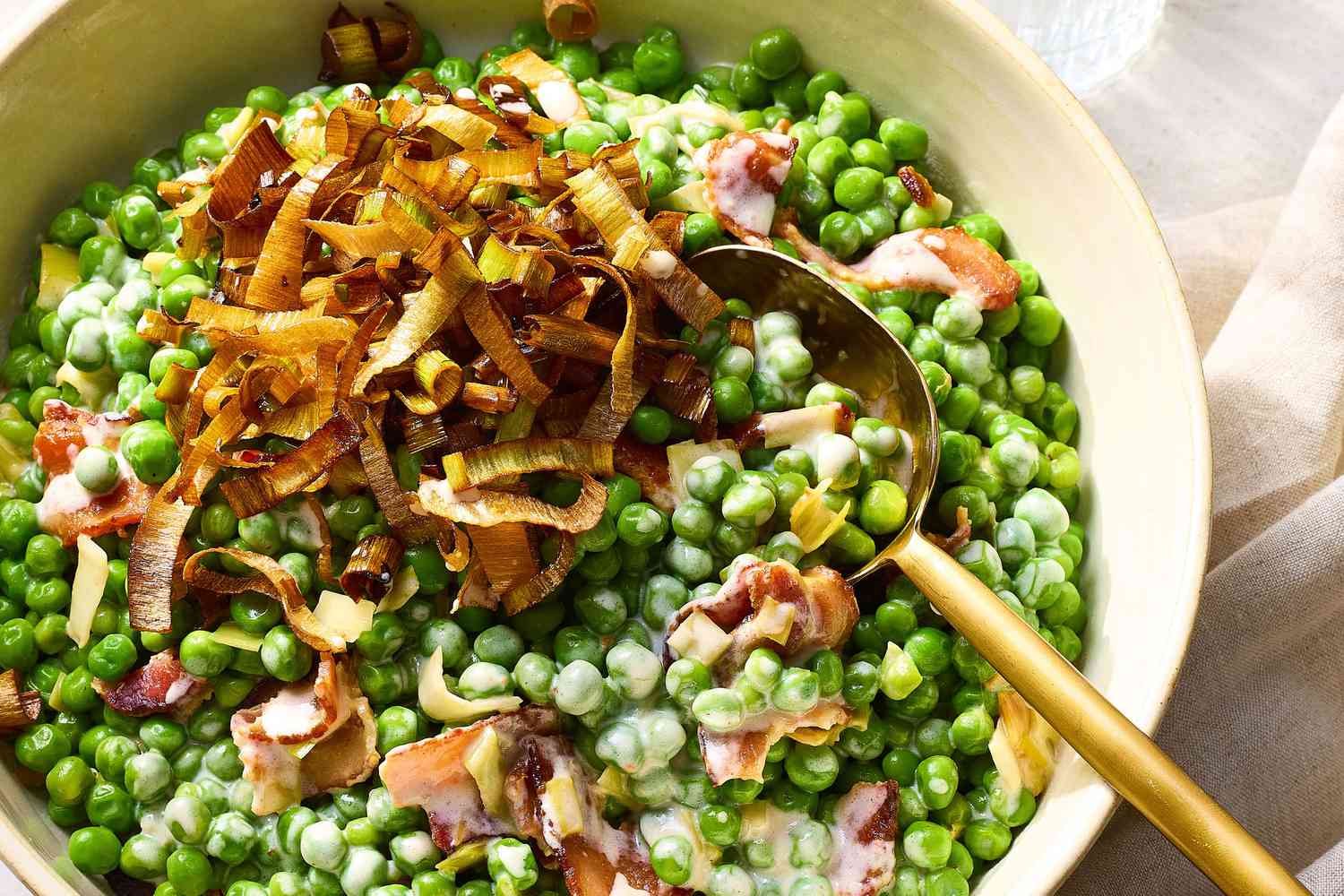
- Sweet baby peas pair perfectly with smoky bacon and buttery leeks for a comforting, flavor-packed side that feels indulgent yet balanced.
- A touch of cornstarch thickens the cream sauce, giving the peas a luscious, glossy texture without becoming heavy.
- Quick and versatile, this 30-minute dish uses frozen peas for peak freshness year-round and crispy fried leeks for irresistible crunch.
This dish of bacon-flecked creamy peas, which highlights tender baby peas and leeks both sautéed and fried until crunchy, is great for spring, when both vegetables are in season. But thanks to the magic of modern food processing, baby peas can be found frozen at peak ripeness any time of year — and with fall also a prime time for leeks, the satisfying side is just as well-suited to cozy fall meals or a Thanksgiving feast.
What is the difference between baby peas and regular peas?
The answer is kind of what it sounds like: Baby peas, sometimes labeled as “petite” peas, are simply peas that are harvested when they’re still young. They’re smaller and sweeter than mature peas, with tender skins, and are actually best when frozen (unless you have your own backyard pea patch) since they’re processed super quickly after harvesting, which preserves their unique flavor.
Can you eat the dark green part of the leeks?
Technically, yes. Dark-green leek tops are pretty and fragrant, but they’re tough and fibrous to eat raw or even cooked (without spending a lot of time breaking them down). They’re typically trimmed off before using only the white and light-green part of the leek and the tender inner leaves. That doesn’t mean there’s no use at all for leek tops, though — when you break down a leek, save the tops in the freezer for flavoring future stocks and broths. Just make sure to wash them thoroughly, since this is part of the vegetable where dirt loves to hide.
Notes from the Food & Wine Test Kitchen
The secret to these lusciously creamy peas isn’t just the heavy cream, but also a cornstarch slurry that’s cleverly added in the last few minutes of cooking. The cornstarch helps thicken up any remaining liquid so the dish comes out rich and glossy rather than thin and saucy.