:max_bytes(150000):strip_icc():format(jpeg)/Cod-with-Clams-and-White-Wine-FT-MAG-RECIPE-1225-29bc670b34be468a874ce6d21866a8d0.jpg)
- This recipe leans on simplicity and quality ingredients, resulting in a meal perfect for a weeknight, or a special event.
- Purging the clams yields a clean, briny broth.
- Finishing the sauce with cold butter gives the perfect body for spooning over the fish.
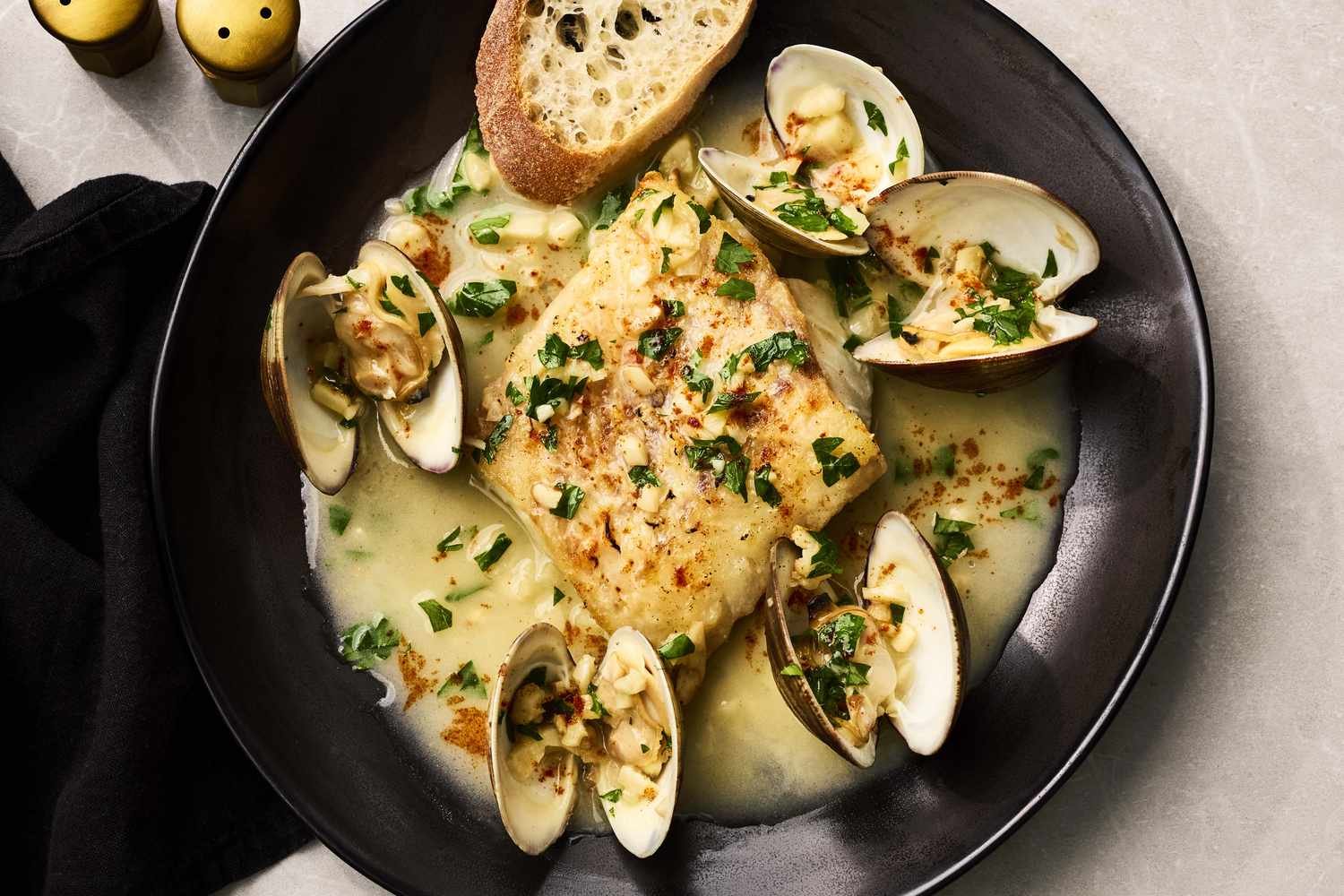
Cod with clams is a classic combination. They are often featured in seafood stews, but this dish combines the firm white fish and clams with a fragrant white wine–infused pan sauce for a light, satisfying dish. Cod fillets get a quick seasoning and a light dusting of flour, which promotes even browning and helps the eventual sauce cling. A hard sear builds flavor in the skillet, then the fillets finish in the oven so the flesh stays moist and flakes cleanly.
While the fish bakes, the pan does double duty for the sauce. Garlic softens just until fragrant, then dry white wine and bottled clam juice reduce to a concentrated base. Littleneck clams steam directly in that liquid, releasing their own juices to amplify the briny character. Swirling in cold butter at the end gives the sauce a gentle sheen and just enough richness to feel special without weighing the dish down. Fresh parsley brightens each bowl, and a whisper of smoked paprika is optional for warmth.
The keys to a balanced flavor are proper clam prep and restraint with added salt. A simple salted-water purge pulls out grit and excess salinity so the finished sauce tastes clean and layered. Because clams and clam juice will both contribute salt, taste and adjust at the very end. With crusty bread on the table and a mineral white in the glass, this is the kind of 30-minute dinner that feels dinner-party ready on any Tuesday.
How to purge and cook clams for the cleanest, briniest sauce
Start by soaking scrubbed littlenecks in well-salted, cold water until the bottom of the bowl shows no signs of sand. Repeat this process as needed. This initial purge doesn’t season the clams so much as it allows them to let go of trapped grit and excess seawater, which can otherwise concentrate into a harshly salty sauce. It’s important to always use salted water — fresh water alone can kill clams. Discard any with cracked shells. When cooking, add clams to vigorously simmering liquid and cover; the hot steam opens them quickly to minimize toughness. Shake the pan occasionally so the clams cook evenly. As soon as they open, remove the lid to avoid overcooking, and discard any that remain closed after a minute more.
The best way to flip a fish fillet
Because fish fillets are delicate, use a wide, flexible fish spatula to gently lift the fillet. If you aren’t using a nonstick skillet, make sure the skillet is lightly oiled so the fish doesn’t stick when you lift it. Let the fillet cook undisturbed until the edges turn opaque and the fish releases easily. Tilt the skillet, spooning hot oil over the top to help it set. Slide the spatula beneath the fillet, supporting it with your fingers or a second spatula. Lift and roll it over gently, away from you. In this recipe, the fillet is transferred to a rimmed baking sheet to finish cooking in the oven, but if you are finishing the fish in the skillet, cook it just until their translucent centers turn opaque.
Notes from the Food & Wine Test Kitchen
- If any clams remain closed during cooking, tap them to encourage them to open. If they still remain closed, discard them.
- To keep them alive and fresh, we do not recommend purging the clams more than two hours in advance.
- You can substitute Manila clams for littleneck clams.
Suggested pairing
Pair this endlessly elegant seafood dish with an unoaked Oregon Chardonnay, like Chehalem Winery Inox.
This recipe was developed by Jose Garces; the text was written by Andee Gosnell.