:max_bytes(150000):strip_icc():format(jpeg)/200510-r-xl-toulouse-style-cassoulet-2ce19601a3b1469090ba210356283dcc.jpg)
- This classic French cassoulet layers tender beans, savory meats, and duck confit in one hearty pot.
- Slow cooking melds flavors into a rich, comforting stew with a beautifully crisped crust.
- It’s an impressive, make-ahead dish that captures the essence of rustic French cooking.
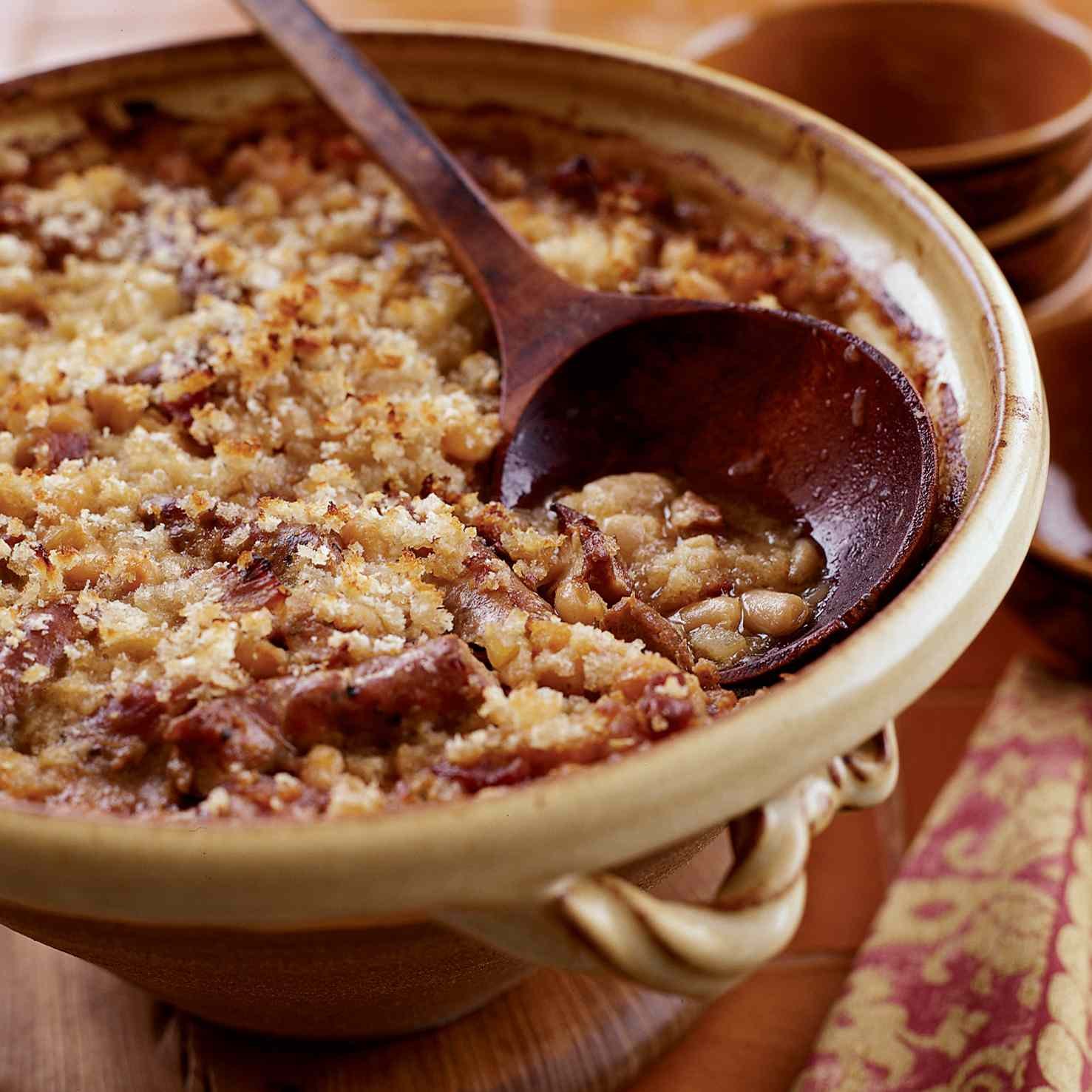
Cassoulet gets its name from the pot it’s traditionally baked in, the cassole, which is often shaped like a wide inverted cone to increase surface area, ensuring the greatest amount of luscious crust. This cassoulet recipe by acclaimed cookbook author Paula Wolfert includes duck confit and the French garlic sausages that are a specialty of Toulouse, a city in southern France.
The best beans for cassoulet
The best beans for cassoulet are those that hold their shape while becoming creamy and tender inside. Here, Wolfert gives the option of using Tarbais beans — the classic choice for cassoulet — or cannellini beans. Flageolets are also popular for this dish; Great Northern and navy beans work beautifully as well. Whichever you choose, it’s important to remember that dried beans cook at different rates depending on their size, age, and how long they’ve been soaked, if at all, so use the cook time given in Step 4 as a loose estimate and test the beans for doneness as they simmer.
The cassoulet crust
A defining feature of traditional French cassoulet is the crust that forms on top, achieved in one of two ways. In the more classic method, the skin that naturally develops as the dish bakes low and slow is repeatedly broken — fats and gelatin from the meats rise to the surface and mingle with bean starches to form a thin skin, each layer concentrating the liquid and creating a thicker crust over time.
The other method, common in Toulousian cassoulets and used here, relies on sprinkling breadcrumbs over the dish during the final stage of baking. With an hour left in the oven, Wolfert breaks the skin and nestles in the sausages, then drizzles the reserved fat on top before adding an even layer of breadcrumbs. The fat melds with the crumbs, producing a crust that’s golden, toasty, and deeply flavorful.
Note from the Food & Wine Test Kitchen
The cassole can be ordered from Clay Coyote; duck fat and confit legs, Tarbais beans, and Toulouse-style sausages from D’Artagnan.
Suggested pairing
In Toulouse, the locals pour hearty, tannic reds to accompany cassoulet, like the wines of the Collioure region, which lies to the southeast.