:max_bytes(150000):strip_icc():format(jpeg)/Bobby-Flays-Fettuccine-with-Anchovy-Butter-FT-MAG-RECIPE-1225-4aa77e5991b24ccda08e6433f79c4a9c.jpg)
Why it passed the test
- Anchovies melt seamlessly into the butter, creating a rich, silky sauce that’s deeply savory.
- Starchy reserved pasta cooking water emulsifies with the butter to make a simple pasta sauce.
- Crunchy panko (Japanese breadcrumbs) adds textural contrast to the tender pasta.
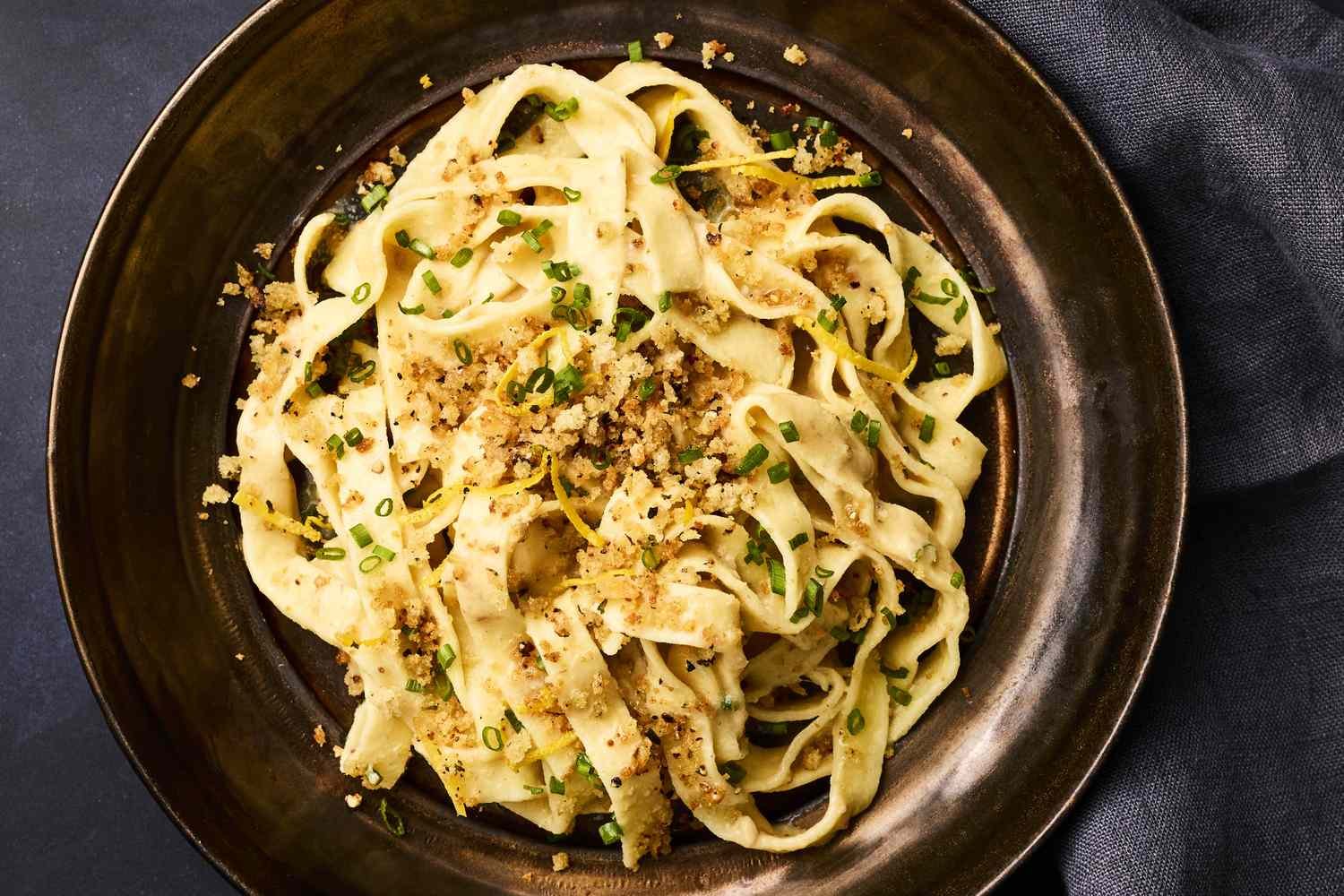
Inspired by a dish he had at Rome’s Roscioli, chef Bobby Flay was struck by how a few ingredients and a simple method could produce a deeply flavorful pasta. At home, he rolls pasta by hand, but store-bought fresh fettuccine saves time and cooks to a tender bite. The sauce’s umami comes from anchovy butter. Chop the fillets, mash them to a paste with a knife, and stir into softened butter. It melts into a glossy sauce that coats the noodles in minutes. While the pasta boils, toasting panko in olive oil with garlic and lemon zest until golden creates a crunchy topping for the pasta. When scattered just before serving, the brightness from the lemon and the crunch from the panko add more bite, while the chives keep things green and lively.
For this recipe, it’s not about overly complicated techniques — it’s about the fundamentals of cooking. Whisking the anchovy butter into starchy cooking water reserved from cooking the pasta to form an emulsion helps the sauce stay silky and not greasy. It’s important to cook the pasta just until al dente — about three minutes — to provide ample surface for the sauce to cling.
Think of this dish as a blank canvas: It’s highly adaptable. In spring, fold in blanched asparagus tips; in late summer, try halved cherry tomatoes, or stir in baby arugula at the end to wilt. Heat seekers can add a pinch of red pepper flakes to the panko. From pantry to plate in 20 minutes, it’s an easy dinner that can be made any day of the week.
Can you substitute fresh fettuccine for dried fettuccine?
You can swap in dried fettuccine for fresh, but expect a few subtle differences. Dried pasta needs 8 to 10 minutes for al dente and delivers a chewy, sturdier bite. Fresh pasta cooks in 2 to 3 minutes and has a tender, silky texture that soaks up the anchovy butter beautifully. The big advantages of store-bought fresh are speed and a better final texture for the pasta. The fresh fettuccine cooks quicker and helps the sauce cling to the noodles.
What to do with anchovy butter
Anchovy butter is a versatile compound, and it’s worth making extra because it works in countless dishes beyond this pasta. Melt it over grilled steak or seared scallops. Spread it onto warm toast, or swirl into mashed potatoes for extra umami. Use it to fortify a quick pan sauce. Whisk with lemon juice for a punchy vinaigrette at home. Toss with roasted mushrooms or potatoes. Dollop on steamed green beans, corn, or asparagus, then finish with lemon zest and chives. It brings depth, balanced saltiness, and glossy richness.
Notes from the Food & Wine Test Kitchen
- Instead of fettuccine, you can use any long pasta shape you prefer, such as tagliatelle or linguine.
- Substitute the anchovy fillets with 1/2 teaspoon store-bought anchovy paste for each fresh anchovy fillet.
- Add the butter a little at a time, whisking constantly, to keep the sauce from splitting.
Suggested pairing
Minerally and brisk, the Sella & Mosca La Cala Vermentino is a natural match for fettuccine with anchovy butter. Its bright acidity slices through the sauce’s richness, while citrus and green apple notes echo the lemon zest. Subtle saline and herbal tones mirror the anchovies’ savory depth and the fresh chives, lifting each bite. A medium body refreshes the palate, and the wine’s crisp finish keeps the toasted panko’s nutty crunch feeling light and airy.
This recipe was developed by Bobby Flay; the text was written by Andee Gosnell.