:max_bytes(150000):strip_icc():format(jpeg)/Best-Way-to-Caramelize-Onions-FT-RECIPE01125-group-09f1d875ead74d5e89e95991423ee42b.jpg)
- Covering the skillet at the start of cooking helps trap steam, softening the onions quickly and jump-starting the caramelization process for faster, more consistent results.
- The method yields perfectly browned, silky onions with a deep, jammy sweetness — ideal for soups, dips, tarts, or topping burgers and steaks.
- With a total cook time of about an hour, this technique delivers the richest flavor and most even texture in the shortest amount of time of all the methods tested, setting a new standard for caramelized onions.
One of the best ways to elevate a dish is with caramelized onions. Of course they’re the backbone of French onion soup, but they’re equally delicious spread on a tart with goat cheese for a simple yet decadent appetizer. Stirred into sour cream and herbs, the silky-soft sweet and savory onions form a classic dip. But caramelizing pungent raw onions into a velvety tender and golden brown treat takes a fair amount of effort and time. How can you ensure the onions come out evenly cooked and pleasantly sweet rather than burned and bitter?
There are plenty of methods to caramelize onions, but all generally call for slowly cooking thinly sliced onions in a bit of fat and stirring occasionally to encourage even browning. There is no consistent way to evenly brown onions in a short amount of time, and you can expect it to take at least an hour, often much longer.
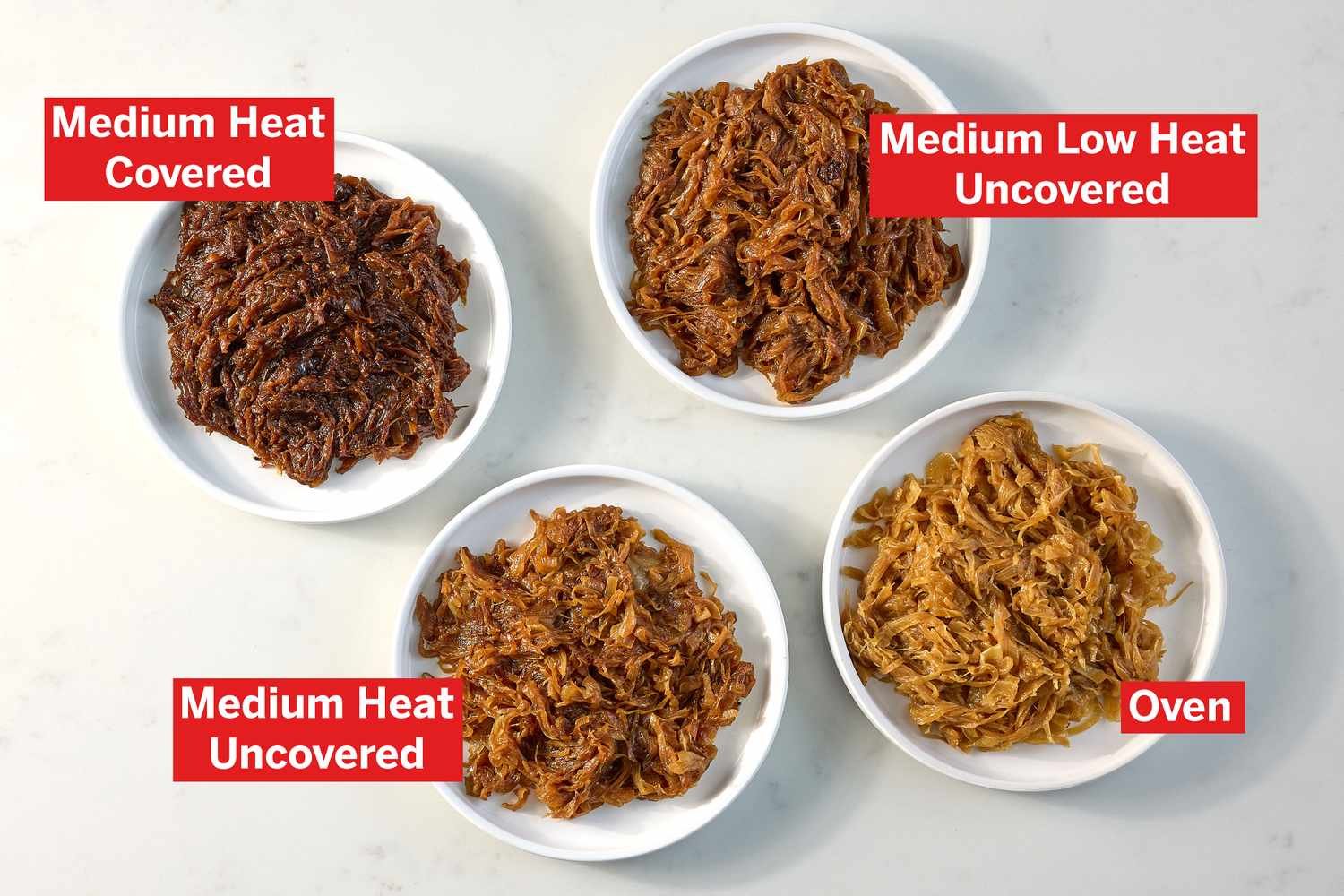
We tasked the Food & Wine test kitchen with testing a variety of methods, including cooking uncovered over medium heat, covered over medium heat, uncovered over medium-low heat, and baking in the oven. Read on to learn what testers found to be the best, most consistent, and quickest method for perfect caramelized onions.
A word about the method
They wouldn’t be caramelized onions without the onions, of course, and for all tests medium-size yellows were the choice. Each yellow onion was about 8-ounces, cut in half then sliced into 1/8-inch thick strips, yielding about 6 cups total. The fat of choice was unsalted butter (3 tablespoons per batch) and tap water was used as needed in most tests. Each batch was cooked in a 12-inch stainless steel skillet.
The goal was luxuriously soft, jammy onions with a rich, subtly sweet and savory flavor. Even caramelization was also crucial. Finally, since all methods take time, we wanted a technique that was straightforward and consistent from batch to batch.
Food & Wine / Photo by Jen Causey / Food Styling by Emily Nabors Hall / Prop Styling by Hannah Greenwood
Oven
Cook Time: 4 hours
Total Time: 4 hours, 20 minutes
Rating: 6/10
Method: For this method, we turn to the oven as the heat source. Preheat the oven to 400°F and melt the butter over medium-heat in a large ovenproof skillet. Add the onions and stir to coat them in the butter. Cover the skillet then transfer to the oven and cook until the onions are softened and most of the liquid evaporates, about 1 hour. Stir the onions then return the skillet to the oven, this time partially covered, until the onions are deeply browned and jammy, another 3 hours to 3 hours and 30 minutes. You’ll need to stir the onions every 15 minutes or so.
Results: While this method gets some serious points for being the most hands-off of the techniques, it’s certainly the most time-consuming. That long cook time would be worth it, however, if the results were better. Unfortunately, testers found this method produced inconsistent onions. The edges of the skillet got darker quicker than the center, requiring fairly consistent stirring. A splash of water helped even out the cooking process, but overall this was the least successful method of the bunch. In fact, one tester commented that it’s simply too fussy for the lackluster results.
Pros: Moderately hands-off cooking with decent results.
Cons: Very long process with inconsistent results. The onions had an uneven texture and patchy sweetness.
Food & Wine / Photo by Jen Causey / Food Styling by Emily Nabors Hall / Prop Styling by Hannah Greenwood
Uncovered, medium heat
Cook Time: 1 hour
Total Time: 1 hour, 20 minutes
Rating: 8.5/10
Method: The rest of these methods are on the stovetop. This one starts with melting the butter then adding the onions and cooking at a consistent medium heat until the onions are deeply browned and jammy, which can take 1 hour to 1 hour and 10 minutes. Stir occasionally and add a splash of water as needed.
Results: This method produced deeply rich and pleasantly sweet onions. Testers said this is a no-frills technique that works well and is nearly identical to the next result on this list. In fact, these last three methods all produced consistently delicious caramelized onions. The real difference, however, is in the time and overall consistency.
Pros: Simple method with well-caramelized sweet and savory onions. Classic flavor and texture.
Cons: Cook time may vary. Some tasters thought the onions were a bit stringy and toothy. Longer total time than winning method.
Food & Wine / Photo by Jen Causey / Food Styling by Emily Nabors Hall / Prop Styling by Hannah Greenwood
Uncovered, medium-low heat
Cook Time: 1 hour, 45 minutes
Total Time: 2 hours, 5 minutes
Rating: 9/10
Method: This is identical to the previous method except the heat source is maintained at a medium-low heat. Melt the butter first then add the onions and cook, stirring and scraping the bottom and sides of the skillet occasionally, until the onions are deeply browned, about 1 hour and 45 minutes or up to 2 hours. Add water, about 2 tablespoons at a time, as needed.
Results: These are classic caramelized onions with a deep mahogany color and rich, sweet flavor. They took a bit longer than the previous method, but the results were slightly better. Some testers found cooking at a lower temperature for longer produced more evenly browned onions with a deeper caramelization. The lower heat strikes a balance of moist and gentle, which is ideal for evenly caramelizing onions.
Pros: The onions are beautifully golden brown with a deeply developed flavor. The lower heat brought out the rich umami depth without a hint of bitterness.
Cons: Time-consuming and slower than other methods. Requires regular attention.
Food & Wine / Photo by Jen Causey / Food Styling by Emily Nabors Hall / Prop Styling by Hannah Greenwood
The best way to caramelize onions: partially covered, medium heat
Cook Time: 55 minutes
Total Time: 1 hours, 10 minutes
Rating: 10/10
Method: Our favorite method for caramelizing onions calls for covering the skillet with a lid for the first 15 minutes. Just like the other stovetop methods, start by melting the butter then adding the onions and stirring to coat. Cover the skillet and cook over medium heat, stirring occasionally, until the onions are softened, about 15 minutes. Uncover and continue cooking over medium heat until the onions are deeply browned and jammy, another 40 minutes. Stir and scrape the edges and bottom of the skillet as needed, and add a bit of water as needed.
Results: These are perfectly cooked caramelized onions with a rich amber color and silky jam-like texture. Covering the onions at the beginning creates steam, which helps them soften quickly, breaking down their cell walls. This effectively jump-starts the transformation from pungent and harsh to sweet and savory. Once the lid is removed, the steam starts to evaporate and the onions’ natural sugars concentrate and caramelize.
Pros: The quickest and most consistent method. Perfectly caramelized onions with a rich flavor and deep mahogany color. The lid traps moisture, creating an ideal cooking environment for the first part of the cooking process. When the lid is removed, the moderate heat gently evaporates the water and concentrates the natural sugars.
Cons: While fastest, this method is still time-consuming and requires fairly constant attention.
Final takeaways
Caramelized onions are a decadent addition to all sorts of dishes, from burgers and sandwiches to soups and dips. No matter the method, it takes a fair amount of time to turn the pungent, sulfur-rich onions into a sweet and savory treat. Our favorite method, however, takes about 1 hour total, slightly less than the runner-up techniques, and produces evenly browned, rich, and sweet caramelized onions. Covering the skillet first with a lid cooks the onions faster; by the time the lid is removed and the water starts to evaporate, the onions are well on their way to a tender, jammy consistency and sweet-savory flavor that blew away all of our testers.