:max_bytes(150000):strip_icc():format(jpeg)/Alaskan-Halibut-Olympia-FT-RECIPE0126-bbe875abf5f2441381eab32e611e8c95.jpg)
- The balance of sweet onions, tangy cream topping, and tender halibut delivered far more flavor complexity than expected, winning over even skeptical tasters.
- The wine marinade keeps the fish juicy and subtly aromatic, ensuring the lean halibut doesn’t dry out during baking.
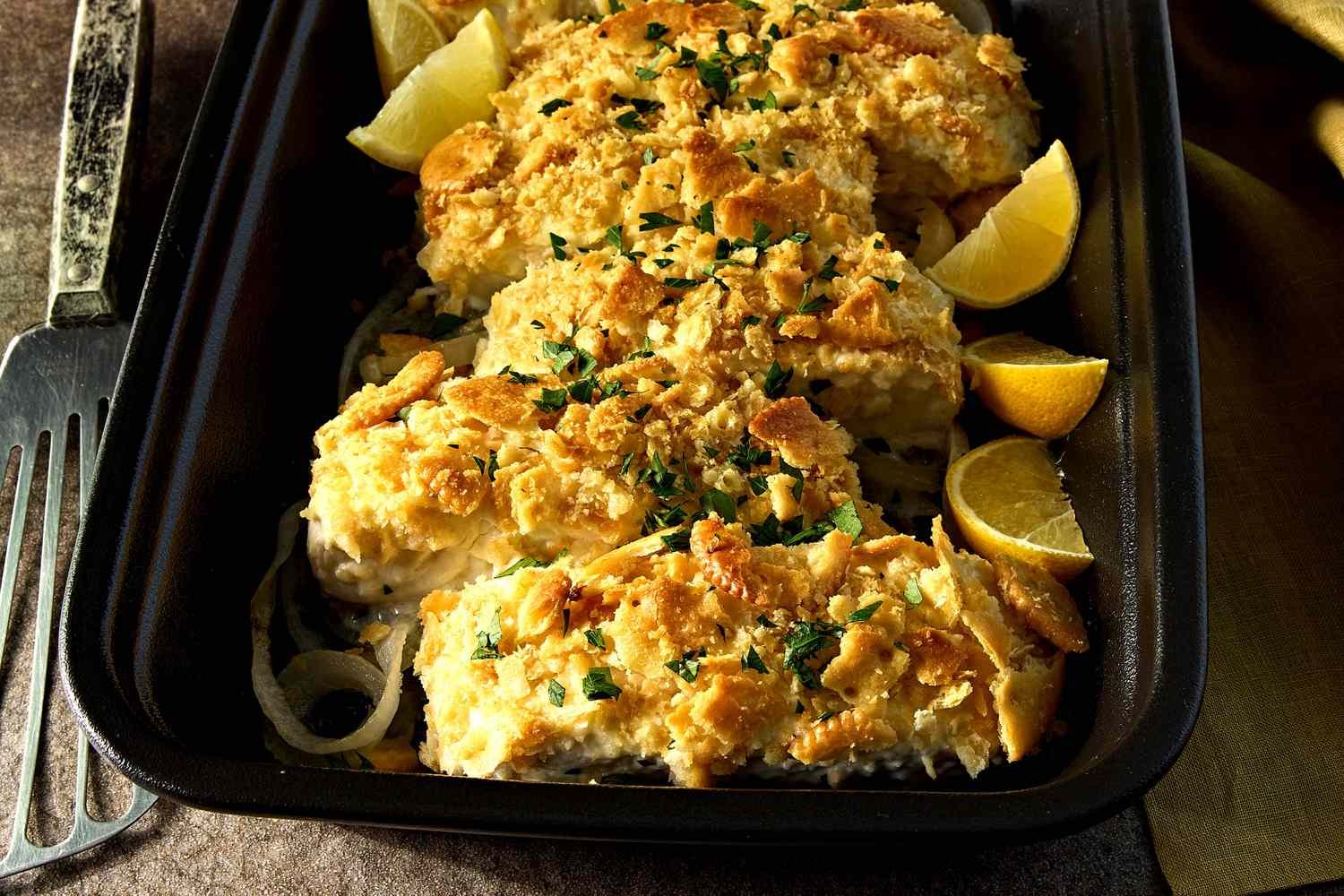
- The buttery cracker topping adds nostalgic crunch without overwhelming the delicate fish, creating a balanced, satisfying casserole-style dish.
Halibut Olympia is one of those dishes that evokes instant nostalgia for many Alaskans, even if they’ve never made it at home. In the mid-20th century, when halibut was far more abundant and affordable, this comforting casserole appeared everywhere — from community cookbooks to winter dinner tables stretching across the state. The formula was simple: frozen halibut, onions, a creamy sauce, and a coating of cracker crumbs. But the flavors — lightly sweet onions, tangy dairy, a hint of wine, and buttery crunch — made it unforgettable. Today, as halibut has become more precious due to overfishing pressures and environmental change, Olympia has transitioned from a casual weekday meal to something you’re more likely to see on high-end menus.
This recipe preserves the most traditional version of the dish while refining the method for modern cooks. The white wine marinade keeps the lean halibut supple, the sautéed onions form a savory-sweet base reminiscent of French onion soup, and the mayo–sour cream topping adds richness without heaviness. A hit of Dijon and optional hot sauce provide balance, while the crushed buttery crackers bring texture and warm, nostalgic charm. It’s a dish that’s humble in appearance, deeply satisfying in flavor, and rooted in regional history.
Whether you’re familiar with its origins or trying it for the first time, Halibut Olympia is a beautiful example of how a simple technique can preserve tradition and elevate a modest list of ingredients. Just take care not to overcook the fish — the most essential rule of all.
What does the wine do to the fish?
Marinating halibut in white wine adds gentle acidity and moisture, helping the lean fillets stay tender as they bake. The wine’s subtle fruit notes enhance the fish’s natural sweetness, and its acidity helps firm the flesh without “cooking” it like citrus does. Aromatics added to the marinade deepen flavor, resulting in a more balanced, nuanced final dish.
Halibut substitutes
Halibut’s mild flavor and firm, flaky texture make it easy to substitute. Cod, haddock, and pollock offer similar neutrality, while sablefish and Chilean sea bass provide richer, buttery profiles. Mahi-mahi and striped bass also work well in high-heat cooking. Choose sustainably sourced options to match flavor, texture, and cooking method.
Notes from the Food & Wine Test Kitchen
- Marinating the fish for two hours ensures the wine flavor remains present but balanced, while marinating longer intensifies this, so stick to the recommended time.
- Onions lining the dish help create steam during baking, which keeps the bottoms of the fillets moist and prevents sticking.
- Halibut cooks quickly; using an instant-read thermometer, aim to remove the fish from the oven as soon as it reaches 130°F in the thickest portion to avoid dryness.
Suggested pairing
Pair this dish with a crisp, mineral-driven white wine that complements both the halibut and the creamy topping. Domaine Huet Vouvray Sec is an excellent choice. Its gentle acidity, subtle orchard fruit, and elegant texture harmonize with the sweet onions and rich sauce without overwhelming the delicate fish. The wine’s minerality also mirrors the brininess of the seafood, making the pairing refined, balanced, and regionally appropriate for a classic seafood casserole.
This recipe was developed by Julia O’Malley; the text was written by Breana Killeen.