You probably use science words every day without thinking twice about them. Someone might tell you they have a theory about why traffic was terrible, or a company might brag about making a quantum leap in technology. Sounds impressive, right?
Here’s the thing. The way we casually toss around scientific terms in everyday conversation often has nothing to do with what those words actually mean in science. It’s not just a harmless mix-up either, because these misunderstandings can muddy important discussions about health, technology, and policy. Let’s dive into five science terms that get twisted so often that most people don’t even realize they’re using them wrong.
Theory vs. Just a Guess
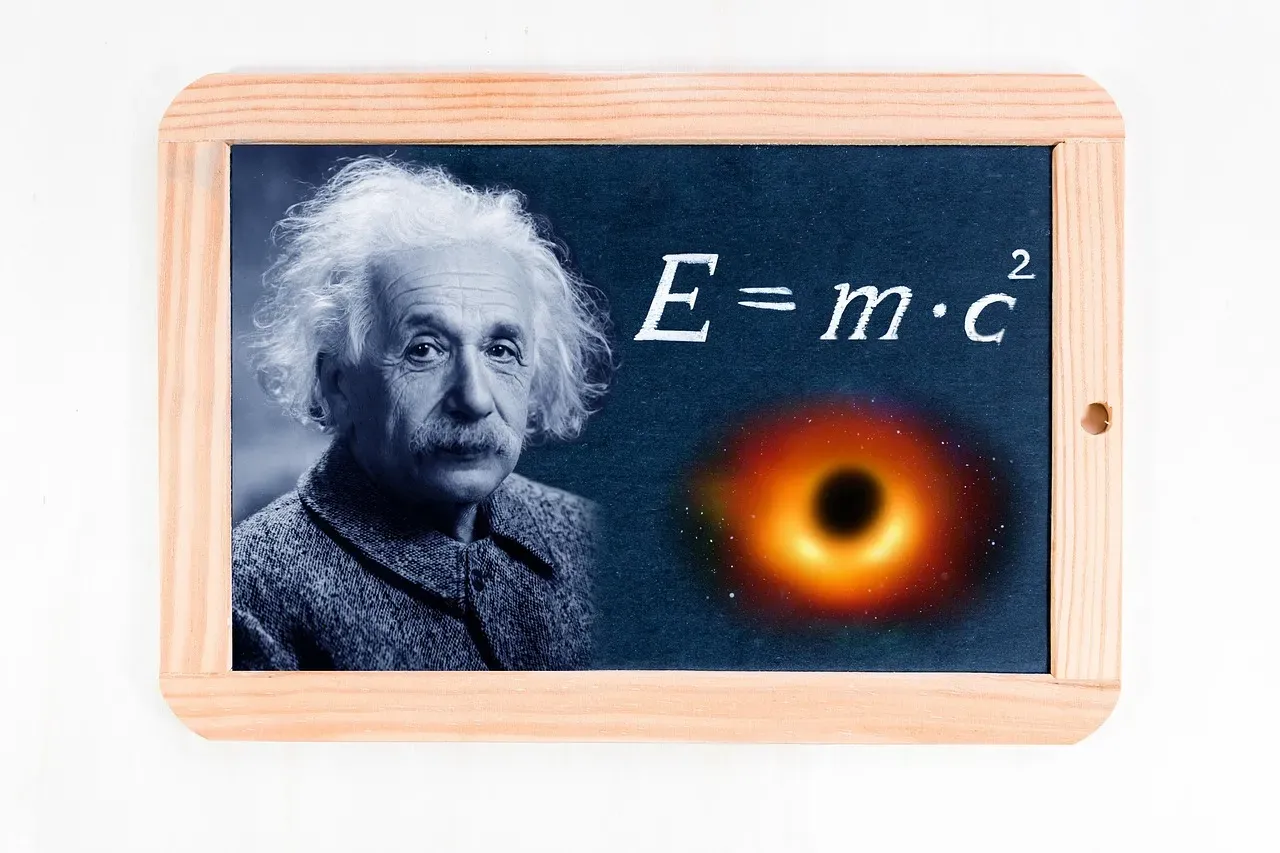
The phrase “that’s just a theory” is a common attack used against scientific theories by people who don’t understand the term. When someone says they have a theory about why their car won’t start, what they really mean is they have a hypothesis or a hunch. A scientific theory and a hypothesis differ in that a theory is a well-established framework built upon extensive evidence, whereas a hypothesis is a testable prediction or explanation that is formulated as part of research or experimentation. Think of it this way: a hypothesis is what you test before you know the answer, while a theory explains why something happens after it’s been tested over and over again.
A hypothesis has not been proven, while a theory has been proven multiple times by different groups of researchers. Evolution, gravity, and the germ theory of disease are all theories in the scientific sense because they’re backed by mountains of evidence and have stood up to rigorous testing. A scientific theory is a hypothesis that has been extensively tested, evaluated by the scientific community, and is strongly supported. Theories often describe a large set of observations, and provide a cohesive explanation for those observations. So when someone dismisses evolution as “just a theory,” they’re completely misunderstanding what that word means in science.
Exponential Growth Doesn’t Mean What You Think

Politicians, business leaders, and journalists love throwing around the term “exponential growth” to describe anything that’s increasing quickly. Here’s the problem: exponential growth has a very specific mathematical meaning that most people don’t grasp. Exponential population growth means that the change in population over a given period of time is proportional to the population size. It’s not just about something growing fast.
Exponential growth is frequently underestimated, an error that can have a heavy social cost in the context of epidemics. To clarify its origins, we measured the human capacity (N = 521) to extrapolate linear and exponential trends in scatterplots. Our brains simply aren’t wired to understand exponential patterns naturally. While linear extrapolation was precise and largely unbiased, we observed a consistent underestimation of noisy exponential growth, present for both pointing and numerical responses. A biased ideal-observer model could explain these data as an occasional misperception of noisy exponential graphs as quadratic curves. This cognitive blind spot became painfully obvious during the early stages of the COVID pandemic when people struggled to understand how case numbers could explode so quickly.
Right now that rate of growth is estimated to be around 1 percent per year, which works out to 70 million additional people. Even though the planet’s population is growing exponentially, the rate is relatively modest. That’s the tricky part about exponential growth that people miss completely.
Organic Means Carbon-Based, Not Chemical-Free
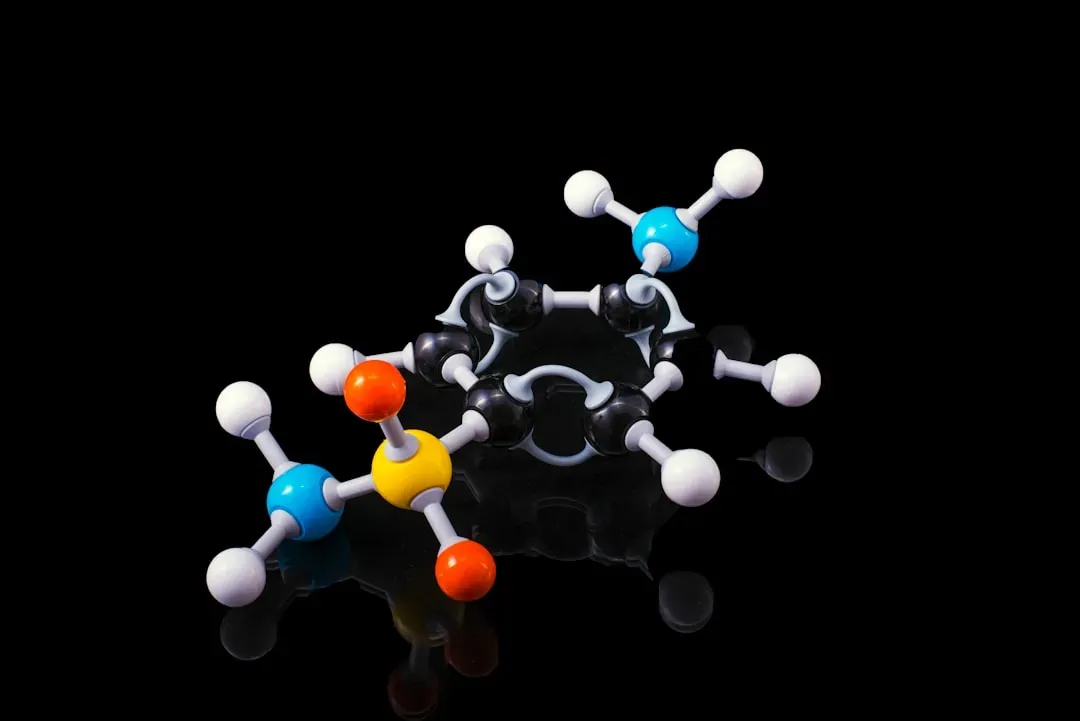
Walk into any grocery store and you’ll see organic labels plastered on everything from apples to coffee. Most shoppers assume organic means natural, pesticide-free, or healthier. In chemistry, the term “organic” means carbon-based. Thus, organic chemistry is the study of carbon-based compounds, which includes both natural and synthetic compounds. Every chemistry student learns this basic definition, which has absolutely nothing to do with farming methods.
With very few exceptions a chemical is classified as organic if it contains at least one carbon atom, regardless of its source. This is why organic chemistry is called “the chemistry of carbon.” That means gasoline, plastic, pesticides, and even synthetic drugs are all organic chemicals by the scientific definition. Properly used in this agricultural science context, “organic” refers to the methods grown and processed, not necessarily the chemical composition of the food. The confusion between these two completely different meanings of the same word leads people to believe that organic food is somehow fundamentally different at a chemical level, when really it’s about farming practices.
A Quantum Leap Is Actually Tiny
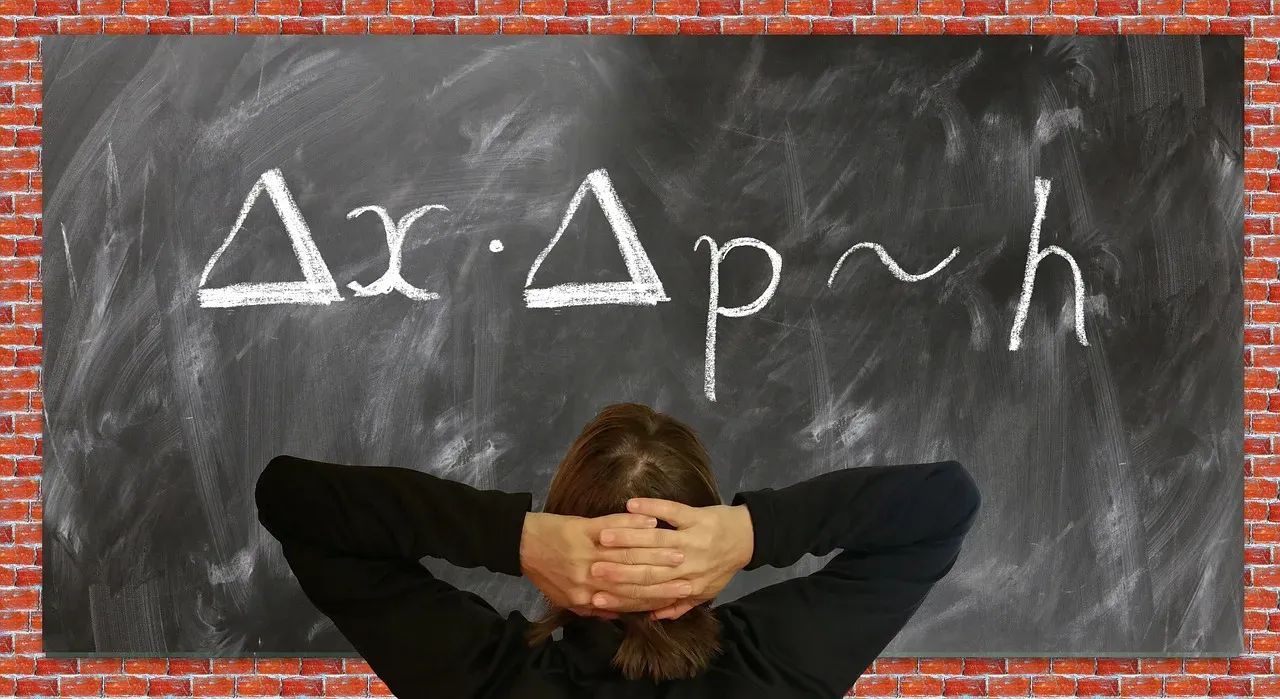
When companies boast about making a quantum leap forward or achieving quantum improvements, they’re trying to sound cutting-edge and revolutionary. The irony is delicious because in physics, a quantum leap is actually the smallest possible change that can occur. A quantum leap is the abrupt transition of a quantum system (atom, molecule, atomic nucleus) from one quantum state to another, from one energy level to another. When the system absorbs energy, there is a transition to a higher energy level (excitation); when the system loses energy, there is a transition to a lower energy level.
In real physical systems a quantum leap is not necessarily a large change, and can in fact be very insignificant. In the popular sense, the term is usually applied to mean a large or significant change, which is thus not strictly correct. The term comes from quantum mechanics where electrons jump between discrete energy levels in atoms. These jumps happen at the subatomic scale, making them incredibly small by any normal measure. By making a kind of high-speed movie of a quantum leap, the work reveals that the process is as gradual as the melting of a snowman in the sun. “If we can measure a quantum jump fast and efficiently enough,” said Michel Devoret of Yale University, “it is actually a continuous process.”
So when that car commercial promises a quantum leap in performance, what they’re actually claiming (if we take them literally) is the tiniest possible improvement imaginable. Marketing departments probably should’ve consulted a physicist first.
Statistically Significant Doesn’t Mean Important

In a scientific setting, “significant” doesn’t mean “important.” Statistically speaking, something that is “significant” is simply something that is unlikely to occur given random chance. That doesn’t necessarily mean there is actually a meaningful result. This distinction matters enormously when interpreting research studies, medical trials, or policy decisions based on data.
Imagine a study finds that people who eat a certain food have a statistically significant increase in some health marker. News headlines might scream about the finding as if it’s a major health breakthrough. If a scientific experiment is set up correctly, then a statistical significance might reveal a lot. The problem is that statistical significance only tells you whether the result is likely due to chance or not. It doesn’t tell you if the effect is large enough to matter in real life.
A medication could show a statistically significant improvement over a placebo while only helping patients by an amount so small that nobody would notice any difference in their daily lives. Researchers know this distinction well, but it gets lost when findings are translated for the public. The word “significant” in everyday English implies importance or magnitude, so people naturally assume statistically significant means the same thing.
Why These Misunderstandings Matter

These aren’t just pedantic complaints from scientists who want everyone to use technical jargon correctly. When we misunderstand basic science terminology, it creates real consequences. Climate change deniers exploit confusion about what “theory” means to cast doubt on well-established science. Companies use “organic” and “quantum” to market products with misleading implications. Public health messaging fails when people can’t grasp exponential growth patterns during a pandemic.
Language shapes how we think about the world. When scientific terms get watered down or twisted in popular usage, it becomes harder to have informed conversations about important issues. The good news is that understanding these distinctions isn’t complicated once someone points them out. You don’t need a PhD to recognize that “I have a theory” should really be “I have a hypothesis,” or that exponential growth isn’t just a fancy way of saying “really fast.”
Next time you hear someone casually drop one of these terms, you’ll know whether they’re using it correctly or falling into the same traps that catch most people. Science communication works best when we all speak the same language. What other science words do you think people misuse regularly without realizing it?