:max_bytes(150000):strip_icc():format(jpeg)/Mimosa-FT-RECIPE1225-ff203fc3136b4a25911dffd78fc8ff22.jpg)
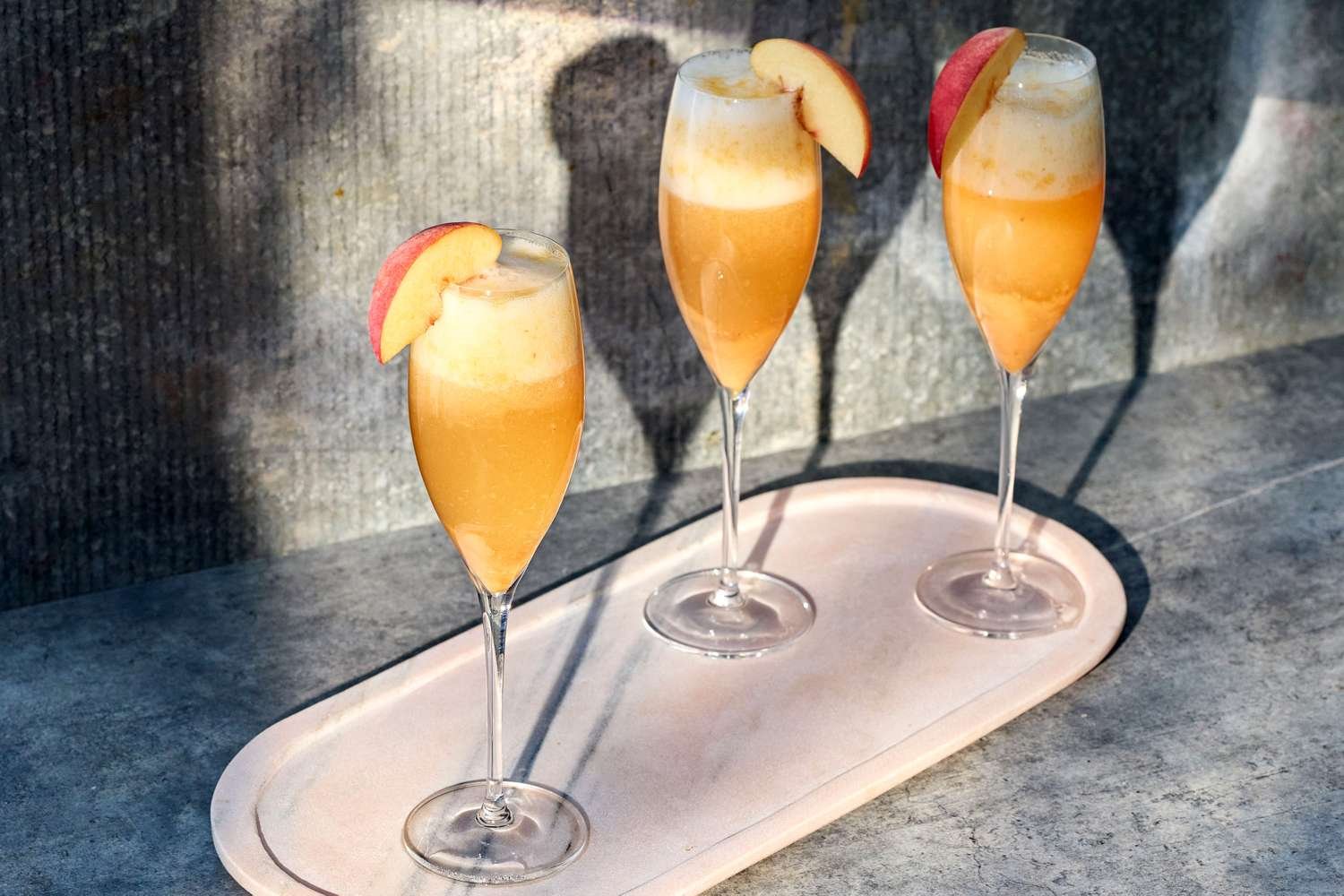
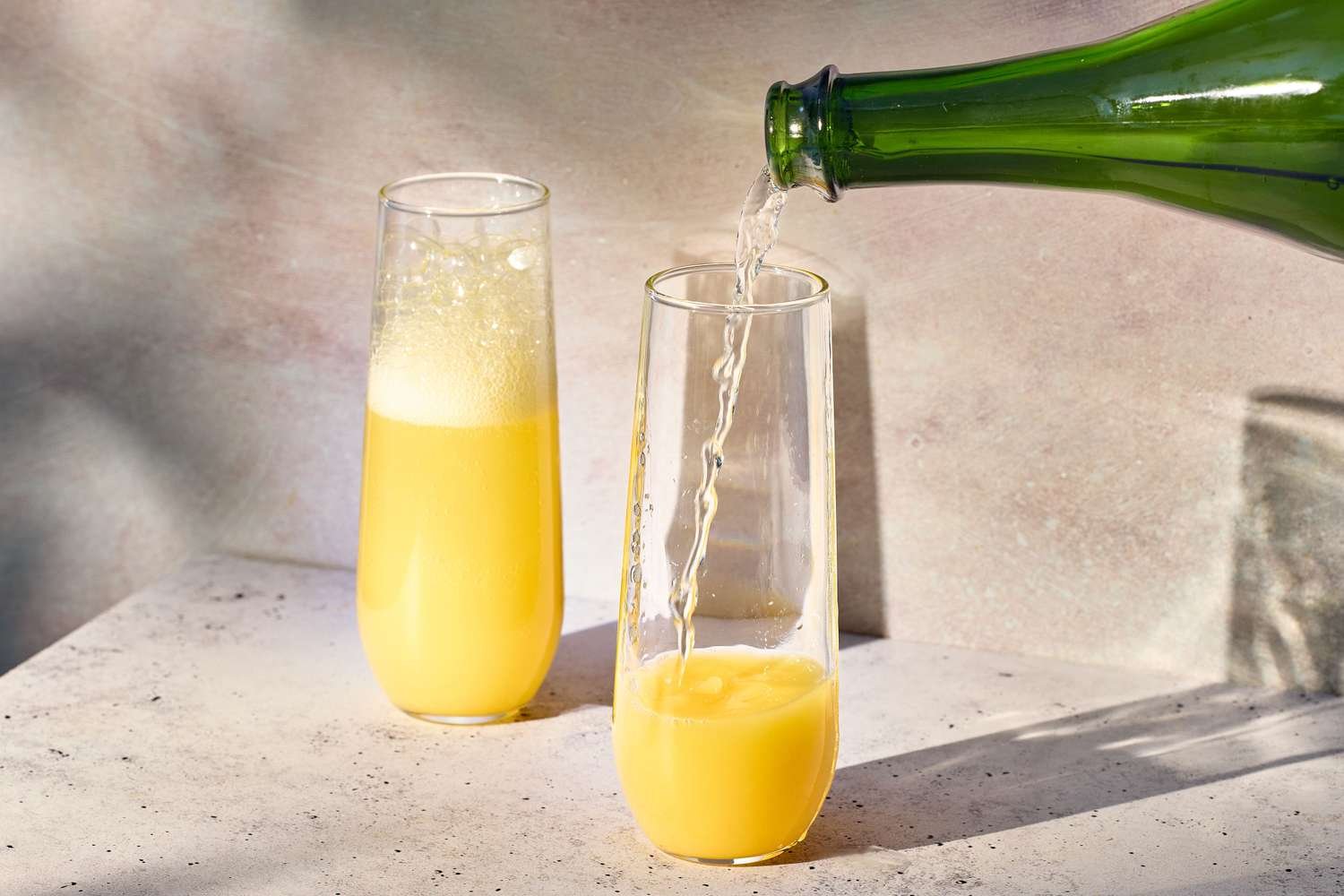
Sunny and effervescent, the classic Mimosa pairs the vivacious bubbles of chilled sparkling wine with the bright, sweet acidity of fresh orange juice. This effortless combo is arguably the most iconic brunch-time drink. But how did we get here?
Its roots trace to an earlier Champagne cocktail, the Buck’s Fizz. Created in 1921 at London’s Buck’s Club, the morning drink leaned heavily on Champagne, with just a splash of citrus and, at times, a touch of grenadine. A few years later in Paris, Ritz bartender Frank Meier refined the formula, opting for equal parts sparkling wine and orange juice and naming the drink after the vivid yellow-orange mimosa flower. The recipe was canonized in 1934 with its inclusion in Meier’s The Artistry of Mixing Drinks.
The Mimosa’s American ascent neatly coincided with the rise of brunch itself, which didn’t truly take hold in the United States until the 1930s. Still, it took a bit of star power to cement the drink’s status. Enter Alfred Hitchcock. The English-born director was famously devoted to Mimosas, and following a widely circulated 1966 interview that featured him enjoying several alongside his beloved cigars, the cocktail’s popularity surged stateside. From there, the Mimosa became less a trend than a tradition — one that continues to sparkle decades later.
Why the Mimosa works
What makes the Mimosa so universally appealing is its simplicity: just two high-quality ingredients working in harmony. The result is a light, slightly sweet, endlessly drinkable cocktail that feels like sunshine in a glass.
This recipe follows a straightforward structure — orange juice first, sparkling wine second — so the bubbles stay buoyant and the flavors stay distinct. The proportion of each ingredient is up to the home bartender, but with two parts sparkling to one part juice, the citrus shines without overwhelming the wine’s delicate characteristics.
Freshly squeezed orange juice is optimal, offering vibrant flavor and the necessary sweetness and acidity for this two-part drink. The sparkling wine contributes texture, fizz, and a dry, crisp finish.