:max_bytes(150000):strip_icc():format(jpeg)/steak-au-poivre-jacket-potatoes-FT-RECIPE1225-457401d249504f7da41e67e0451c2c92.jpg)
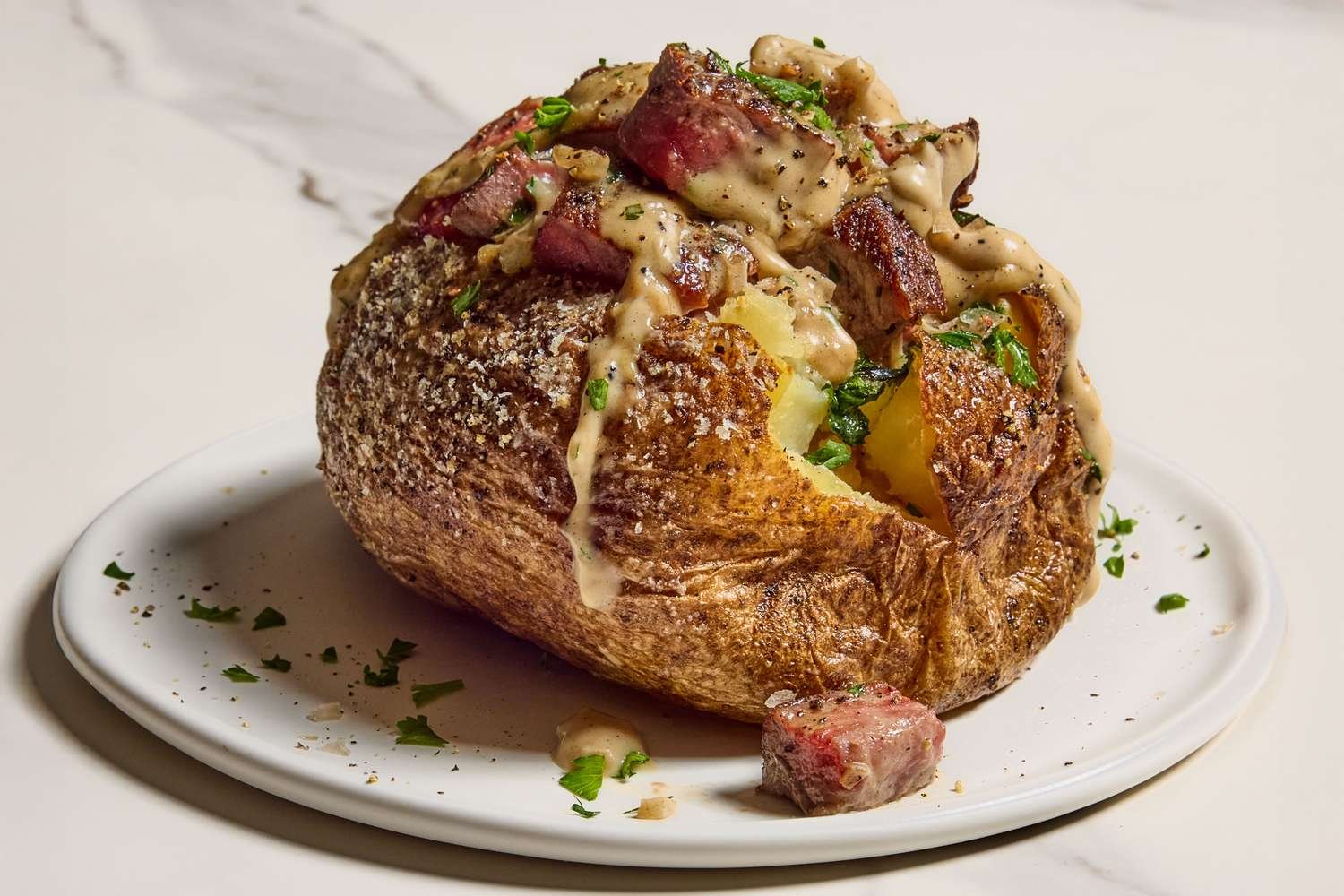
- Crisp-skinned russet potatoes become a hearty base for tender, pepper-crusted strip steak, capturing all the classic flavors of steak au poivre.
- Strip steaks stand in for traditional filet mignon, delivering the same beefy flavor at a fraction of the cost.
- Baking the potatoes twice ensures a fluffy interior and extra-crisp skins.
This fun mash-up takes its cues from traditional steak au poivre, where tender steak is cloaked in a creamy peppercorn sauce, and the British jacket potato, known for its ultra-crisp skin and buttery interior. Coarsely ground black peppercorns form a crisp crust on strip steak seared in a hot cast-iron skillet until deeply browned on the outside and juicy within. Meanwhile, russet potatoes roast directly on the oven rack until their skins are shatteringly crisp and their centers fluffy and tender. Once split open, the potatoes become vessels for the peppery steak and its rich pan juices.
A quick pan sauce built on steak drippings, finely chopped shallot, garlic, thyme, a splash of Cognac, beef broth, and cream ties everything together. Dijon mustard and a parsley-thyme butter whisked in at the end lend brightness and give the sauce its velvety body. As it soaks into the potato, the sauce enriches the filling with deep umami. A final shower of flaky sea salt, fresh parsley, and extra cracked pepper adds brightness and makes every bite pop.
While traditional steak au poivre typically uses filet mignon for its tenderness and milder flavor, this recipe leans on strip steaks for a budget-friendlier option. Because the steak is cubed and tucked into the baked potato, you want a cut that brings more beefy character. Strip steak is still tender enough to eat in bite-size pieces, but its firmer texture and fat cap give you a deeper, more pronounced steak flavor that stands up to the bold pepper crust and creamy sauce. Whether you’re a longtime jacket potato fan or trying your first, don’t be surprised if it makes your regular dinner rotation.
What’s the difference between a baked potato and a jacket potato?
Baked potatoes and jacket potatoes are essentially the same thing — potatoes baked with the skin on until the exterior is crispy and the interior is soft and fluffy. An American-style loaded baked potato is typically a large russet baked until fluffy and finished with toppings like butter, sour cream, shredded cheddar, bacon bits, and chives. A British jacket potato is baked to develop a crisper, drier skin, or “jacket,” while the inside stays soft and fluffy. It’s commonly filled with butter, cheddar, baked beans, tuna mayonnaise, or coleslaw, and is more often served as a standalone meal at lunch rather than a side.
Can you use other types of peppercorns?
Classic steak au poivre uses black peppercorns, but you can also try different peppercorn varieties. Green peppercorns give a fresher, grassier heat and feel a bit more delicate against the rich cream sauce. Pink peppercorns add floral, fruity, almost berrylike sweetness, so they’re best blended with black for balance. White pepper is earthier and funkier. For any variety, gently crushing the peppercorns with a mortar and pestle helps achieve a coarse grind that releases aroma without turning dusty.
Notes from the Food & Wine Test Kitchen
- When crushing peppercorns, use a heavy skillet or mortar and pestle rather than a grinder to maintain the coarse texture essential to classic steak au poivre.
- Rib eye and filet mignon both work beautifully in place of strip steak; adjust cooking time for thickness.
- Brandy or dry sherry can substitute for Cognac. If alcohol is not preferred, use a tablespoon of balsamic vinegar or Worcestershire.
This recipe was developed by Renu Dhar; the text was written by Andee Gosnell.