:max_bytes(150000):strip_icc():format(jpeg)/The-Best-Way-to-Make-Scrambled-Eggs-FT-DGTL1225-Hero-a7b6214431f945499d21fbf1e201fcba.jpg)
- The best method actually depends on the end texture that you prefer. Some tasters preferred creamy eggs, while others preferred fluffy, resulting in our two top picks.
- To create soft-scrambled eggs with a small, creamy curd, whisk whole milk into the egg mixture and cook it in butter. Start cooking the eggs in a cold pan or in a pan preheated over low heat.
- If you prefer less creamy, more well-cooked eggs with a larger, fluffier curd, whisk in some milk and cook them in a preheated skillet over moderate heat.
I consider cooking scrambled eggs to be an essential skill for anyone to master. They are a gateway dish — many times the first thing one learns to cook in a skillet. Straightforward enough for a kid yet fast enough for an adult to whip up after a long day. They make a quick and simple breakfast or a fulfilling, easy meal for dinner. As common in Indian cuisine (don’t sleep on this Egg Bhurji) as they are in French cooking, scrambled eggs can be prepared in so many different ways. After reviewing the numerous techniques and theories circulating online, I set out to determine what truly matters and find the best way to scramble eggs.
A word about my method
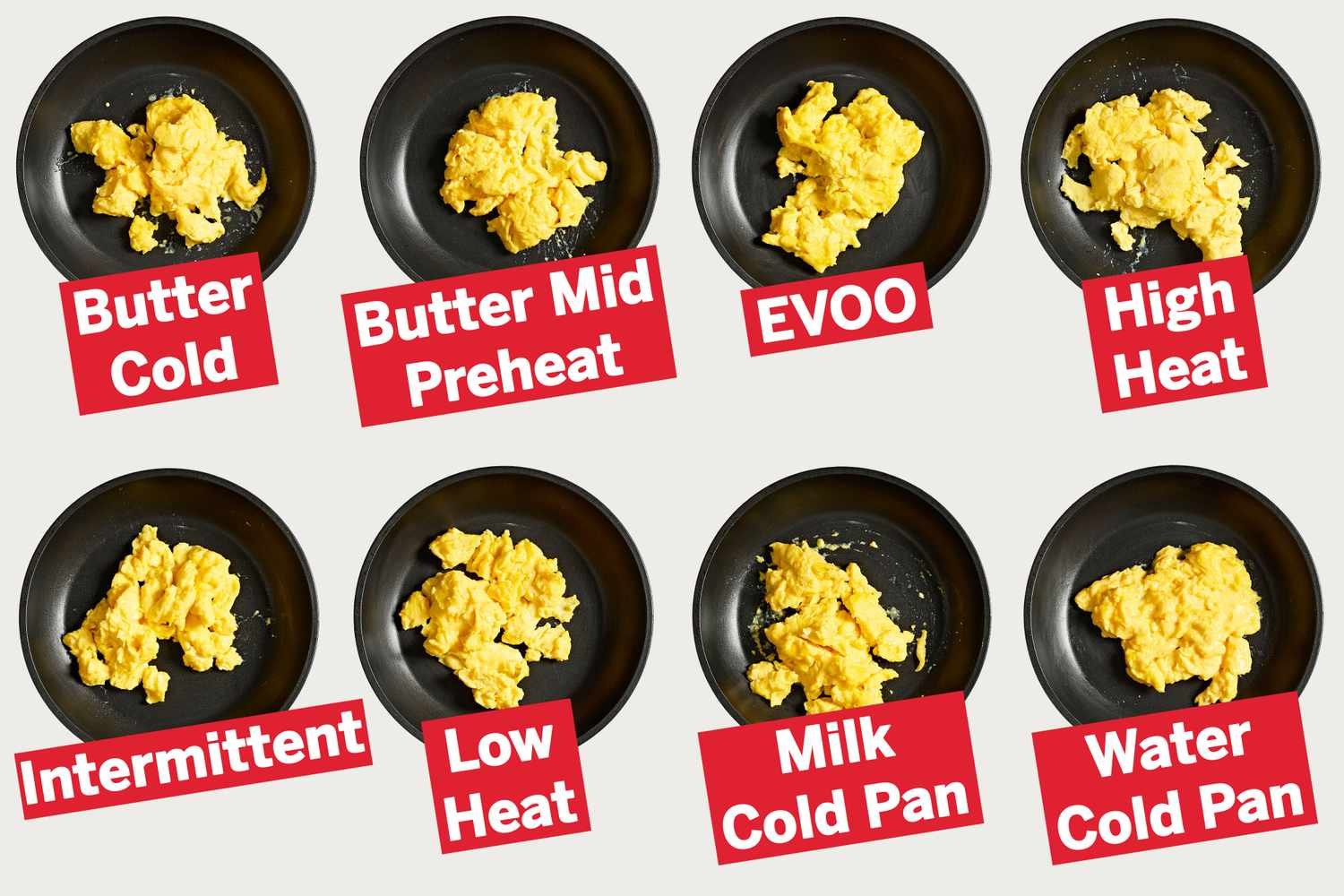
For each of these tests I kept certain factors consistent. I started by whisking two large eggs with a measured amount of liquid (the amount depended on the test — more on that later) and 1/8 teaspoon salt until no streaks of egg white remained. This helped to aerate the eggs and make sure that the yolks and whites were uniformly combined. I cooked each batch in a medium (10-inch) nonstick skillet, using a rubber spatula to stir. (You could also use silicone.)
As the eggs cooked, I scraped the bottom and sides of the skillet while stirring constantly. For each of my tests, I removed the eggs from the heat when they thickened and formed soft, set curds that still looked a bit wet. At this point I removed the pan from the heat and embraced carryover cooking by folding the eggs a few times, using the pan’s residual heat to finish. This slowed the cooking in the final seconds, helping me achieve a just-right texture — not too firm, dry, or overcooked — before plating.
There are a few things that I switched up among my tests
- For three of the trials, I started the eggs in a cold skillet then cooked them over medium heat, whereas the other five tests began with preheated pans over various temperatures. This helped me to evaluate how temperature affected the end consistency.
- I triedmixing in milk or water in varying amounts to check how different liquids contributed to the finished texture.
- I varied the cooking fats (butter or olive oil) and tried cooking with no fat at all. For those tests without fat I increased the amount of liquid to 2 tablespoons for added moisture.
All eight versions were tasted by a team of chefs from the People Inc. Test Kitchen. Read on for more details of each test and our results.
Food & Wine / Photo by Jen Causey / Food Styling by Margaret Monroe Dickey / Prop Styling by Hannah Greenwood
Top method for the fluffiest scrambled eggs: with milk and butter in a skillet preheated over medium heat
Cook time: 50 seconds
Total time: 5 minutes
Method: For this test, I cooked the egg mixture with butter in a preheated skillet over medium heat. I used 2 large eggs, 1 tablespoon of milk, and 1/8 teaspoon of salt cooked in 1/2 tablespoon of butter.
Results: The preheated skillet jump-started the cooking process, allowing the eggs to set relatively quickly. Because the eggs started to set before I began to stir, larger curds formed. Removing the eggs from the heat while still wet ensured rich, slightly creamy, fluffy eggs. If you prefer eggs that are still moist but cooked medium-soft, this is the best method to use.
Pros: The final texture exhibited many of the best qualities seen across our other tests. Mainly they were light and fluffy with a larger curd and still retained some creaminess. The eggs cooked quickly, in just 50 seconds, thanks to the preheated skillet.
Cons: Lovers of small, very creamy curds didn’t particularly enjoy this texture. Additionally, it takes a few minutes to get the pan preheated, which makes the total time about the same as other methods.
Food & Wine / Photo by Jen Causey / Food Styling by Margaret Monroe Dickey / Prop Styling by Hannah Greenwood
Top method for the creamiest scrambled eggs: with milk and butter in a skillet preheated over low heat
Cook time: 2 minutes 40 seconds
Total time: 5 minutes
Method: I cooked the egg mixture with butter in a preheated skillet over low heat. I used 2 large eggs, 1 tablespoon of milk, and 1/8 teaspoon of salt cooked in 1/2 tablespoon of butter.
Results: This method yielded the creamiest, richest eggs of the batch. The low heat and constant stirring broke the curds up more, making them smaller in size with a custard-like texture.
Pros: This was the team’s top batch for those who love soft, super-creamy scrambled eggs.
Cons: This batch had one of the longest cook times, which meant more active time stirring at the stove, though it was still quick at just over 2 1⁄2 minutes. Some tasters found the curd to be too small for their personal preference, almost the consistency of grits.
Food & Wine / Photo by Jen Causey / Food Styling by Margaret Monroe Dickey / Prop Styling by Hannah Greenwood
Top method for eggs cooked without fat: with milk and no butter, starting in a cold skillet cooked over medium heat
Cook time: 2 minutes 30 seconds
Total time: 5 minutes
Method: I started by adding my egg mixture to a cold skillet without any fat in the pan, then placed over medium heat to cook. I used whole milk in the mix and, due to the lack of butter or oil, I increased the amount of liquid for added moisture. I used 2 large eggs, 2 tablespoons of milk, and 1/8 teaspoon of salt.
Results: Using a cold skillet slowed the speed of the egg’s coagulation, yielding fluffy, creamy curds without the use of fat. They had a clean eggy flavor that was not overshadowed by butter. If you prefer a lighter soft-scramble, these eggs will hit the spot.
Pros: The eggs were creamy and egg-forward in flavor. Starting in a cold skillet yielded a smaller curd. The lack of fat allowed the flavor of the eggs to shine bright. This is a great method if you have fresh farm eggs on hand.
Cons: Starting in a cold skillet resulted in a longer cook time and more stirring at the stove than with some methods.
Food & Wine / Photo by Jen Causey / Food Styling by Margaret Monroe Dickey / Prop Styling by Hannah Greenwood
Second-favorite method for creamy eggs: with milk and cold butter, starting in a cold skillet cooked over medium heat
Cook time: 2 minutes 20 seconds
Total time: 5 minutes
Method: I started by adding my egg mixture to a cold skillet at the same time that I added cold butter, then set the pan over medium heat to cook. Because the butter and skillet were both cold, I diced the butter into 4 pieces before adding so that it could melt into the eggs as I stirred. I used 2 large eggs, 1 tablespoon of milk, 1/8 teaspoon of salt, and 1/2 tablespoon of butter.
Results: These were very similar in texture to our top pick for creamy eggs (method number 2, cooked with butter, in a preheated skillet, over low heat). Because they started in a cold pan, the eggs set slower, resulting in a small, creamy curd.
Pros: The end texture was very creamy yet still light. The butter melted slowly while cooking, allowing it to emulsify into the eggs, yielding a rich mouthfeel. This is a great way to cook soft-scrambled eggs if you forget to preheat your pan.
Cons: Again, the cold skillet resulted in a longer cook time and more stirring at the stove than some methods.
Food & Wine / Photo by Jen Causey / Food Styling by Margaret Monroe Dickey / Prop Styling by Hannah Greenwood
Best method if you don’t have butter: with milk and olive oil in a skillet preheated over low heat
Cook time: 50 seconds
Total time: 5 minutes
Method: I cooked this batch of eggs in a preheated skillet swirled with olive oil over medium heat. I used 2 large eggs, 1 tablespoon of milk, 1/8 teaspoon of salt, and 1 1/2 teaspoons of olive oil.
Results: The egg mixture set more quickly in the preheated skillet, yielding medium-soft, fluffy eggs with a larger curd. They cooked similarly to our top pick (method number 1, cooked in a moderately preheated skillet using butter), but had a more pronounced egg flavor, perhaps due to the lighter cooking fat.
Pros: Some tasters preferred the “cleaner” taste of these eggs and the lack of a lingering buttery aftertaste.
Cons: Other tasters missed the creamy richness that was present in the eggs cooked similarly in butter.
Food & Wine / Photo by Jen Causey / Food Styling by Margaret Monroe Dickey / Prop Styling by Hannah Greenwood
Best method for cooking without any additional fat: with water, starting in a cold skillet cooked over medium heat
Cook time: 2 minutes and 30 seconds
Total time: 5 minutes
Method: I started by adding my egg mixture to a cold skillet without any fat in the pan, then placed over medium heat to cook. I used water in the mix and increased the amount of liquidd for added moisture. I used 2 large eggs, 2 tablespoons of water, and 1/8 teaspoon of salt.
Results: This batch had one of the longer cook times of the tests and wept a good bit of water as they cooked. Referring to Simply Recipes tests on how to cook scrambled eggs, I learned that dairy coats egg proteins, which prevent them from releasing liquid when cooked. With the absence of dairy in this test, a lot of water leached out. The end result was still airy, though not as fluffy as those cooked with milk.
Pros: The eggs cooked up light and soft. Due to starting in a cold skillet, the curd remained moist because the eggs set slowly. They had the most egg-forward flavor of any batch, allowing the rich yolks to really shine. (Another great method for farm eggs!)
Cons: The longer cooking time meant more active time stirring at the stove than with some methods. Without butter or milk, these eggs lacked creaminess and richness.
Food & Wine / Photo by Jen Causey / Food Styling by Margaret Monroe Dickey / Prop Styling by Hannah Greenwood
Fastest cooking method: with milk and butter in a skillet preheated over high heat
Cook time: 30 seconds
Total time: 5 minutes
Method: For this test, I cooked the egg mixture with butter in a preheated skillet over high heat. I used 2 large eggs, 1 tablespoon of milk, and 1/8 teaspoon of salt cooked in 1/2 tablespoon of butter.
Results: The eggs cooked the fastest of any test. Because the eggs set so quickly, the curds were large and fluffy but not creamy. Some tasters liked this texture and would have ranked them higher, but overall our tasting group preferred some of the softer scrambled eggs.
Pros: These eggs took only 30 seconds to cook. This is a great method if you are in a hurry or prefer fully cooked eggs, rather than soft-scrambled.
Cons: Over high heat, there is a greater risk of overcooking the eggs. They set almost immediately, making the curd slightly firmer and larger. The end texture is not for those who love creamy soft-scrambled eggs.
Food & Wine / Photo by Jen Causey / Food Styling by Margaret Monroe Dickey / Prop Styling by Hannah Greenwood
Top method for intuitive cooks: with milk and butter in a preheated skillet moved on and off medium heat
Cook time: 2 minutes
Total time: 5 minutes
Method: For this test, I cooked the egg mixture with butter in a preheated skillet over medium heat. Every 30 seconds I removed the pan from the heat to stir and slow down the cooking process. I was curious to see if this intermittent cooking would create more curds that were more evenly cooked in terms of size and texture. I used 2 large eggs, 1 tablespoon of milk, and 1/8 teaspoon of salt cooked in 1/2 tablespoon of butter.
Results: The eggs cooked up into a light yet creamy texture with large and small curds interspersed throughout.
Pros: The texture pleased our tasters who preferred a creamier, softer curd. Moving the pan on and off the heat allowed me to evaluate and control how the egg was cooking to reach my desired end texture.
Cons: Consistently moving the pan didn’t result in a different or unique enough texture to warrant the extra effort. For those who just want to cook a plate of eggs in the morning, and quickly, this technique didn’t make sense.
Final takeaways
While every technique we tested had its pros and cons, several key factors influenced our top results. Starting eggs in a cold skillet or over low heat slowed coagulation and yielded smaller, creamier curds that soft-scrambled egg lovers preferred. On the other hand, for those who enjoyed a more egg-forward taste and lighter texture, omitting fat from the mixture and increasing the liquid yielded optimal results. Even if you don’t have milk, adding water is acceptable; however, milk is preferred as it helps the eggs retain moisture for a richer, creamier outcome.
As a tasting team, our opinions varied, but we agreed on one key point: The best way to cook scrambled eggs is the way that you like to eat them.