:max_bytes(150000):strip_icc():format(jpeg)/201502-xl-pasta-carbonara-2000-c29c90ed22914a6eb620f63c222dbb0c.jpg)
- Rendering the guanciale slowly creates crisp pieces and flavorful fat that coat the pasta and form the base of the sauce.
- A mixture of egg yolks, a whole egg, and grated Pecorino Romano is tossed with the hot pasta off the heat, allowing the residual warmth to create a silky, creamy sauce without curdling.
- A splash of starchy pasta water helps the sauce emulsify smoothly, while freshly ground black pepper and crushed red pepper add aromatic heat.
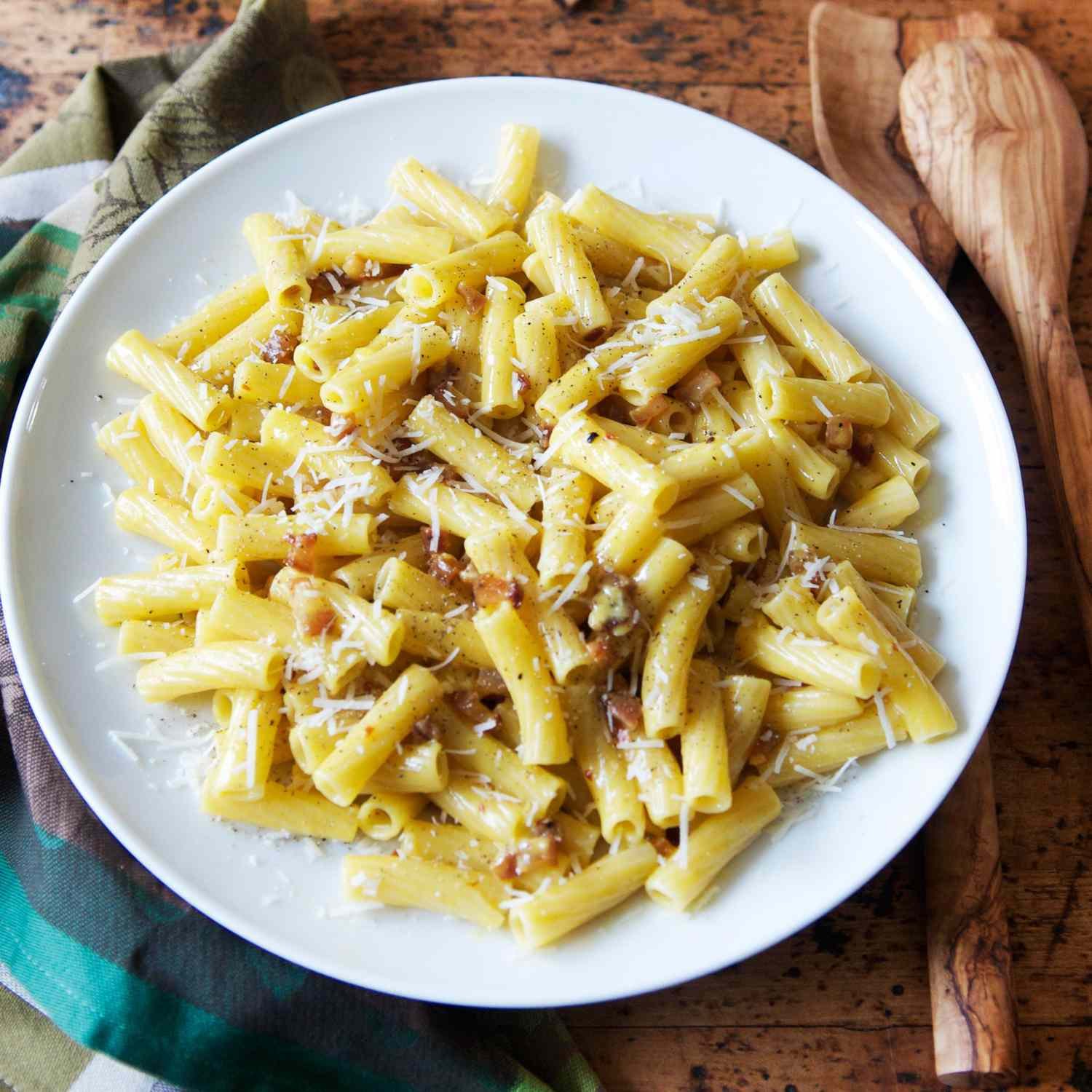
There are all kinds of carbonara iterations, but traditionally, the dish is made from not much more than Pecorino Romano, guanciale, eggs, and spaghetti plus black pepper. Here, Andrew Zimmern largely keeps things classic, opting for the ridged tubes of rigatoni over spaghetti strands and including crushed red pepper for extra warmth.
The best cured pork for carbonara
Though this recipe works with either guanciale or pancetta, guanciale is the clear winner for making carbonara — no wonder it’s the traditional choice. In our tests, pancetta provided a pleasantly clean flavor but lacked the fattiness this dish leans on. Infused with a hint of smoke plus a subtle barnyard funk, rich guanciale added the most complexity to the elemental sauce. We tried bacon as well, but found that it was too smoky and thin for this application.
Notes from the Food & Wine Test Kitchen
- To get a silky, well-emulsified sauce, start with room-temperature eggs and cheese. When you add the hot pasta — plus a splash of starchy pasta water — stir continuously so the heat gently warms the eggs and turns them creamy instead of scrambled or curdled. Have the egg mixture ready before the pasta is done so you can combine everything immediately for a glossy, cohesive sauce.
- Don’t purchase pre-grated cheese for this dish; the shreds are typically coated in cornstarch or other anti-caking agents to prevent clumping, which interferes with the cheese’s ability to melt smoothly. Pecorino Romano tends to be on the saltier side, so feel free to swap out up to half for Parmesan cheese if you’d like.
- Use bronze-cut rigatoni if possible. It has a rougher texture than Teflon-cut, which is standard for commercial pasta sold in the United States; bronze cut’s porous nature allows the velvety sauce to fully adhere for a more flavorful bite.