:max_bytes(150000):strip_icc():format(jpeg)/Creme-Anglaise-FT-Recipe0325-a06dbd6ad30547e0a4a6828e2ac2c6d8.jpeg)
- Gently heating the half-and-half with a split vanilla bean just until bubbles appear at the rim extracts the delicate vanilla flavor without scalding the dairy.
- Egg yolks are whisked with sugar and tempered with the hot milk mixture before being cooked slowly until the sauce thickens, ensuring a silky, custard-like consistency without curdling.
- The custard is immediately strained into a bowl set in a cold-water bath to halt cooking, then enriched with vanilla seeds before serving or chilling for later.
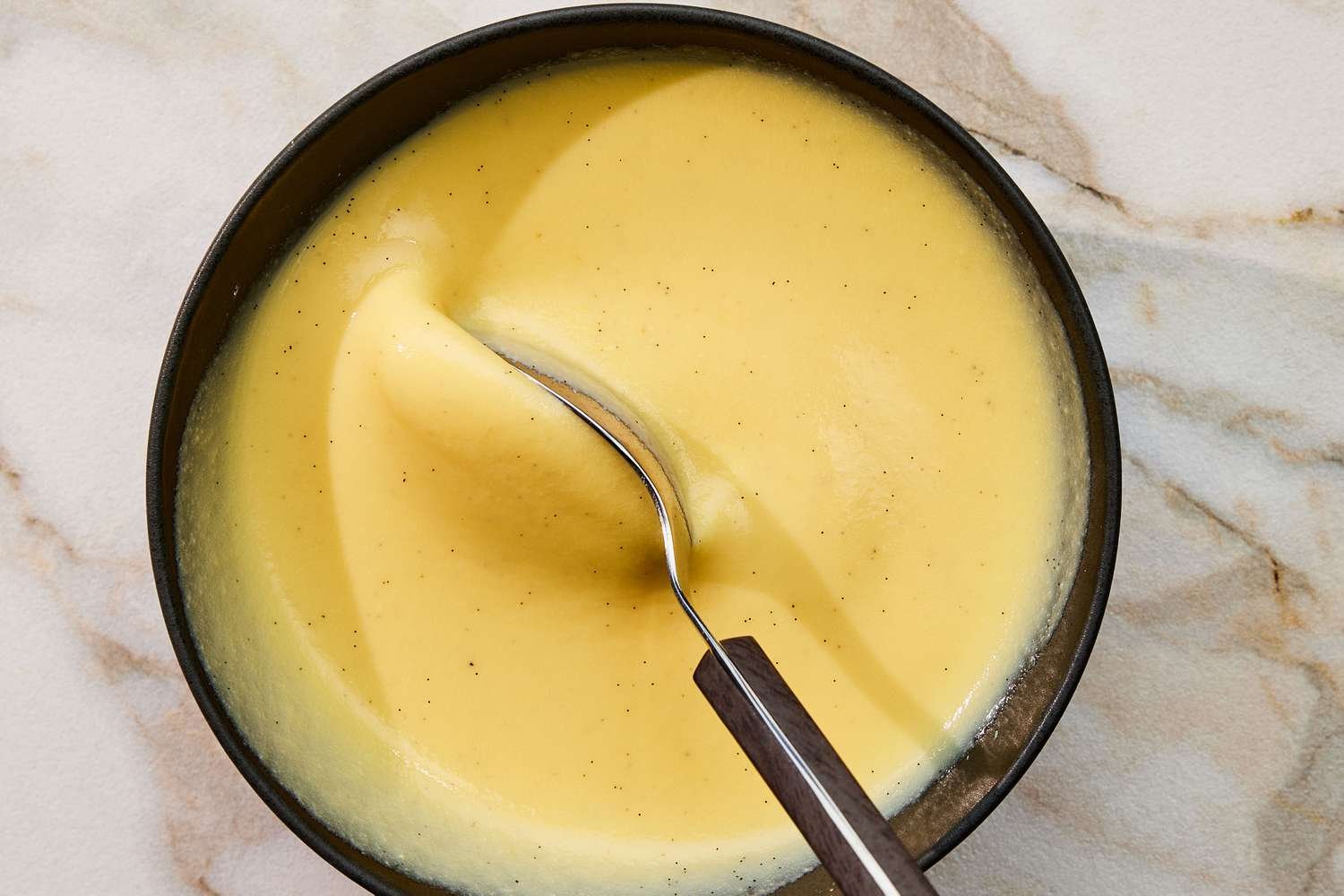
Smooth, creamy, and infinitely versatile, this quintessential French custard sauce is just as delicious drizzled onto chocolate and fruit desserts as it is churned and frozen for a terrific vanilla bean ice cream. It’s also the base for floating islands, a classic French dessert featuring a meringue “island” floating in a sea of custard.
The single most nerve-racking thing about making this simple and elegant pourable custard is that it can overcook and curdle. Grace Parisi helps prevent this by preparing a cold-water bath and setting it near the stove before she even cracks an egg.
How to tell when crème anglaise is finished cooking
Once the yolks and sugar are tempered with the hot dairy and returned to the saucepan, the key to silky-smooth crème anglaise is heating the mixture just long enough to thicken it. The goal is to cook the yolks without them solidifying — temperature-wise, this occurs when the sauce reaches between 165°F and 180°F, or nappe. At this stage, it will evenly coat the back of a spoon; when you run your finger through the sauce on the back of the spoon, it should hold a clear line.
Note from the Food & Wine Test Kitchen
To prevent the yolks from scrambling in the sauce, it’s vital to keep them moving. When tempering the dairy with the sugar and yolks, be sure to whisk as you pour in the liquid. Then, once you’ve returned the mixture to the stove, stir it constantly until it’s adequately thickened, scraping the bottom and sides of the pan to keep the temperature homogenous throughout.