:max_bytes(150000):strip_icc():format(jpeg)/spice-roasted-duck-FT-RECIPE1025.-6778e6b91a8f41628f2dc39152042067.jpg)
- Dry-brining the whole bird with a mix of toasted coriander, fennel, caraway, smoked paprika, pepper, and salt then letting it rest uncovered in the fridge overnight provides flavor and promotes skin crisping.
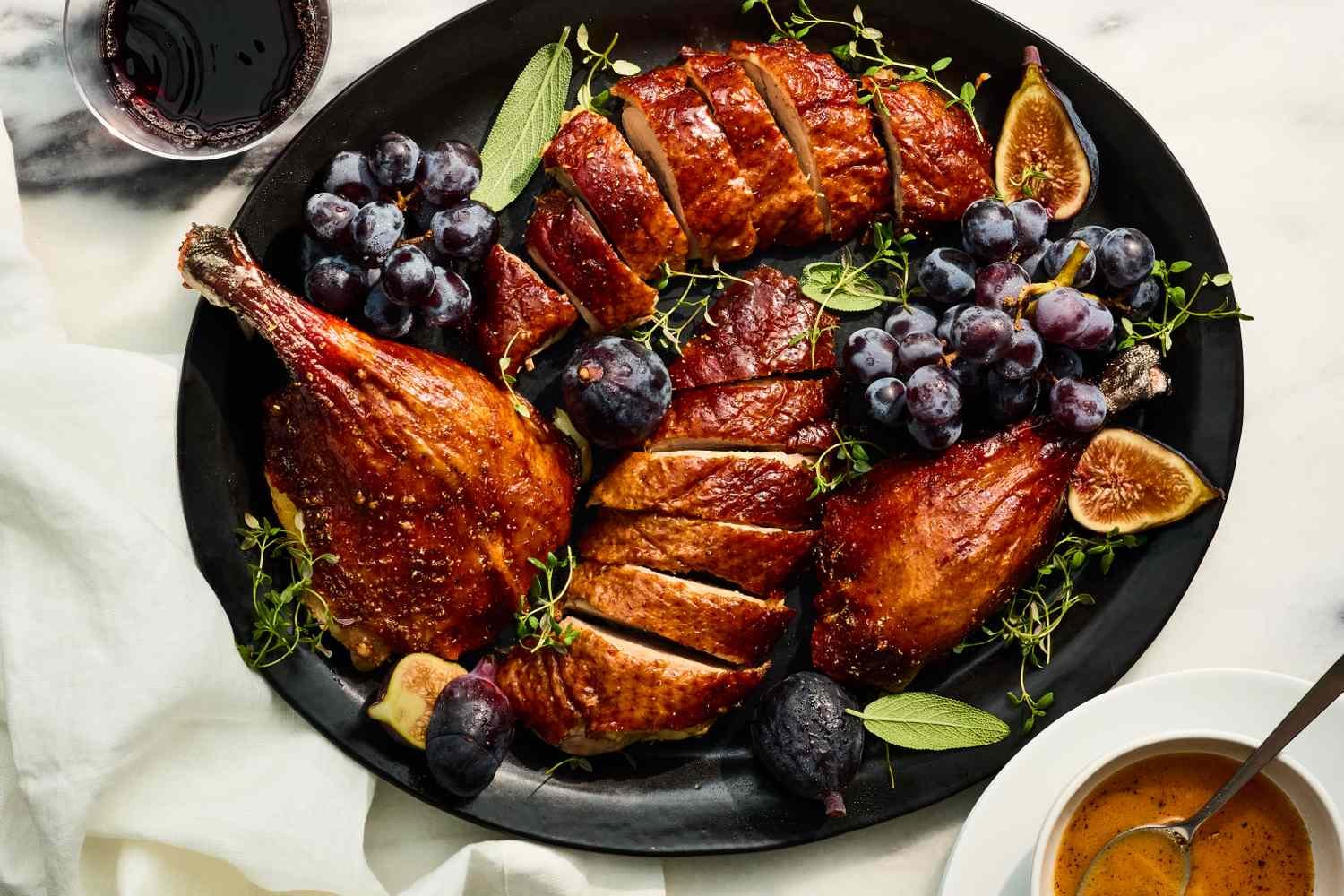
- A two-stage roasting process begins with a long, low-heat roast to cook the meat through, followed by a brief high-heat finish to crisp the skin and caramelize fat, yielding a duck that’s juicy inside and beautifully bronzed outside.
- The dry rub delivers warm, smoky notes; herbs like thyme and sage plus an onion in the cavity impart savory depth, all without overwhelming the duck’s natural flavor.
In this super-easy duck dish, Hugh Acheson says the trick to getting crispy duck skin is dry-brining the bird: seasoning it and letting it rest in the refrigerator overnight. For optimal flavor, the coriander, fennel, and caraway seeds in the dry rub are toasted on the stovetop before being ground and mixed with the smoky pimentón de la Vera, salt, and pepper.
What is pimentón de la Vera?
Most of us know Spanish pimentón de la Vera as simply “smoked paprika.” To make it, peppers are dried and smoked over an oak fire before being ground into a spice. It comes in three heat levels — sweet, bittersweet, and hot. If the heat level is not indicated on the packaging, it’s safe to assume you’re dealing with the sweet variety.
How dry-brining achieves crispy duck skin
Dry-brining contributes to perfectly crisp, crackling duck skin in two ways. First, the salt in the spice rub draws moisture out of the skin. As the bird sits, the salt dissolves into that moisture and is reabsorbed into the meat, seasoning the inside while the surface remains dry. Second, the refrigerator’s cold circulating air further dries out the skin, so when the duck hits the oven, there’s less steam generated on the surface. This means faster browning and better fat rendering for a thin, glassy-crisp crust.
Notes from the Food & Wine Test Kitchen
- Carefully prick the duck with a paring knife in Step 2, aiming for just the skin and not the meat. This helps the fat render effectively.
- Allow at least eight hours for the dry-brined bird to rest in the fridge. A longer dry-brining period of 12 to 24 hours is optimal; a full 24 hours enables the flavors to penetrate and the skin to completely dry out.
- Once the duck is finished roasting and you’ve spooned off the fat from the pan juices, reserve the fat for other applications, such as making these incredible layered potatoes.
- Let the roasted duck rest on the cutting board, tented loosely with aluminum foil, for about 15 minutes before carving so the juices have a chance to redistribute.
Suggested pairing
A structured, rich, full-bodied red.