:max_bytes(150000):strip_icc():format(jpeg)/This-Year-Cook-Leg-of-Lamb-FT-DGTL1225-a6fe97b4906e4073a306e6f558e94003.jpg)
The center of a holiday meal is often a large roast, rounded out with delicious sauces and sides. That roast is usually beef, but rising beef costs make a good case for trying a less popular but equally rewarding protein this year: leg of lamb.
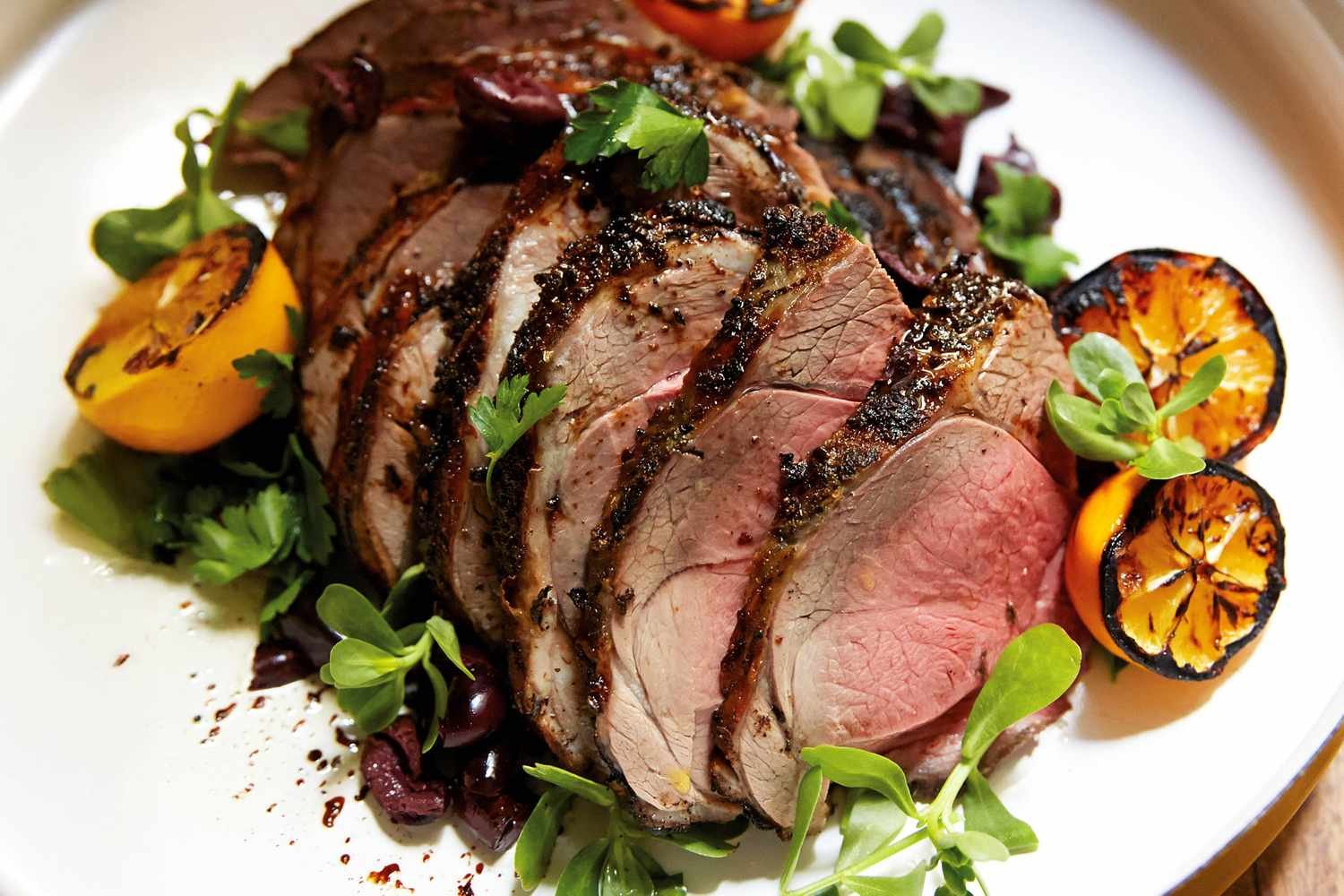
Despite its popularity in many cuisines, lamb remains one of the least-consumed meats in the world, far behind pork, poultry, and beef. Though lamb is common on the menus of fine dining restaurants or neighborhood kebab shops, Americans consume only one pound of lamb per person compared to about 56 pounds of beef every year. We argue that should change: Leg of lamb offers a unique flavor and impressive presentation with relatively little effort on your part, making it an interesting alternative for a holiday dinner.
Marc Hudacsko, owner of The Archer and Berkeley’s in Charleston, South Carolina
“Your guests will be impressed by your culinary skills, but the secret is that [a leg of lamb] is almost foolproof. No one needs to know how easy it is.”
— Marc Hudacsko, owner of The Archer and Berkeley’s in Charleston, South Carolina
“A roast leg of lamb is a showstopper on any holiday table,” says Marc Hudacsko, owner of The Archer and Berkeley’s in Charleston, South Carolina. “Your guests will be impressed by your culinary skills, but the secret is that it is almost foolproof. No one needs to know how easy it is.”
What to look for
If you’re buying a leg of lamb, there are a few considerations.
“The first question I would ask is, ‘Where is the lamb from?’” says Shawn Matijevich, lead chef-instructor of Online Culinary Arts & Food Operations at the Institute of Culinary Education. “Domestic lamb tends to have a far less gamey flavor, so if you’re new to lamb, this is the way to go. Imported lamb (from the U.K., Australia, or New Zealand) is smaller and also much stronger-flavored.”
Rand Packer, chef and founder of Evoke 1923 along with other restaurants in Colorado, agrees that domestic lamb tends to have a “richer flavor.”
The next consideration is whether you should purchase a bone-in or boneless leg of lamb. Pano Karatassos, cookbook author and executive chef at Kyma in Atlanta, notes that they can be interchangeable in recipes, but boneless legs of lamb are easier to carve.
However, a bone-in lamb will “have more flavor and is more impressive on the platter,” says Hudacsko. He recommends purchasing a third of a pound per person for a boneless leg of lamb and a half pound per guest for a bone-in leg of lamb.
Greg DuPree / Food Styling by Margaret Monroe Dickey / Prop Styling by Claire Spollen
How to cook leg of lamb
There are a number of ways to prepare a leg of lamb, but most chefs recommend either slow-roasting or braising, both of which can produce very tender meat. “Leg of lamb is not a cut of meat you want to undercook,” Packer says. “Remember, this muscle is a working muscle,” which means it needs to be cooked properly to break down the connective tissue.”
It can be a challenge to judge the doneness as the shape of a leg of lamb is not uniform. Use an instant-read thermometer to check several areas, aiming for the same temperature range as you would a beef roast. For medium-rare, that means a temperature of about 120°F to 130°F, followed by plenty of time (at least 10 minutes) for the leg to rest on the counter.
Braising
Of the two methods, braising is more forgiving, offering more margin for error than roasting. “If you’ve never cooked a leg of lamb, I would definitely braise it,” says Karatassos. “It always comes out amazing. When you braise, if you cover the leg about 80% of the way, as it’s braising the top part will get color.” Turning the leg periodically, he says, will caramelize all sides.
Karatassos suggests you start by browning the lamb in a large Dutch oven or roasting pan, depending on the size of the lamb, then add vegetables such as garlic, onions, and carrots as well as a “nice and neutral” braising liquid like chicken stock. Cover and cook in a moderately low oven, about 300°F, until the meat pulls away from the bone, a fork inserted into the center meets little resistance, and you’ve reached your target temperature on an instant-read thermometer. Remove from the oven and let the lamb rest in its braising liquids before slicing and serving.
Another benefit of braising is that you can do it ahead of time. “As with any braised item, leg of lamb gets significantly better from being chilled overnight after cooking it, which makes it an incredible dish for low-stress hosting,” Abramovitch says. “Cook it up to four days in advance, chill it down, and reheat before guests arrive” in a low oven.
Greg DuPree / Prop Styling by Missie Crawford / Food Styling by Ali Ramee
Roasting
To roast a leg of lamb, season it at least a day in advance. “A good rule of thumb for dry-brining is 1% of salt by weight and left uncovered in the fridge overnight,” says Andrew Black, chief culinary officer of Counter Service in New York City. For example, for a six-pound leg of lamb, you’ll need three tablespoons kosher salt (we use Diamond Crystal) for the brine. “Score the lamb on the outside and rub all over with salt. You can also add rosemary and crushed garlic at this stage. It may look like a lot of salt, but remember the leg is thick and seasoning it ahead of time allows the salt to penetrate throughout the meat.”
Hudacsko likes to roast the lamb low and slow in a convection oven at 275°F (or 300°F in a regular oven) for a few hours, pulling it from the oven when the internal temperature reaches between 125°F and 130°F. He recommends resting the lamb for at least 30 minutes. When you’re almost ready to serve, crank the oven to 500°F and put it back in for about 15 minutes to “develop a beautiful crust on the exterior,” he says. “Carve and enjoy.”
The best seasonings for leg of lamb
Lamb has a distinctly rich, slightly grassy flavor that can stand up well to bold flavors. “Because of its distinct flavor, lamb pairs really well with strong spices like coriander, cumin, cardamom, and allspice,” says Matijevich. “It’s a good opportunity to use up those lonely spices you don’t know what to do with.”
“There are lots of ways to season lamb, but my go-to is to make a paste of confit garlic, harissa, lemon zest, fresh oregano, and rosemary,” says Hudacsko. “Slather on generously and let it sit in the fridge overnight.”
Other options include piercing the lamb with a knife and adding garlic cloves. Packer also likes to rub the leg with salt and chopped rosemary. He marinates the leg with a mixture of Worcestershire sauce, red wine, basil, garlic, and more rosemary. He seasons it generously with cracked pepper and marinates it in the fridge for 24 hours, turning once.
Itamar Abramovitch, chef-owner of (M)eat Carnival in Napa, California, says he enjoys lamb “rubbed with Korean chile paste and soy sauce, braised with warm North African spices, or simply smoked with barbecue sauce. It’s a great showstopper for a group.”
However you prepare your lamb, “Don’t throw away the leftover juices,” says Luis Rios Ramos, executive chef of Mr. B’s – A Bartolotta Steakhouse in Brookfield, Wisconsin. “Reduce them and add some butter at the end to make a great sauce to serve with your leg of lamb. Treat it like you would a good roast beef and you will nail the preparation every time.”