:max_bytes(150000):strip_icc():format(jpeg)/red-curry-dumpling-soup-FT-RECIPE1225-a56e264f396e4ffc8ed88f3602c658c5.jpg)
Why it passed the test
- A deeply aromatic base of shiitakes, shallots, garlic, ginger, and red curry paste builds complex flavor fast, creating a rich, fragrant broth.
- Coconut milk, fish sauce, lime juice, and a touch of brown sugar balance heat with creaminess and brightness, giving the soup a layered, Thai-inspired flavor profile.
- Frozen mini wontons and tender baby bok choy cook quickly in the aromatic broth.
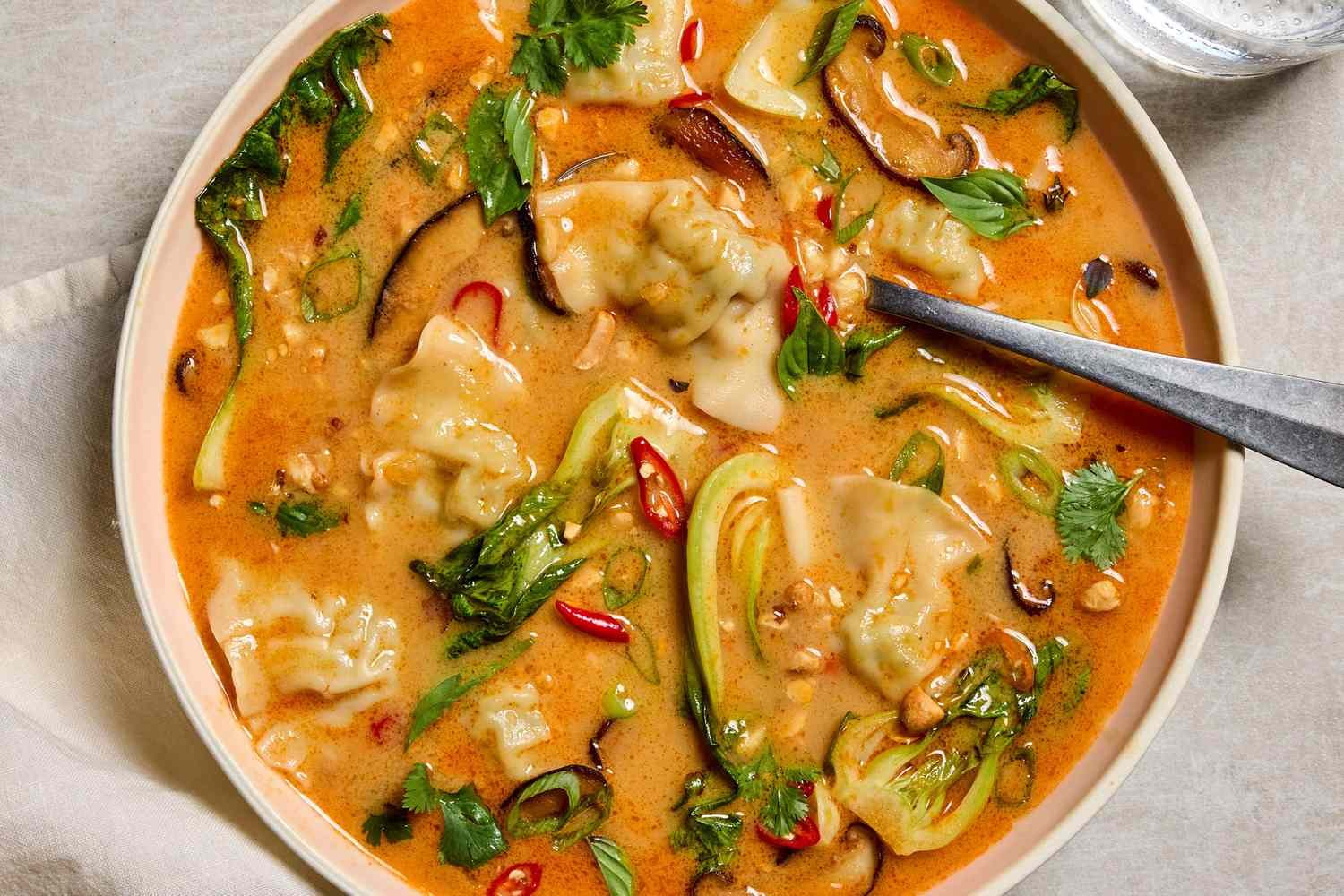
With its fragrant broth, springy wontons, and plenty of vegetables, this soup is a complete meal that channels the punchy flavors of Thai red curry, but without a specialty grocery trip. Frozen mini wontons bulk up the bowl and cook right in the broth, while baby bok choy wilts to tender-crisp, adding freshness and a welcome dose of green.
The base starts with browning shiitake mushrooms with shallots, garlic, ginger, and a Thai red chile. Searing the mushrooms coaxes out smoky, savory depth while the aromatics turn intensely fragrant. Thai red curry paste is the real star, a concentrated flavor base loaded with umami from fermented shrimp paste and gentle heat from dried red chiles. Toasting the paste in the pan intensifies its flavor before it’s loosened with chicken stock. Canned unsweetened coconut milk adds creaminess, while fish sauce, lime juice, and a touch of brown sugar bring the salty-sour-sweet balance that defines Thai curries.
Make no mistake, this soup isn’t traditionally Thai. Rather, it layers savoriness, acidity, freshness, and spice flavors and textures that are central to Thai cooking. Finish each bowl with your choice of toppings, such as fresh herbs, sliced chiles for extra heat, or crushed peanuts for salty crunch. Everyone can customize their serving at the table, from mild and cozy to bright and fiery.
What is Thai red curry paste made from?
Most commercial Thai red curry paste is made from a blend of dried red chiles — often such as red spur chiles, and aromatics like shallot, and garlic. Citrusy elements like galangal, a rhizome in the ginger family with piney notes, makrut lime leaves, and lemongrass add floral lift to the paste, and toasted spices like coriander and white pepper round it out. Fermented shrimp paste is often a core ingredient for umami, but some store-bought brands use vegetarian substitutes like fermented bean paste.
Where to buy Thai red curry paste
You can find jarred or canned Thai red curry paste, as well as other Thai curry pastes, at most grocery stores in the international aisle. Popular brands include Maesri, Mae Ploy, and Thai Kitchen. Ingredients and sodium levels vary depending on the brand, as well as the inclusion of shrimp paste, as some brands instead use a fermented bean paste. You can also find a wider selection of Thai red curry pastes at Asian grocery stores or online.
Notes from the Food & Wine Test Kitchen
- Substitute frozen dumplings for homemade dumplings.
- Use spinach or napa cabbage or another leafy green of your choice if you don’t have bok choy.
- Garnish with a drizzle of chili oil for extra heat.
This recipe was developed by Nicole Hopper; the text was written by Andee Gosnell.