:max_bytes(150000):strip_icc():format(jpeg)/Chef-latke-tips-FT-DGTL1225-01-791253ca88fc4805857d903c61c61871.jpg)
Crunchy on the outside and tender on the inside, latkes are objectively delicious — and notoriously a pain to prepare. They’re finicky, time-consuming, and physically taxing, but when made correctly (and topped with sour cream and apple sauce), they can be exceptional. We reached out to professional chefs from around the country to discover how to make the best potato pancakes imaginable. Here are the seven of their most essential tips.
Use russet potatoes
“The secret to an excellent latke? Start with selecting the right potato,” says Hillary Sterling, executive chef of Ci Siamo in New York City. The potato variety you select will not only impact the taste and texture of your latke, but also how simple they are to prepare. Sterling opts for russet potatoes, which are drier and starchier than other varieties like Yukon gold. “[This] helps them stick together without adding too much moisture,” says Sterling.
Season immediately after grating
“The best way to ensure the crispiest latkes is to remove as much moisture as possible after you shred the potatoes and onions,” says Eli Sussman, chef and co-owner of Gertrude’s in Brooklyn, New York. One easy way to draw that moisture out is by seasoning the potatoes and onions immediately after shredding. Liad Balki, director of operations at Miznon, suggests placing the potato mixture in a strainer, seasoning it with salt, then letting it rest for 10 to 30 minutes.
Squeeze, squeeze, squeeze
Here comes the challenging bit. The only way to ensure dry shredded potatoes is by using your hands to squeeze or press the starchy water out — a bit of manual labor that makes all the difference. “Once grated, squeeze them like hell in a dish towel,” says 2022 F&W Best New Chef Caroline Schiff. “And when you think you’ve got all the liquid out, squeeze some more.”
How you choose to squeeze the water out is up to you. “You can use a kitchen towel, cheesecloth, or carefully press it through a strainer,” says Sussman. “The key is to get the mixture dry before adding in eggs.”
Add the right binder
While liquid doesn’t benefit a latke, starch certainly does. “When you remove the water, the potato starch goes with it, and you want that starch for binding and crispiness,” says Schiff. So, she adds potato starch back into the mixture — one tablespoon for every pound of potato. You can use store-bought (which comes as a powder) or the starch that sits at the bottom of your strained potato water — in that case, make sure you strain the liquid into a bowl instead of the sink.
For another binding agent, Sterling likes to use grated cheese like young Pecorino or fontina. “It helps hold the mixture together and gives the latkes a nice crispy outside, while still staying creamy on the inside,” she says.
Pay attention to the oil temperature
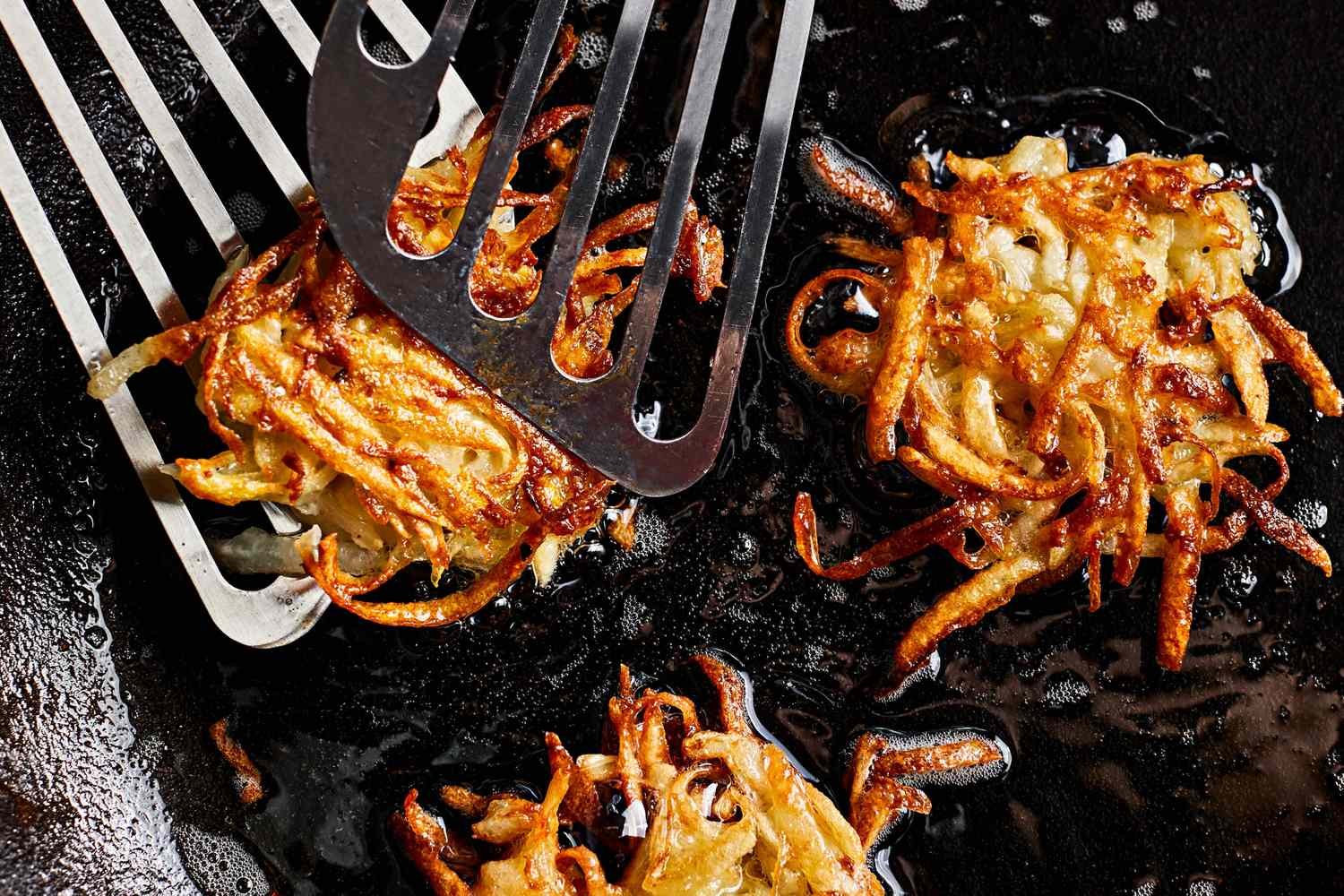
Michael King, chef of Sungold and NoMad Diner in New York City, says a candy thermometer is essential for making latkes at home. “If your oil is too cold, your latkes are never going to get crispy enough,” he says. “Because they are really just a loose paste before they’re fried, oil that’s less than hot will seep into the grated potatoes, giving you a result far worse than a limp french fry.” But if your oil is too hot, Schiff says, your latkes will brown too quickly, “leaving the inside raw.” For perfectly golden brown latkes, keep your cooking oil between 350℉ and 375℉.
Don’t overcrowd your pan
Even if you’re making latkes for a crowd, you should avoid frying too many at once. “Don’t overcrowd your pan, as it will rapidly drop the temperature of the oil,” says King. “A good rule of thumb: However big your latkes are, leave that much space between them while frying. It might take longer, but it’s well worth it.”
Cool on a rack
When your latkes are done, do not throw them directly onto a plate. Instead, let them cool on a wire rack. According to chef Michael Hackman of Aioli Sourdough Bakery and Cafe in West Palm Beach, Florida, this ensures that the “bottoms stay crisp instead of steaming into sogginess.”
After all that effort, no one wants to be left with a soggy latke.