:max_bytes(150000):strip_icc():format(jpeg)/What-Is-Sirloin-Roast-FT-DGTL1225-bc23281386834d8bb6fc47a38f1ae1f3.jpg)
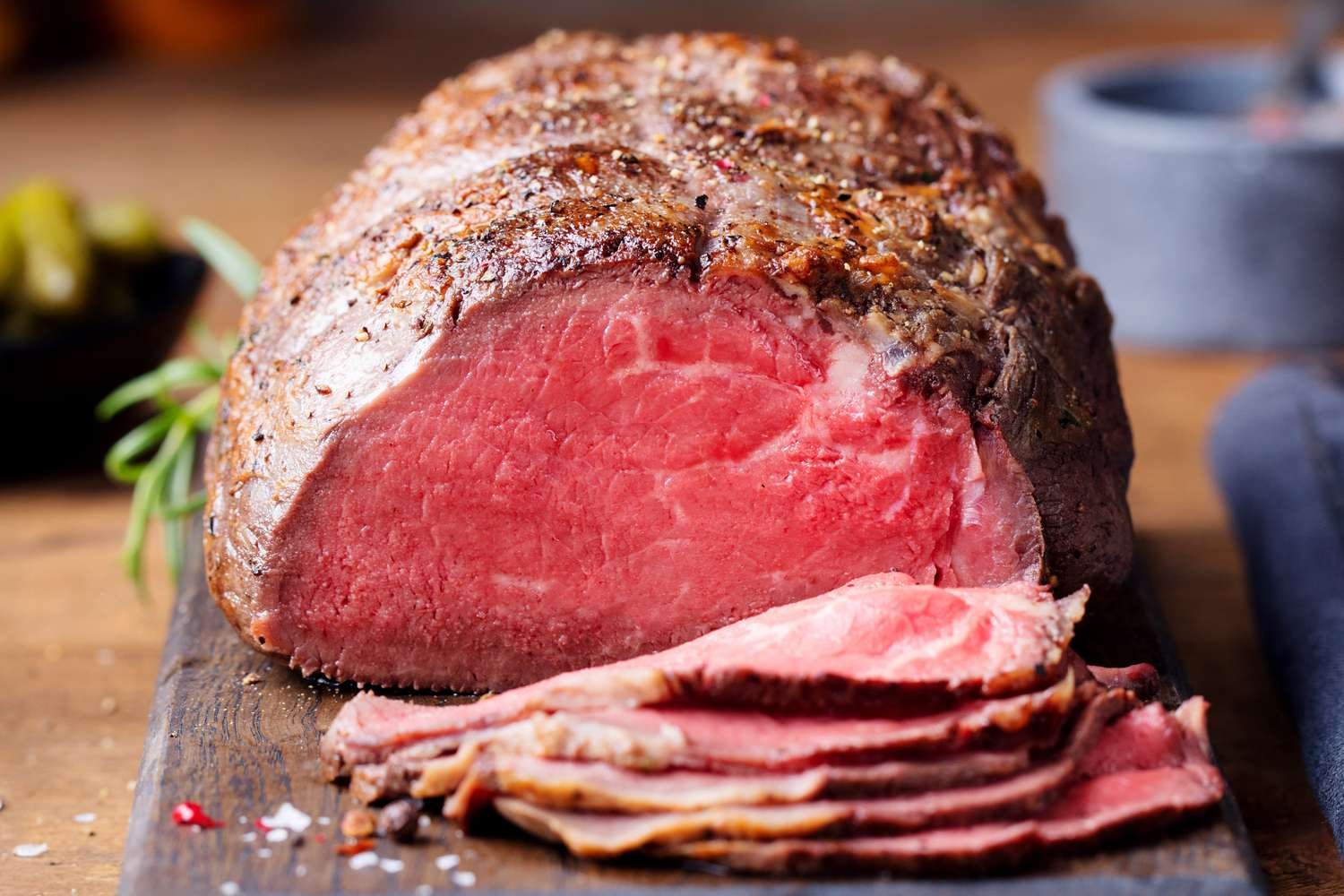
A beautifully cooked roast beef makes the ideal centerpiece of a holiday meal, and for good reason. It feeds a crowd, has a rich meaty flavor, and can slowly roast in the oven while other components of the dinner are prepared. While prime rib might be the traditional choice, it comes with a significant price tag. This year, consider an overlooked roast that butchers love and that costs a fraction of the price of prime rib: top sirloin roast.
“The top sirloin is a favorite roast; wonderful beefy flavor,” says Ross Flynn, owner of Left Bank Butchery, a whole-animal butcher with locations in Saxapahaw and Raleigh, North Carolina. “It looks beautiful in the pan, and when you slice it into large slabs it just feels perfect for a holiday meal.”
What is top sirloin roast?
The top sirloin is a subprimal of the sirloin primal, located in the hindquarter of the cow. Most often the general term “sirloin roast” is going to refer to a cut from the top sirloin subprimal of the sirloin, not the bottom sirloin, says Taylor Boetticher, owner of Fatted Calf Charcuterie in San Francisco and Napa, California. It’s also not to be confused with the sirloin tip roast, which comes from the round primal and is considerably leaner and tougher.
The sirloin primal benefits from its close proximity to the ribs and loin and has a very beefy flavor. While not quite as tender or marbled as the rib primal, it can be turned into a perfectly tender, delicious roast beef with a little know-how.
Ross Flynn, owner of Left Bank Butchery in North Carolina
“We think of [top sirloin] a ‘thinking person’s roast.’ If you want an old-school, honest roast beef dinner for the holidays, we don’t think you can do much better for the money.”
— Ross Flynn, owner of Left Bank Butchery in North Carolina
“Top sirloin is really nice because you can roast the whole thing in one big piece, or you can get several amazing roasts,” Boetticher explains. “It’s really dense and has an amazing mouthfeel. It lends itself really well to a long, slow roast, and you don’t need to worry about overcooking it like a tenderloin, which is smaller. And the rib eye is literally twice the price.”
Boetticher also loves the sirloin roast for its versatility. It’s not perfectly uniform in shape and size, which allows for varying doneness temperatures in one roast.
“We always smile when someone orders a top sirloin roast, kind of like they ordered what we as butchers would have ordered,” adds Flynn. “We think of it as a ‘thinking person’s roast.’ If you want an old-school, honest roast beef dinner for the holidays, we don’t think you can do much better for the money.”
How to buy and cook a sirloin roast
While sizes vary, a full top sirloin roast may be eight or even nine pounds and will include the sirloin. Your butcher may also sell it pre-tied. The sirloin center may be sold on its own as a smaller roast.
Even though the top sirloin roast is tender, its relatively lower fat and marbling content means it can get tough if overcooked. If possible, look for a roast with about a half-inch fat cap.
“It’s essential to have a generous fat cap to maintain juiciness and then sear the roast on all sides before cooking,” says Steve Sabicer, a former butcher who runs the Enlightened Omnivore newsletter. “Then put it in the oven at 250°F for a slow finish. This offers the largest pink center with plenty of flavor on the outside.”
Steve Sabicer, founder of Enlightened Omnivore newsletter
“It’s essential to have a generous fat cap to maintain juiciness and then sear the roast on all sides before cooking.”
— Steve Sabicer, founder of Enlightened Omnivore newsletter
Flynn also recommends cooking a top sirloin in two stages, whether you sear first then finish with gentle heat or reverse sear it by slowly roasting first then browning at the end.
“The reverse sear has advantages,” Flynn says, “but we always recommend cooking it however you feel most comfortable. If you are entertaining guests, the idea of browning the roast at the end when your guests are milling about might seem intimidating.”
Like you would with any meat, especially large roasts, give the sirloin roast plenty of time to rest, and plan for it to continue cooking another 10 degrees or more. The end result should be a roast beef with a good crust and a reddish pink interior, similar to that of other roasts like a prime rib or tenderloin.
Boetticher recommends saving leftovers for roast beef sandwiches.
Beyond top sirloin roast
The sirloin has several other muscles that can be separated into smaller portions, including the picanha (the sirloin cap), tri-tip, and sirloin filet. Any of these cuts can make a beautiful roast, says Flynn. The tri-tip and picanha are especially delicious grilled, while the sirloin filet can actually be a replacement for the filet mignon. “It’s the same size, very tender, but we think with better flavor and at a much lower cost,” Flynn says.