:max_bytes(150000):strip_icc():format(jpeg)/chewy-sugar-cookies-FT-RECIPE1224peg-6dfbe03a78f74d27b1124c1095c4c1ec.jpeg)
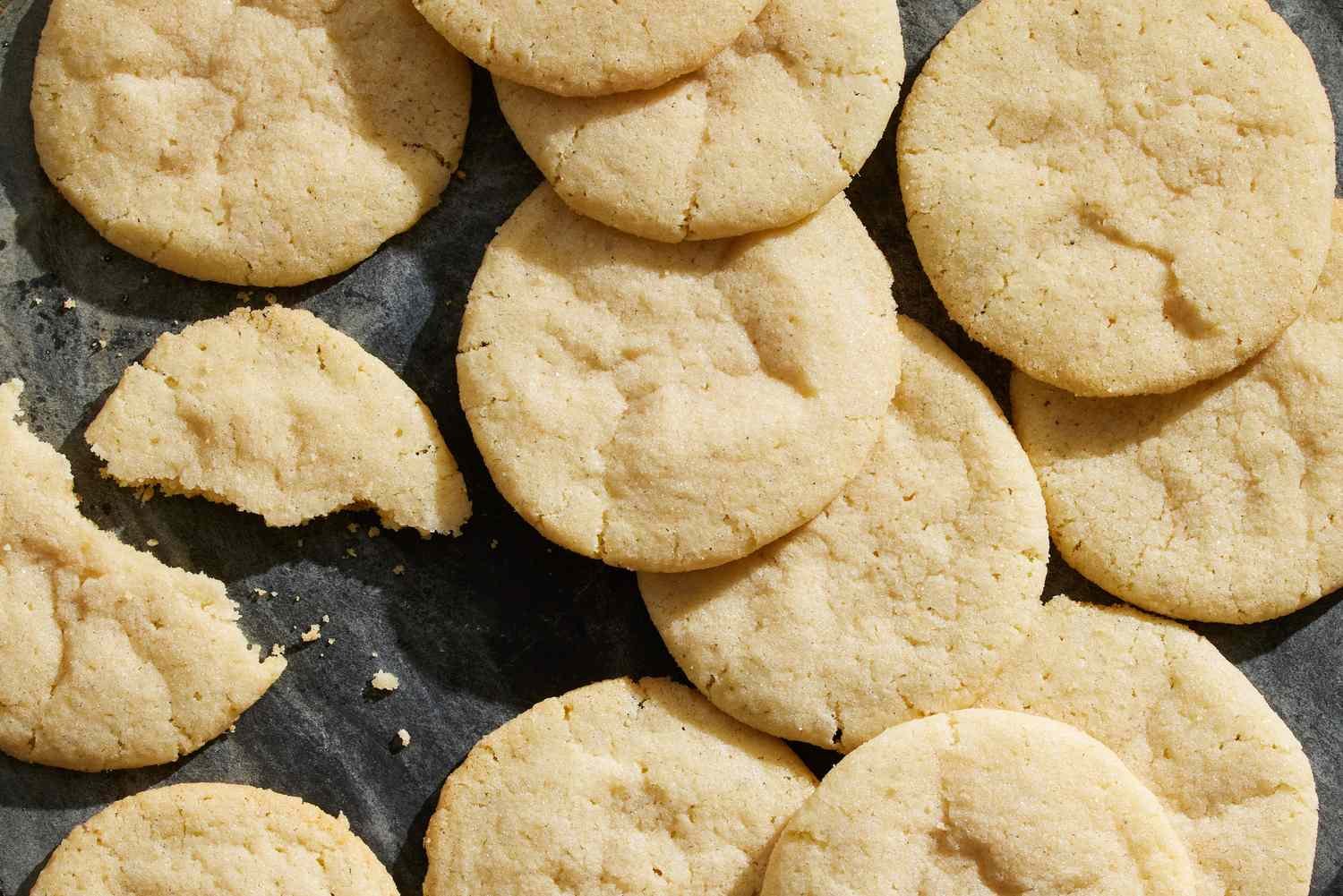
- Featuring crispy edges and chewy centers, these vanilla-scented cookies include a touch of freshly grated nutmeg for a warm, aromatic note.
- The dough comes together using the creaming method, first beating the softened butter and sugar together until light and fluffy, then incorporating an egg and vanilla extract before mixing in the dry ingredients at low speed until just combined.
- Cookies are shaped into 2-tablespoon balls that get rolled in additional sugar and baked at 350 °F for 12 to 14 minutes, rotated midway through to promote even browning.
Crispy cut-out sugar cookies, perfect for festively decorating to celebrate any number of occasions, have their place. But when you want to fill your cookie jar or tuck something in your lunch, a sturdier, chewier cookie is in order.
What makes sugar cookies soft and chewy
These drop cookies contain a higher ratio of sugar to flour than rolled and cut sugar cookies, which tend to be more crispy than chewy. Sugar is hygroscopic, meaning it helps baked goods retain moisture. Creaming the sugar with the butter until light and fluffy incorporates tiny air pockets to give the cookies some lift (as opposed to the tight, dense crumb of the flat, rolled variety); plus, these cookies have a chemical leavener in the form of baking powder for a bit of a cakier texture.
Shaping the dough into balls also plays a part in the texture of the baked cookies. Round dough balls spread more gradually in the oven, so the centers stay thicker than the edges, resulting in cookies that are crisp on the outside and soft and chewy within.
Why use a chilled egg in the dough
Using a cold egg helps to keep the dough a little firmer, which can be beneficial if you’re going to shape and bake it immediately after mixing.
Notes from the Food & Wine Test Kitchen
- Freshly grated nutmeg offers a far more complex, robust flavor than ground nutmeg. Use your Microplane to grate just the 1/4 teaspoon needed for the recipe.
- Be sure not to overmix the dough once you’ve added the dry ingredients, as this will cause too much gluten formation, yielding cookies that are more tough than tender.
- If time allows, chill the dough before shaping and baking to give the flour a chance to fully hydrate and the butter time to solidify. This will help control the spread, further ensuring a chewy result. At least half an hour is helpful, though overnight is optimal.