:max_bytes(150000):strip_icc():format(jpeg)/Sweet-Holiday-Traditions-in-Portugal-FT-DGTL1225-Bolo-Rei-02-d2f8be65c8dd447482f97df7b5d27564.jpg)
When I moved to Portugal almost five years ago, I knew it would be easy to fall in love with Lisbon’s cobblestone streets, the rolling hills in the countryside speckled with sheep, and the rugged beaches offering year-round surf. But what I didn’t expect was how deeply I’d fall for December.
Portugal puts on quite a show during the holiday season, with cities like Lisbon and Porto transforming into a twinkling light spectacle. And with all this holiday revelry comes bite after bite of only-in-Portugal sweets.
“Portugal really shines when it comes to holiday sweets,” Anita da Silva, founder of Portuguese With Anita, shares with Food & Wine. “What I love most about these sweets is that they’re so much more than just desserts. They’re part of our family life and traditions. Each one carries stories, memories, and smells that instantly take me back to my childhood.”
As da Silva explains, every region in Portugal adds its own variations, so the same dessert “can taste a little different depending on where you are. I love that. It makes each version special and tied to a place and its people.”
Bruno Rocha, the head of culinary at Highgate Portugal, agrees, noting that the ingredients in these holiday desserts offer “comfort through simplicity made from humble ingredients — bread, eggs, sugar, citrus — yet full of warmth and flavor.” As he adds, many offer “distinctly Portuguese aromas like lemon, cinnamon, honey, and a hint of aguardente [a grape-based spirit],” which give the season in Portugal “its unmistakable perfume.”
And, like the rest of the world, “preparing these treats is usually a family thing, especially during the holidays,” da Silva says. “Everyone has a role in the kitchen, and there’s laughter, music, and the smell of cinnamon everywhere. It’s not just about making food. It’s about keeping our traditions alive and sharing them with the next generation.”
Here are a few time-honored, locally beloved treats that you should try on a trip to Portugal or make at home this holiday season.
Sonhos
nataliaspb / Getty Images
Almost everyone I speak to points to Sonhos as the ultimate, time-honored Portuguese holiday dessert, which Dárcio Henriques, the executive chef of Octant Douro, explains are “light, airy fritters made from leavened dough, fried until golden and then dusted with sugar and cinnamon or drizzled with honey. Sonhos are round and fluffy.” As for his favorite spot to try them, Henriques says Pastelaria Versailles in Lisbon makes the best batch around. And if you need one more reason to try one, Da Silva says, “They really do taste like a dream.”
Rabanadas
homydesign / Getty Images
Henriques explains that these are “thick slices of bread soaked in milk and egg” and again fried until golden, then sprinkled with sugar and cinnamon. Think of it like Portuguese-style French toast, only now, it’s drizzled with Port wine or honey instead of syrup. Or, as Henriques describes, they are “soft and custardy inside, crispy outside, pure comfort in dessert form.”
João Carvalho, the regional director for Portugal at Butterfield & Robinson, adds, “Every Portuguese family has memories of a big plate of rabanadas sitting on the kitchen counter at Christmas and New Year’s, ready to grab at any time of day.” His go-to spot to try them is Pastelaria Versailles in Lisbon or Leitaria da Quinta do Paço in Porto.
Bolo Rei
homydesign / Getty Images
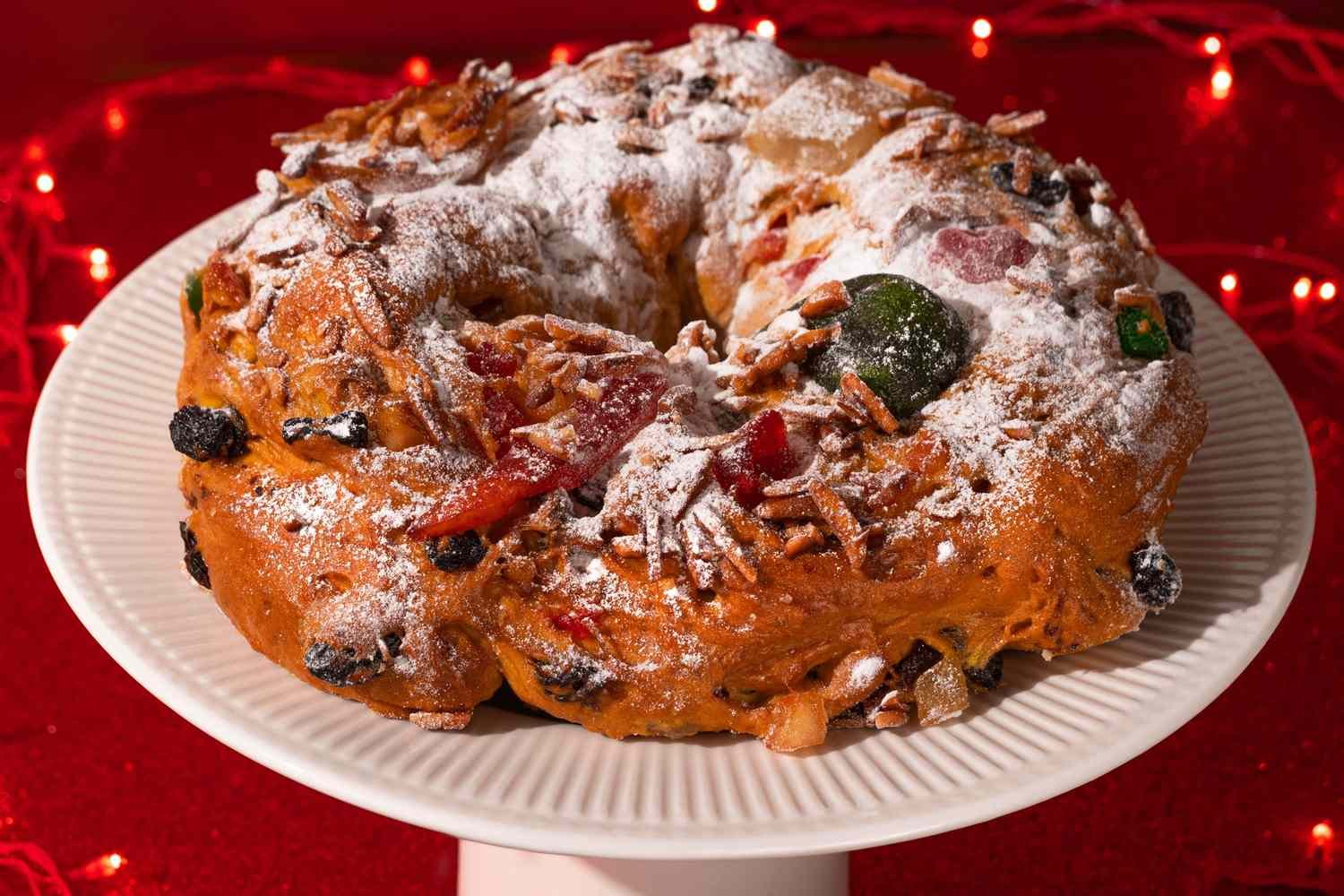
One more iconic dish da Silva wants everyone to try is the Bolo Rei (King Cake), which she says is “always the star of the table. It’s a soft, brioche-like cake filled with candied fruits and nuts. It looks so festive, covered in colorful fruit, and it’s one of those things that instantly makes it feel like Christmas.” Both Henriques and da Silva say Confeitaria Nacional in Lisbon is a key spot to get the cake as the confectionery is “credited with introducing the Bolo Rei in the 19th century.”
Bolo Rainha
nataliaspb / Getty Images
If you need a “royal” alternative to Bolo Rei, Henriques says the Bolo Rainha (Queen Cake) is a fantastic option. “It’s made with the same rich dough but without candied fruit,” he explains. ‘It’s packed with walnuts, almonds, and raisins for a more nutty, toasted flavor.” Find these at Pastelaria Careca in Lisbon, which the chef calls it “an icon of quality and tradition.”
Arroz Doce
Joao Manita / Getty Images
According to Henriques, Arroz Doce (Rice Pudding) is “a timeless Portuguese classic” that’s “comforting and aromatic, and often served warm or at room temperature. Every family has its own recipe, making it a true symbol of home and holiday warmth.”
Michael Benevides, owner of Portugalia Marketplace, notes that while it’s often made at home, you can also find it across the country at almost every bakery. As for why it’s special, Benevides says, “I think the secret to a great one is the Bom Sucesso Portuguese rice grown in Portugal. We used to make it at the store with domestic rice [from the U.S.]; however, once we were able to source the Bom Sucesso, there was no going back.”
Pudim
ico_k-pax / Getty Images
For Emma Campus, co-founder of Austa, no Portuguese dessert bar is complete during the holiday season without Pudim. “It’s a wobbly, creamy, and gelatinous dessert,” Campus explains, always made with a base of eggs, milk, sugar, and caramel. “At Austa we make a lighter, but no less indulgent, version of the traditional Portuguese dessert … ours is made with caramelized milk and our homemade miso — extra naughtiness for the holidays.”
Queijadas da Vila Franca
tamara_kulikova / Getty Images
We can’t forget the islands of Portugal, which offer their own special treats. Benevides, whose family is from the Azores, points to one of the best desserts from São Miguel: Queijadas da Vila Franca. “This sugar-dusted cake is ubiquitous there, where they’re produced at a bakery in the seaside village of Vila Franca. Similar to Pastéis de Natas, the recipe originated at a religious order, a convent. Very few people know how to make this at home, to some extent because the recipe is, if you can believe it, still a family secret.”