:max_bytes(150000):strip_icc():format(jpeg)/FAW-recipes-red-skin-potato-mash-hero-8705fa7d99fa40d7aae1b5ab94003e5b.jpg)
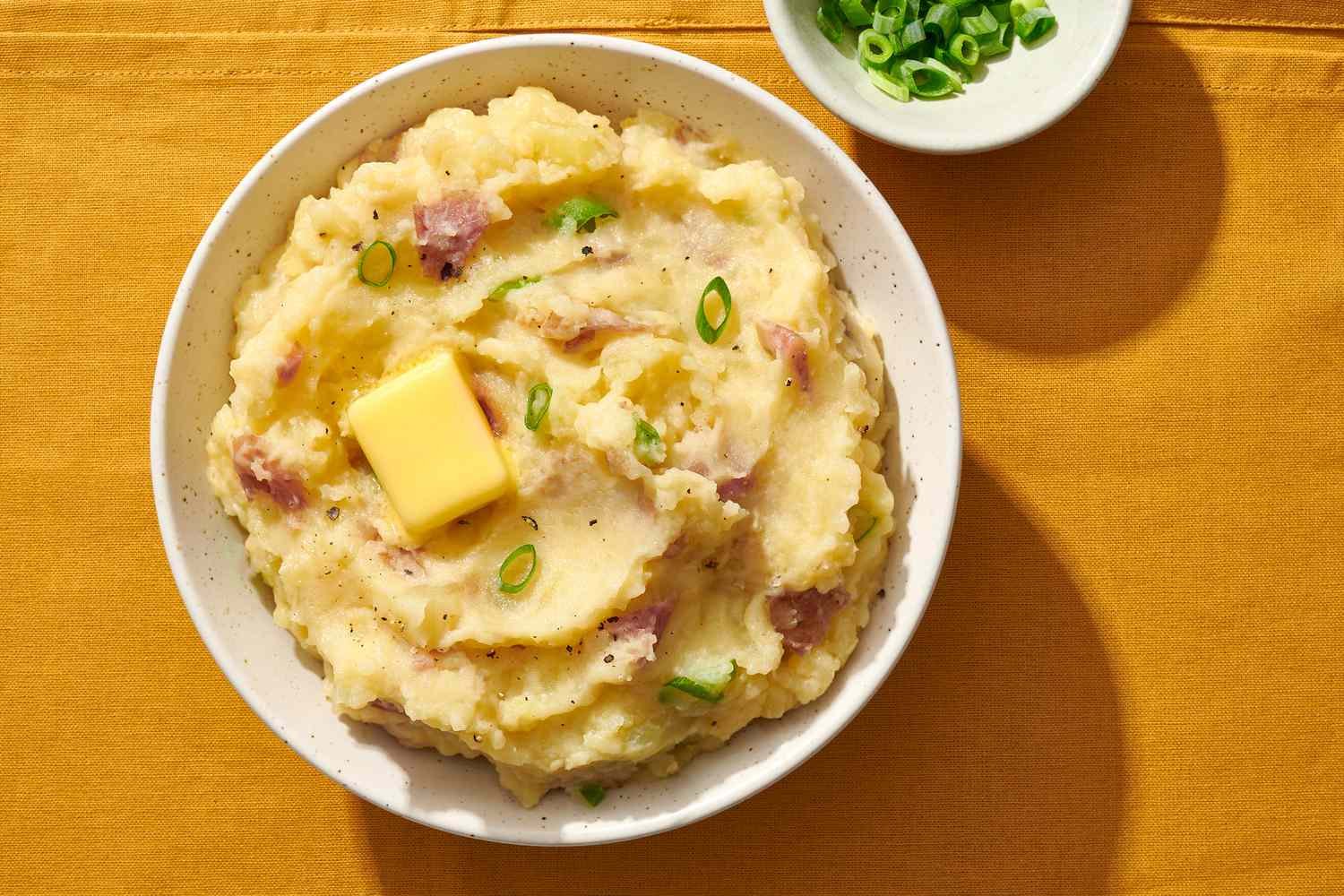
- Leaving the skins on red potatoes adds color, texture, and a bit of rustic charm without compromising creaminess.
- The potatoes are dried briefly after draining, then mashed with warm milk and softened butter so the mash is silky but still slightly chunky.
- Thinly sliced scallions stirred in at the end provide a fresh pop of flavor and brightness as a finishing touch.
These mashed red potatoes are for the cooks who crave a little texture (or who just don’t want to be bothered with a potato peeler). Boil the potatoes with skins on, then mash with butter and milk for a creamy but lightly chunky side dish swirled with pretty flecks of red. Here, we also include thinly sliced scallions for an additional pop of color and flavor to finish the delicious red potato mash.
Are red potatoes better for mashed potatoes?
When it comes to mashed potatoes, it’s hard to go wrong — any potatoes will taste pretty good with some butter and salt. But red potatoes tend to have skin that’s thinner and smoother than that of other varieties. This means you can leave the skins on without worrying too much about substantially changing the texture of your dish. All potato skins are edible and can be delicious in mashed potatoes, but things will be noticeably chunkier with skin-on russet potatoes, for example. Plus, thinner skins also mean you’ll be able to mash with a little less effort.
Red potatoes vs. white potatoes
Some say red potatoes have a slight sweetness to them compared to the starchy flavor of some other potato varieties. However, the main difference is the texture: Red potatoes tend to have waxy flesh (akin to fingerling potatoes) that stays firm when cooked rather than becoming fluffy or crumbly. This mashed red potato recipe includes a lot of milk to help loosen up the waxy texture.
Note from the Food & Wine Test Kitchen
There are few rules when it comes to how to actually mash mashed potatoes; for the most part, if it works, it works. For this recipe, though, we prefer a good old-fashioned potato masher over something like a ricer or immersion blender. A masher will help maintain the pleasantly chunky texture and keep the skins intact. In a pinch, a slotted spoon or even a fork will also do the trick.