:max_bytes(150000):strip_icc():format(jpeg)/Best-Non-chill-filtered-whiskeys-FT-DGTL1125-hero-11022fad60704bb9821e7b7015614b8e.jpg)
There are lots of buzzwords in whiskey, and not all of them impact what’s in the glass. One phrase worth noting is “non-chill-filtered.”
Chill filtration is a common practice that involves cooling the whiskey to around or below freezing and then passing it through fine filters to remove naturally occurring compounds, including proteins, fatty acids, and esters, which clump together at cold temperatures. This ensures that the liquid doesn’t appear cloudy or hazy, a phenomenon more likely in whiskeys that are below 46% ABV.
As the name implies, non-chill-filtered whiskeys skip this step and bottle the natural expression of the spirit. As a result, there may be a slightly hazy appearance, especially when combined with water or ice. The benefit is often a richer mouthfeel with a creamy or oily texture and potentially more character in the aromas and flavors. It’s a trade-off, and one that distillers are free to make. But once you notice which whiskeys employ which technique, you might see a preference for one over the other.
Here are seven non-chill-filtered whiskeys recommended by bartenders.
Wild Turkey Rare Breed: a bartender favorite
Food & Wine / Wild Turkey Distilling Co.
Rare Breed is a blend of six-, eight-, and 12-year-old stocks that offers great value for a non-chill-filtered, barrelproof bourbon. The flavor-rich whiskey, made since 1991, is a bartender favorite. Josh Murphree, head bartender at The Lodge at Blue Sky, Auberge Collection in Park City, Utah, is also a fan. “It drinks a bit softer than its proof, with notes of peppery oak, maraschino cherry, caramel-glazed apple, and a long, baking-spice Kentucky finish,” he says.
Pikesville Rye: a rich whiskey for classic cocktails
Food & Wine / Heaven Hill Distillery
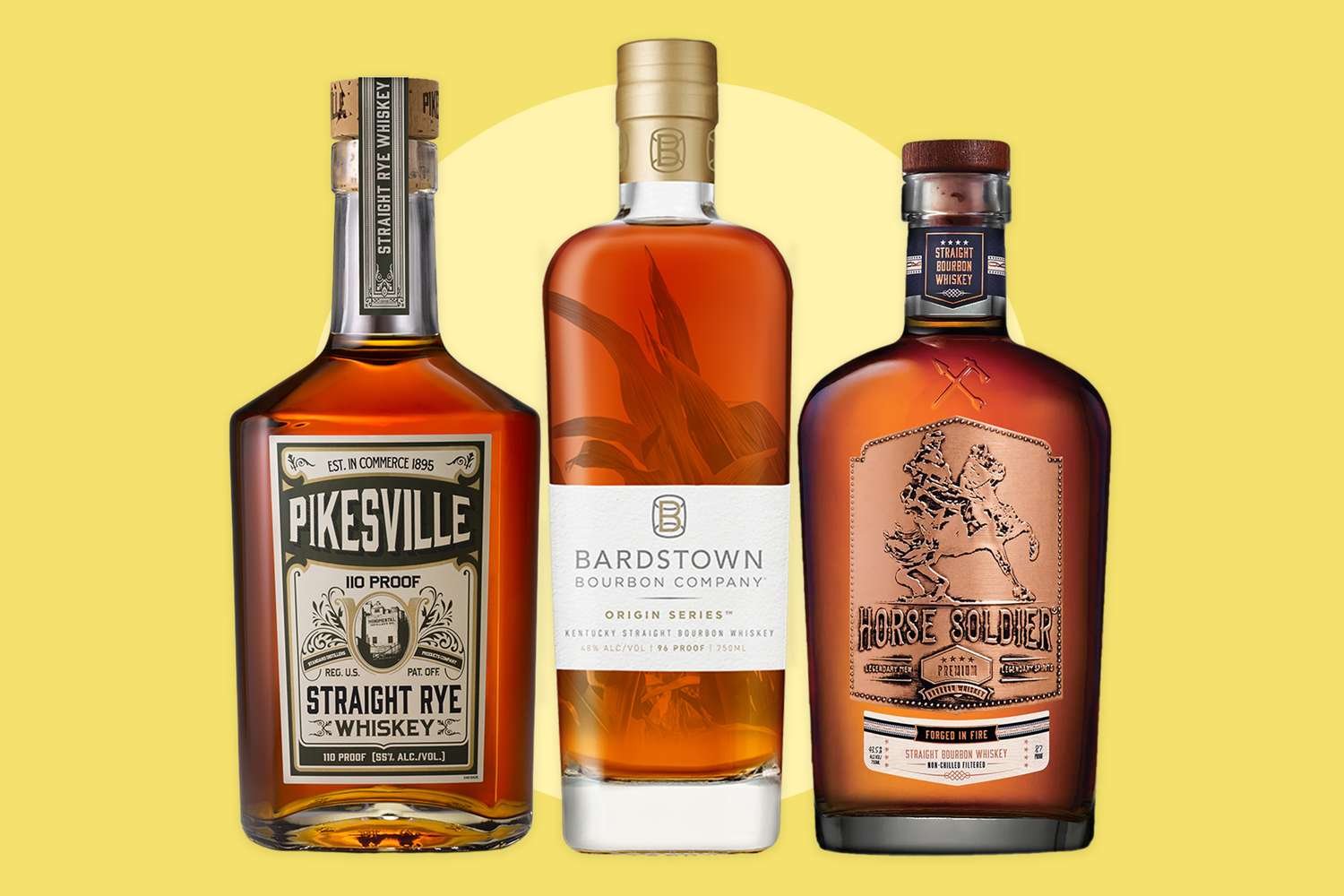
Murphree also gives the nod to six-year-old Pikesville Rye from Heaven Hill, a 110-proof bottle that’s now made in Kentucky but was once part of Maryland’s robust rye industry. “It leans slightly sweet with vanilla and baking-spice notes, plus a hint of cherry, rather than the medicinal or minty flavors found in other ryes,” he says.
Murphree adds that it’s excellent in cocktails like the Manhattan or Boulevardier, noting that “rye is particularly versatile in cocktails because its bold, spicy notes are hard to replicate with syrups or flavorings.” He often recommends spicy ryes like Pikesville for an Old Fashioned, rather than bourbon, to give the drink an extra dose of complexity.
Booker’s Bourbon: a statement pour
Food & Wine / Suntory Global Spirits, Inc.
Booker’s Bourbon, named for legendary master distiller Booker Noe, is an unfiltered, uncut powerhouse that’s a favorite among whiskey drinkers. “It brings serious texture and intensity with its natural oils and fatty acids, giving cocktails a rich, velvety mouthfeel that stands up beautifully to bitters and sugar,” says Chris Gill, beverage manager at the sky-high restaurant Crown Block in Dallas. “Its deep caramel, peanut, and spice notes shine through even after dilution, making every sip layered and satisfying.” He stresses that it’s not a “safe” bourbon, but rather “a statement pour” that turns classic whiskey drinks into experiences.
Hatozaki Finest: a great introductory Japanese whisky
Food & Wine / Akashi Sake Brewery Co. Ltd.
Hatozaki Finest is an easygoing blend that features whiskies up to 12 years old. “It’s a great introduction to Japanese whiskies — light in color and taste, but still having those malt whisky notes,” says Adam Cabanilla, lead bartender at Bar Doko, a Japanese-inspired cocktail bar in Houston. “Bright and floral notes make it easy to drink any time of the year.” He adds that it’s great for drinking neat or on a large cube, but his personal favorite serve is a highball. And, as a bonus, it’s really affordable compared to many Japanese whiskies.
“I’ve introduced this whisky to a number of guests, and almost all of them take a photo of the bottle so they can buy it at home,” says Cabanilla.
Bardstown Bourbon Company Origin Series: layered with high-rye spice
Food & Wine / Bardstown Bourbon Company
Bardstown Bourbon Company’s Origin Series bourbon features a high-rye mashbill and is bottled at 96 proof. It “shows what happens when you let the whiskey speak for itself,” says Aften Locken, bourbon steward at Hotel Bourré Bonne in Louisville, Kentucky. She says that because it’s non-chill-filtered, “you really get that creamy mouthfeel and layered spice that a lot of modern bourbons lose. It’s elegant but still deeply Kentucky.”
Leopold Bros. Three-Chamber Rye: a heritage grain whiskey
Food & Wine / Leopold Bros.
Hemant Pathak, bartender and general manager of Junoon and Jazba Indian restaurants in New York City, and the upcoming Room 207 cocktail bar, likes the full-bodied nature of non-chill-filtered whiskeys. One of his favorite examples is the Three-Chamber Rye from Leopold Bros., named for the old three-chamber stills once used to extract more oils and aromas from grains. “It has the right combination of oak and proof to be exciting on the palate,” says Pathak.
Horse Soldier Bourbon: a classic, full-bodied bourbon
Food & Wine / American Freedom Distillery
This non-chill-filtered whiskey maintains its natural oils and micro-compounds, which create a fuller texture and lingering finish, says Ray Flores, general manager of Morgan’s in the Desert at La Quinta Resort & Club, located just outside of Palm Springs, California.
“Smooth, layered, and confidently made, Horse Soldier is a bourbon that rewards patience and precision in every sip,” he says. Flores uses Horse Soldier in the restaurant’s Old Fashioned and notes that “the bourbon’s depth and warmth complement the spiced sweetness and bright citrus, creating a cocktail that is both classic and elevated.”