:max_bytes(150000):strip_icc():format(jpeg)/Happy-Hour-Meets-Apero-Hour-FT-DGTL1125-226a0767c616432f8bb1b4078ef658df.jpg)
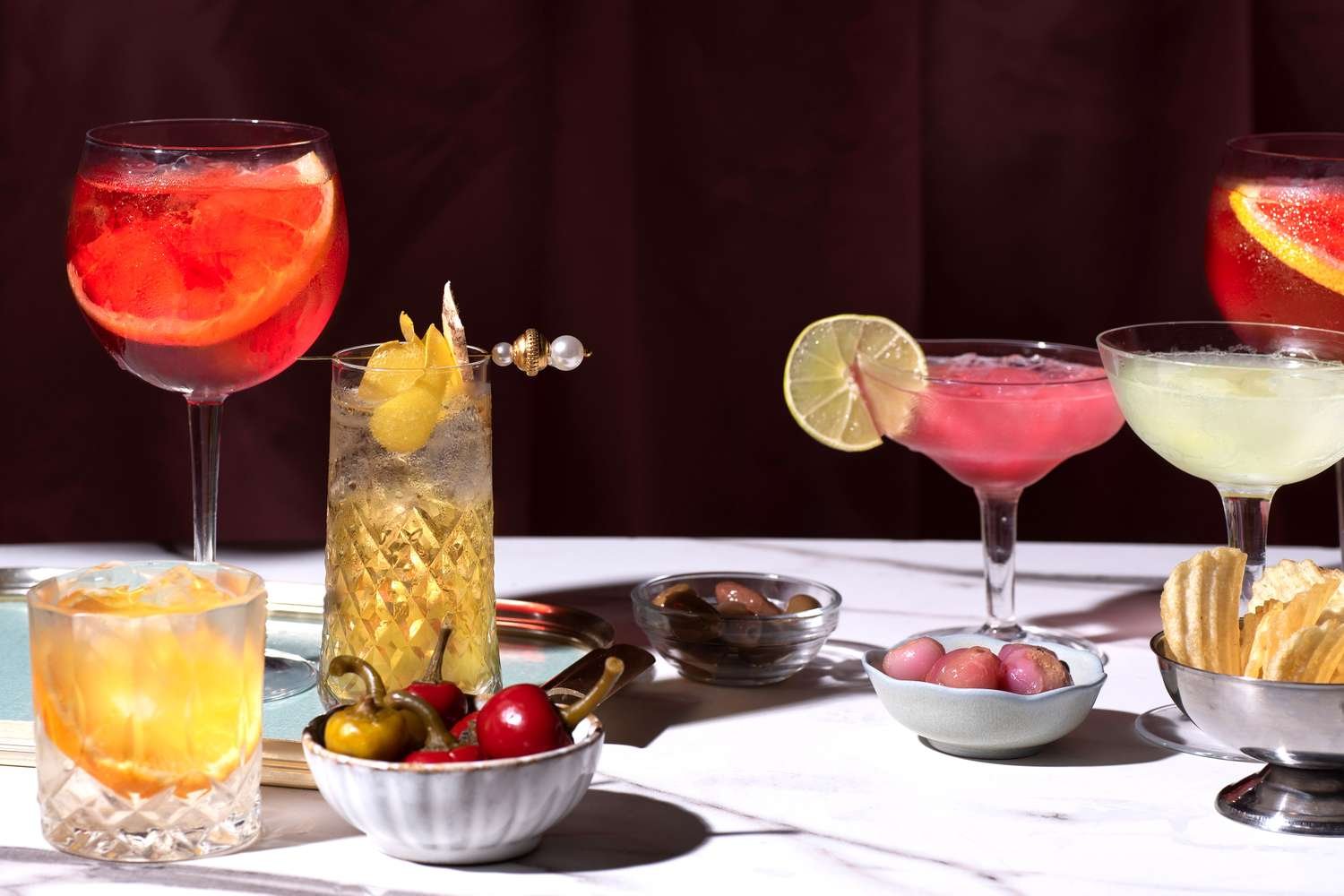
Apéro or aperitivo hour is a pre-dinner ritual celebrated daily across Europe, featuring light, refreshing drinks and small snacks that whet the appetite. Though the tradition has deep roots around the world, the U.S. has only recently adopted the custom, driven by the popularity of classic apéritif drinks like the Aperol Spritz and Hugo Spritz. The drinks tend to be low in alcohol, bright, and effervescent. Because of this, Americans often associate aperitivo with warm weather. But as many outside the U.S. know, the social ritual can, and should, be practiced year-round.
Drinks professionals know this as well. At this year’s Food & Wine Classic in Charleston, top sommeliers Matt Conway, owner of The Tippling House, Bethany Heinze, co-owner of Vern’s, and Marie Stitt, co-owner of Baba’s on Cannon, all based in Charleston, South Carolina, shared their favorite apéritif drinks and snacks that can hold up to the cooler temps sweeping the country. In their seminar titled “Happy Hour Meets Apéro Hour: Top Somms Share Their Secrets,” they each revealed fall-friendly drink pairings that can usher in the holiday season.
Chilled Light Red Wine and Comté Cheese (Tiberio Cerasuolo d’Abruzzo Rosato)
“Aperitivo is an integral part of our culture at Baba’s,” says Stitt, who co-owns the European-style café and bar with her husband, Edward Crouse, whom she met in Northern Italy. “[We] fell in love with the Italian tradition of aperitivo — the hospitality and generosity of the Italians offering savory snacks along with your first sip of the evening.”
Stitt chose to feature an expressive rosato wine made from Montepulciano grapes grown in Italy and beloved by sommeliers: Tiberio Cerasuolo d’Abruzzo Rosato. “For aperitivo in the fall and winter, this is a perfect rosato for this time of year,” says Stitt. “This is one of my favorite categories of wine — I love a chilled red. It totally toes the line between rosato and light red. This kind of dry style of darker rosé is a bit more serious and has a savory quality to it.”
The tangy, tart characteristics, along with a touch of tannin and high acidity, not only make this wine easy to drink but also incredibly food-friendly. At the seminar, attendees tried this with Comté cheese, a nutty, semi-hard cow’s milk cheese from eastern France.
“This would also be a perfect wine for Thanksgiving,” she says. “The translation for Cerasuolo wine basically means cherry-like. It even has this kind of pomegranate, cranberry thing going on.”
Kir Royale and Potato Chips (Dirler Cadé Crémant d’Alsace)
A Kir Royale is a traditional French apéritif, a bubbly take on the Kir, a 19th-century drink that traditionally combines Burgundy white wine with crème de cassis. The Royale version replaces white wine with Champagne. For the seminar, Heinze chose a sparkling French wine from the Alsace region: Dirler Cadé Crémant d’Alsace.
“My dad always told me I had Champagne on a beer budget, and alas!” says Heinze. “I love a Crémant. It’s essentially French sparkling wine made in the same method, but not from the Champagne region, and not with the same price tag.”
This grippy, acidic, bone-dry sparkler is the ideal stomach opener during aperitivo hour and the perfect base for a sweetener like crème de cassis — a rich, black currant liqueur.
“There is a wide variety of styles within this category,” she says. “I like a crisper, lighter style to use for cocktails, so Alsace is the perfect place. The varietals used are more lean and floral with a mineral intensity that will lift the cocktail and not compete with the other elements.”
Pair this with savory potato chips. The bubbles in the drink will cut through the fat of the chips, and the touch of sweetness will balance out the salt.
Sparkling Spanish Rosé and the Gilda (Ameztoi Txakolina)
When seeking an optimal aperitivo, Conway looks for “something delicious, easy to make, and guaranteed to wet the whistle.”
Txakolina (chalk-oh-lee-na), produced in the Spanish Basque Country, is typically a very dry sparkling white wine, high in acid and low in alcohol. Refreshing and mineral-forward, it’s incredibly food-friendly and is often a popular pre-dinner favorite.
The expression Conway chose to feature for the seminar was a rosé variation: Ameztoi Txakolina. “It’s lightly effervescent, fresh with zippy acidity,” he says. “It’s an ideal way to have something fresh and fun to get your senses excited.”
This gentle blush-colored sparkler pairs perfectly with a regional Basque pintxo (peen-chose), or bite-sized bar snack, the Gilda. Created in the mid-century at Bar Casa Vallés in San Sebastián, named for the 1946 film, the Gilda is often a skewer made with an olive, a pickled guindilla pepper, and an anchovy fillet. Salty, tangy, delicious, and paired with Ameztoi Txakolina, a foolproof aperitivo duo.