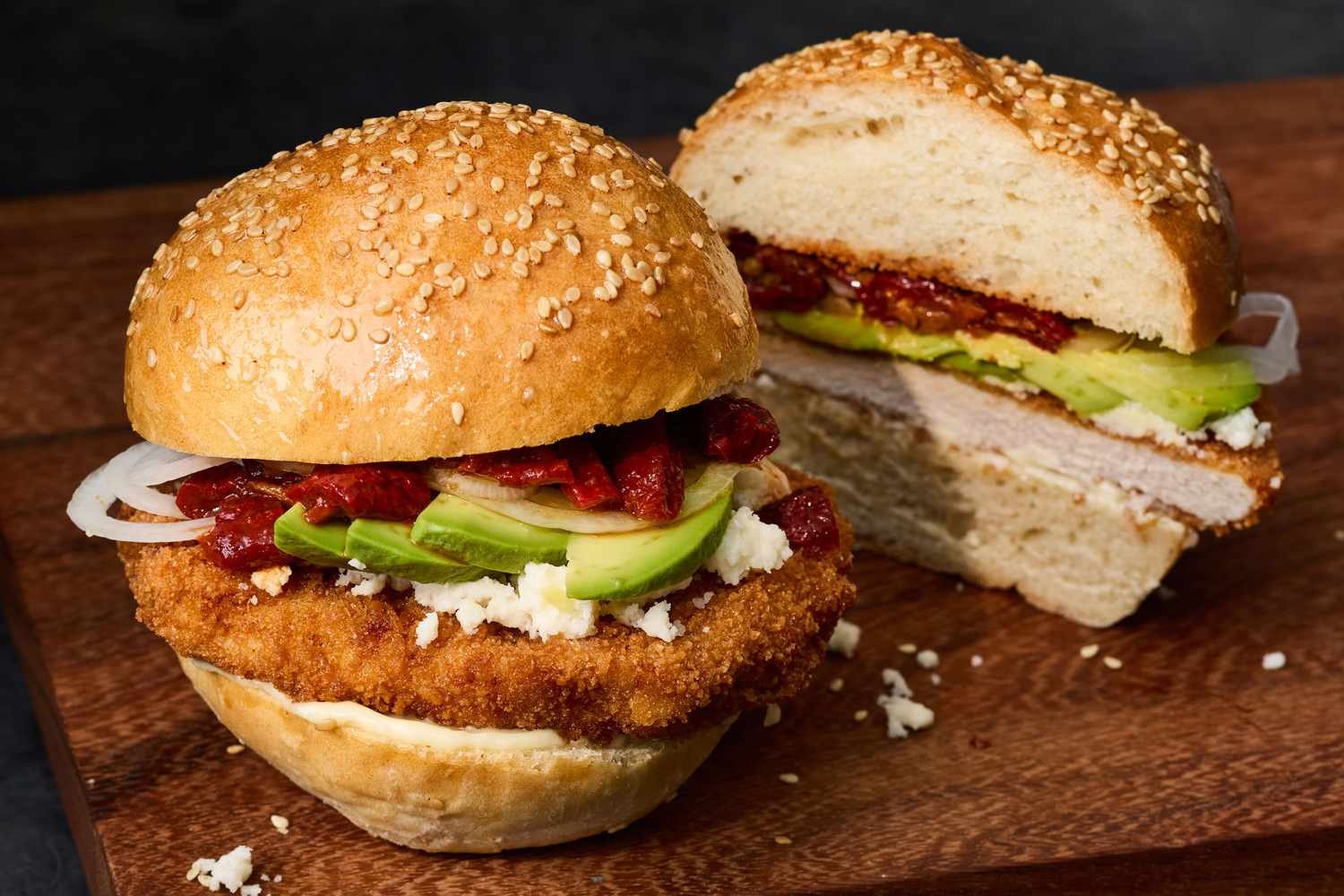
:max_bytes(150000):strip_icc():format(jpeg)/Cemita-Buns-FT-RECIPE0925-89ebbf5b8ad54c0985bf834621f1e146.jpg)
- A simple yeast dough comes together quickly and rests just long enough to develop structure, resulting in soft yet sturdy buns.
- The egg wash and generous sprinkle of sesame seeds give the buns their signature golden crust and nutty flavor.
- With a light, airy texture and subtle chew, these buns are perfect for holding hearty sandwich fillings.
Walk the streets of the Mexican city of Puebla and you’ll spot cemita after cemita, towering sandwiches layered with crispy Milanesa-style cutlets, chiles, avocado, and Oaxaca cheese. The sandwich takes its name from the bread itself: Cemitas are plush rolls with a glossy crust and a nutty shower of sesame seeds.
These buns are built from pantry staples such as bread flour, instant yeast, a touch of sugar and kosher salt, warm water, and an egg wash, but they bake up with bakery-level finesse. The result is a tender crumb giving way to a texture that falls between challah and brioche. The bread is soft and slightly airy, but sturdy enough to support heavier fillings and catch any juices.
Cemitas are intentionally unfussy. They don’t need special equipment or complicated shaping. They only require a brief knead, a few strategic folds, and a patient rise. This recipe uses all bread flour, whose high protein content helps the rolls rise taller than they would with all-purpose or a flour blend. The egg wash locks in sheen and secures the sesame coat. Brown unhulled sesame brings deeper flavor and a gentler crunch than hulled seeds and sets cemitas apart from other sesame-topped breads. Bake a batch for the classic sandwich or freeze extras and toast them for weeknight burgers and breakfast egg sandwiches.
What’s the difference between instant yeast and active dry yeast?
Instant yeast has finer granules and more live cells, so it hydrates quickly and can be mixed directly into dry ingredients. It typically rises faster than active dry yeast and tolerates warmer liquids for blooming. Active dry yeast has larger granules and a protective coating, and while instant yeast dissolves around 120°F to 130°F, active dry yeast dissolves around 105°F to 115°F. Substitute 1:1 by weight, or use about 25% less instant than active dry yeast and monitor rise times, adjusting as needed.
Substitutes for cemitas
If you want to make cemita sandwiches but not cemita bread itself, you can find these signature Pueblan rolls at Mexican grocery stores. If you need a substitute, sesame-topped brioche echoes a cemita’s mild sweetness and tender crumb. Portuguese papo secos, aka pão d’avó rolls, and Mexican telera also mimic the light, slightly sweet texture. For better structure, lightly toast the cut sides before assembling your sandwich; add a pinch of sesame seeds for aroma.
Notes from the Food & Wine Test Kitchen
- Swap hulled sesame seeds or a mix of sesame seeds for brown unhulled sesame seeds.
- If working with active dry yeast instead of instant yeast, use the same amount by weight, bloom in part of the warm water (110°F to 115°F) for five to 10 minutes, then proceed with the recipe as written.
- Bread flour builds more gluten than all-purpose, giving these buns lift and chew.
This recipe was developed by Iliana de la Vega; the text was written by Andee Gosnell.