:max_bytes(150000):strip_icc():format(jpeg)/CastIronAR-STEP2-30273bdb42564637997c14ad5e1fe6dd.jpg)
Show it some TLC and your cast iron skillet can last a lifetime—or more. Many families have generations-old cast iron that’s been crisping up fried chicken and caramelizing Brussels sprouts for 150 years.
But unlike your standard department store kitchen tools, cast iron requires a bit of special treatment. That does not mean it’s extremely fussy; it just has a different set of care, cleaning, and cooking rules than something like a stainless-steel or ceramic skillet.
Whether you’re buying new or using Mom’s, steer clear of these common cast iron skillet mistakes and you’ll set your pan on a plan to be passed down for decades.
1. Not Cooking on High Enough Heat
While cast iron is prized for its ability to get—and stay—scorching hot, it has a tendency to get hot spots that can lead to uneven cooking and a less nonstick sear. To prevent this, first preheat your skillet in the oven whether you’re baking, frying, or sautéing what you plan to cook in it.
Place the skillet in a room-temperature oven, then turn it on to at least 400 degrees F. Allow the oven and skillet to heat up together, and once the oven reaches the set temp, the skillet should be ready to move forward with the directions in your cast iron recipe. Slip on an oven mitt, carefully remove the skillet from the oven, and go forth on your merry menu way.
2. Waiting (Too Long) to Clean
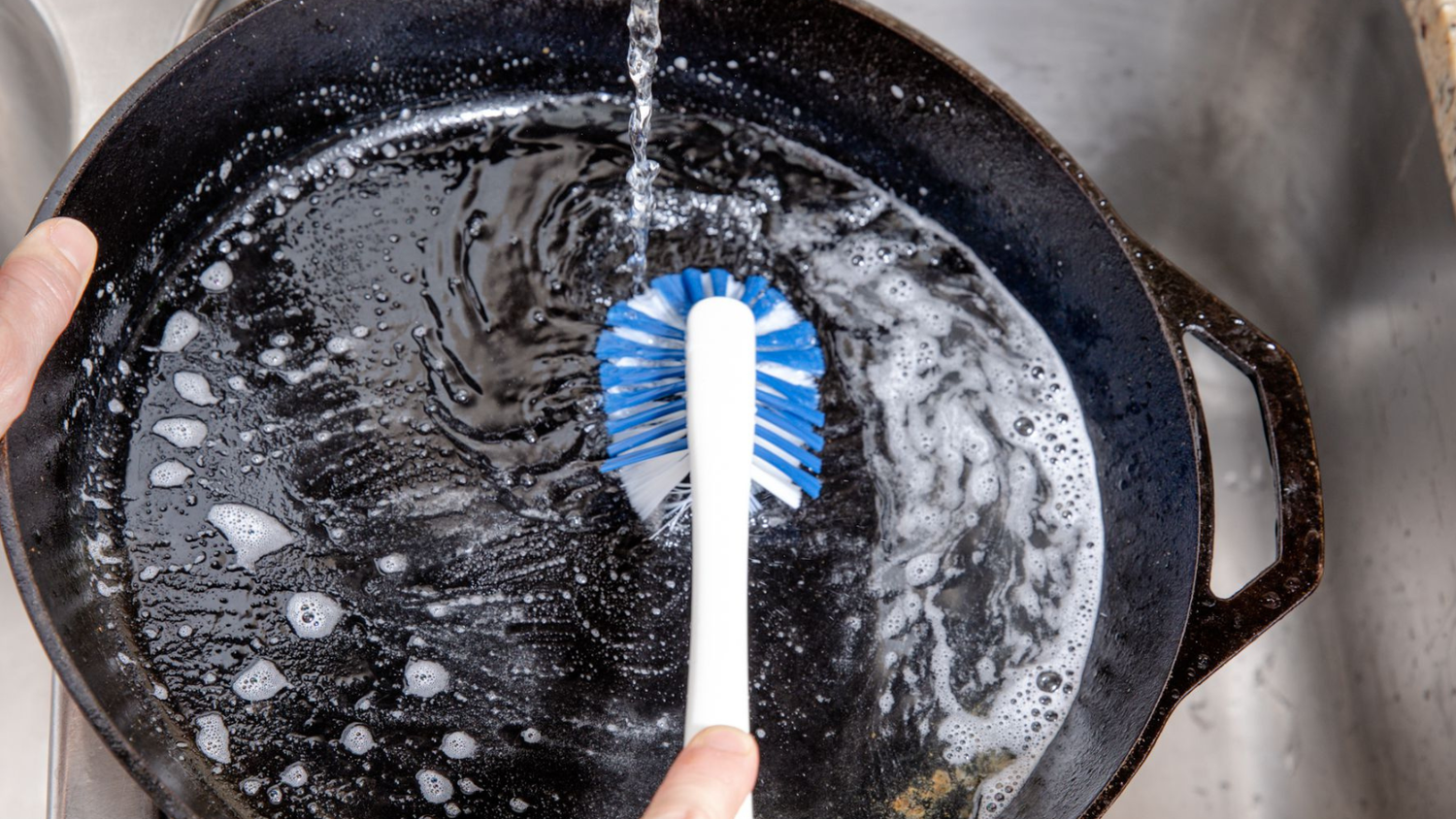
For the best and easiest results when cleaning your cast iron, tackle the tidy-up mission while the skillet is still warm from cooking your meal. For a complete how-to, check out our step-by-step guide for cleaning cast iron.
Rinse the pan with warm water, shake in some baking soda and/or salt, and gently dislodge any debris with a sponge, washcloth, or nylon scrub brush (skip the steel wool). The baking soda will help counteract any lingering flavors while acting as an antibacterial agent; the salt acts as a super-mild abrasive element; and the warm water helps lift up the particles left over from your meal.
3. Soaking
Soaking your cast iron skillet in your sink is a recipe for rust, as is washing it in the dishwasher. Instead, clean it ASAP, even using simple soap and water (if you must). As long as you rinse off all of the suds and dry the pan thoroughly and quickly after washing, the soap shouldn’t harm your skillet’s seasoned surface.
4. Not Seasoning Often Enough
Speaking of seasoning, it’s why so many home cooks prize Grandma’s cast iron skillet. Cast iron gets better and more nonstick with age and with repeated use, although modern cast iron skillets come handily pre-seasoned. For the uninitiated, seasoning refers to the oil that’s baked onto the cast iron’s surface that makes food not stick and helps keep the surface from staining.
Still, both vintage and new skillets are best served by a simple reseasoning step after each use. After cooking, washing, and drying your skillet, place it back on a medium-high burner and add a tablespoon of neutral oil, such as vegetable or canola oil. Use a paper towel to evenly distribute the oil around the surface and interior sides of the skillet so each part is shiny. Once it starts to smoke just a bit, take the skillet off the heat, wipe it down once more with a clean paper towel, let it cool, and store until next time.
5. Storing a Wet Skillet
It bears repeating: Give that seasoned skillet one last wipe-down before storing, if you can, since water is essentially iron’s enemy number one—leading to rust, wear and tear. While rust doesn’t mean that you need to toss your skillet, it is a hassle to scrub, season, and reseason, so prevent damage before it happens by keeping your skillet dry.
If you don’t have a hanging pot rack and you’re worried about any scratching or scraping, layer a paper plate or kitchen towel between pans that you stack to store efficiently.