:max_bytes(150000):strip_icc():format(jpeg)/Mistakes-You-Might-Be-Making-When-Pickling-FT-BLOG0825-503936c76a984f94bcdac246aa51840c.jpg)
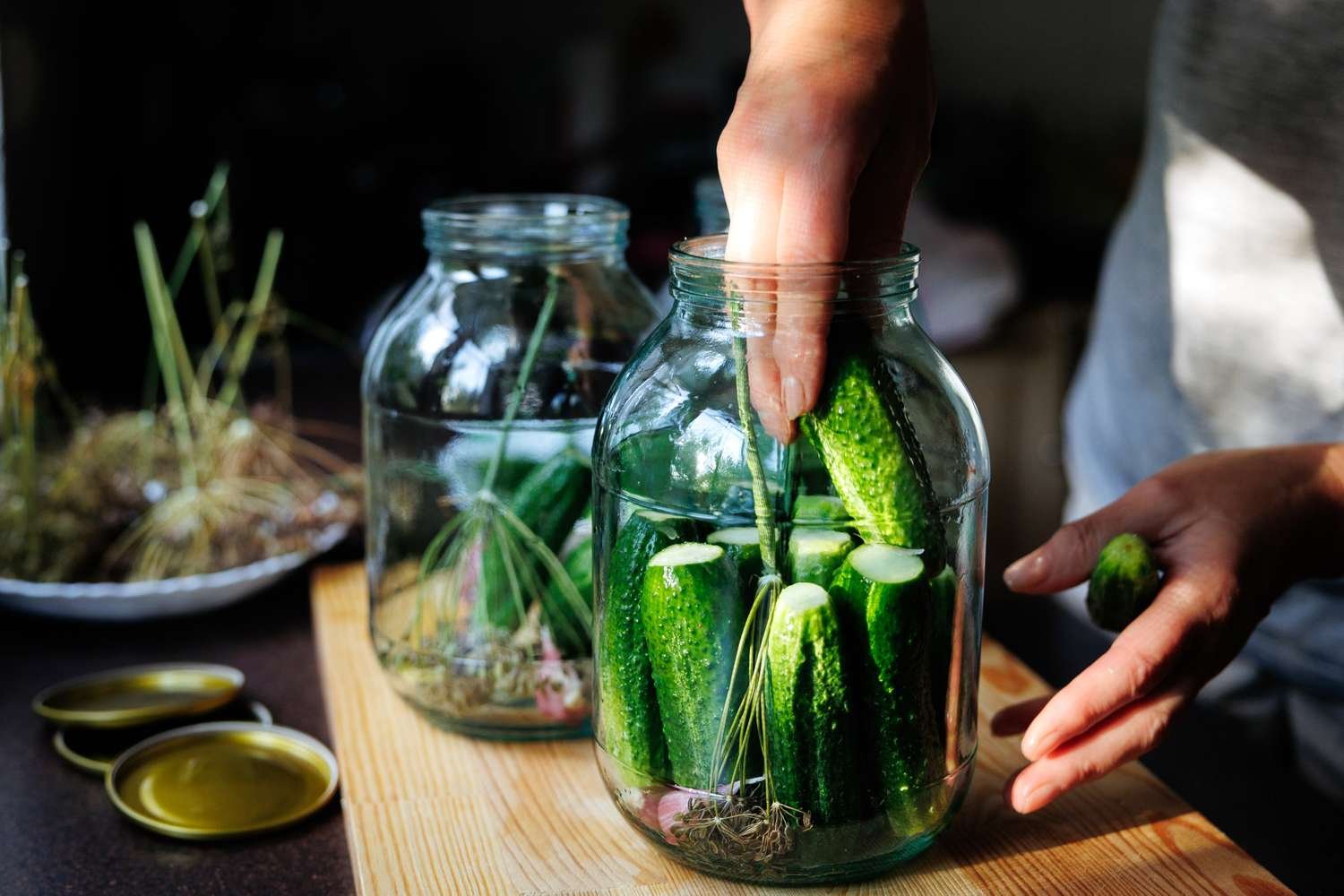
Pickles are a wonderful way to preserve summer’s bounty and level up everything from tacos to sandwiches with tangy, zesty crunch. In contrast to quick pickles and fermented pickles, canned pickles have the advantage of being shelf-stable, which allows you to enjoy the season’s harvest months down the line.
“Canning is an expression of time and place that you can open and experience later,” says Julia Skinner, PhD, founder of The Culinary Curiosity School and food writer whose work includes Our Fermented Lives and the forthcoming The Essential Preserving Handbook. “The pickles I can today can remind me of my garden’s summer okra months later when I have them in the winter.”
Canning pickles isn’t difficult, but it requires preparation and an understanding of the “why” to achieve safe, optimal results. To help you approach home preservation with confidence, we asked an all-star roster of food preservation experts to weigh in on the essential rules of canning pickles. Here’s what they said.
Distinguish between canning methods
“The canning method you choose should align with the food’s acidity,” says Steve McHugh, chef at Cured in San Antonio and author of Cured: Cooking with Ferments, Pickles, Preserves & More. “For higher-acid foods — like pickles — the preferred approach is hot water bath canning,” also known as boiling water bath canning. “This method, as its name implies, uses hot water to create airtight seals in jars, thereby preventing the growth of harmful bacteria. For low-acid foods, pressure canning is generally recommended for food safety, which requires a specialized piece of equipment: a pressure canner.”
Good news: As long as you follow tested recipes accurately, pickles do not need to be pressure-canned because they contain enough acid. “The bacterium [that causes botulism] cannot produce its dangerous toxin in acidic environments with a pH below 4.6,” says April McGreger, chef and fermenter at The People’s Kitchen Philadelphia, who writes a newsletter called Preserving the South. “This means that most fruits, pickles, and most tomatoes are safe to can in a boiling water bath.”
Choose the right kinds of cucumbers
Selecting the freshest, crispest cukes you can find, as well as the right variety, is crucial for canning success, according to experts. “If you are going to pickle cucumbers, you need to choose pickling varieties that are impeccably fresh and firm,” McGreger points out. “No oversized, yellowed, or old cucumbers, please.”
“Pickling cukes are not waxed — which slows down pathogens and natural decay — like ‘slicers’ found at the supermarket,” adds Christina Ward, author of Preservation and the certified master food preserver for Southeast Wisconsin. “If you’re making a big batch — and you should — talk to your favorite farmer at the local market and order cukes in advance.” Remember to cut off the blossom end of cucumbers, which has enzymes that contribute to softening.
Even if you pick the best cucumbers, however, canned pickles won’t have quite the same crunch as their refrigerated counterparts. “If your goal is to have a ‘Claussen’-style pickle, then you’re making refrigerator pickles,” notes Ward. “All hot water bath processing results in pickles that are softer than fridge pickles.”
New to canned pickling? Consider starting with carrots, which McGreger recommends for their ability to maintain their texture better than (comparatively) fragile cucumbers. Skinner also discourages canning delicate produce — think thinly sliced zucchini or tender berries — which can easily turn to mush in the process.
Use proper, sanitized canning jars
The right equipment is just as important as what you put inside the vessels. “Brands like Ball and Kerr make reliable canning jars with two-part metal lids,” says McHugh, who advises inspecting jars and lids for cracks, chips, or bends before you begin. Refrain from recycling old peanut butter and spaghetti sauce jars, which Ward says are prone to breaking or exploding when processed.
Jars should also be thoroughly sanitized before use. “Immediately prior to filling, wash your jars in hot, soapy water, then rinse in hot water and set on a rack until use,” says Ward. “Or put them in a dishwasher and run a full cycle and leave them in the dishwasher until needed.”
What about sterilizing your jars? According to Skinner, pickles that will be processed for less than 10 minutes require jars to be sterilized, while those processed for longer than this timeframe do not.
GREG DUPREE / FOOD STYLING by JULIAN HENSARLING / PROP STYLING by CLAIRE SPOLLEN
Don’t wing it
“The biggest mistake I see is when folks listen to unsafe canning advice from people who think canning best practices are optional — they aren’t,” says Skinner, who recommends consulting reputable resources like the National Center for Home Food Preservation or books by industry experts (she put together a helpful guide on this topic as well). “Following tested recipes, especially when you’re new to canning and unfamiliar with how to make your own recipes safely, is the only way to go.”
This means adhering to given ratios instead of tweaking measurements (as you might do when cooking or baking).
“[People] often want to reduce the vinegar to make their pickles less acidic, or maybe they want to add extra garlic or onions to the recipe,” says McGreger. “These things can raise the pH of the final product, and if it is raised above 4.6, your pickle is no longer safe for water bath canning.”
Use the right vinegar…
“If your vinegar doesn’t have enough acid in it, that makes the overall product less acidic, which can increase the risk of botulism growth,” warns Skinner. “Only use vinegar that says it’s 5% acid. While I make, and love, homemade vinegars, I don’t use them for canning for this reason.” As long as the label indicates 5% acidity, there’s room to use different types of vinegars based on the desired flavor profile (Skinner is partial to white distilled, apple cider, and white and red wine vinegars).
Find your canned pickles overly puckery? “You can always reduce the acidity once you open it, and store it in the refrigerator,” suggests McGreger. “I actually do this with store-bought pickles that I find too acidic: Pour out a little of the vinegar brine and replace it with water and a pinch of salt, [then] store the jar in the refrigerator.”
…and the right salt
For prime pickles, the salt you reach for matters. “Use canning salt or 100% pure salt. It’s the additives like anti-caking agents and iodine that will puck up your pickles,” says Ward. “Anti-caking agents, as used in table salts, result in a cloudy pickling solution and can darken the cukes to an unappetizing color.” In addition, “the iodine gives the solution and pickles an ‘off-taste’ that is often described as metallic,” according to Ward.
If you’re considering a swap (subbing in additive-free kosher salt or sea salt for pickling salt, for example), keep in mind that the size of granules varies across salts. “Due to the different grain sizes of the salts, they may measure differently and affect the taste of the recipe,” explains McGreger. “Pickling salt is very fine-grained, whereas some kosher salts are coarser and will measure, spoon for spoon, less salty because of that.” Always measure salt by weight to maintain accuracy and consistency.
Leave headspace — but not too much
Once your brine is prepped and your jars are sanitized, it’s time to fill the vessels — but neither too much nor too little. “It’s important to leave headspace (empty space between the ingredients in the jar and the rim) to account for expansion from heat during canning,” says Skinner, who advises following the measurements provided in your recipe.
“If overpacked, the material will overtop the jar during processing and won’t seal. If underpacked, the physics of the hot water bath process won’t work,” Ward points out. “That negative space between the stuff in the jar and the lid is very necessary to ensure all the oxygenated air is pushed out and the slight delta in pressure results in a sealed jar.”
Greg DuPree / FOOD STYLING by JULIAN HENSARLING / PROP STYLING by CLAIRE SPOLLEN
Take it easy on the seasoning
Before you go overboard on the spices, remember that the flavors will concentrate the longer the pickles sit. “With canning, the spices you add intensify considerably over time,” notes Skinner. “This isn’t a bad thing, but I’ve definitely made jars of pickles that unintentionally burned my face off because I was too footloose with the crushed red pepper.”
“If you put extra mustard seed, dill flower, garlic cloves, or hot peppers into the jar with your cucumbers, the pickles will continue to absorb those flavors,” Ward adds. “If you want to make hot pickles, know that the last jar you eat will be hotter than the first jar eaten.”
Give the rim a good wipe
Before you fasten the lids, don’t forget to wipe them as stray spices, herbs, and even salt granules can get in the way of proper sealing. “The most common mistake that results in a bad or non-sealing jar is failing to ‘wipe the rim,’” says Ward. “A damp cloth or paper towel rubbed along the top edge of the jar — where the rubber meets the glass — to remove any material is critical because [that material] prevents sealing.”
Avoid overprocessing
Experts warn that processing for longer than instructed, even by a few minutes, can diminish the crunch factor of your pickles. “To ensure a good texture, process your jars for the amount of time recommended in the recipe: If it says 12 minutes, do 12 minutes,” advises Skinner. “The longer you heat your jars, the more you cook and soften the ingredients inside.”
Worried if you did it right? “You’ll know your canning worked when the dimple in the center of the lid is depressed — this means the jar has been vacuum sealed,” explains McHugh. “You may hear a popping noise when this happens as the jar cools. If you can press the dimple down, your jar has not been sealed properly.”