:max_bytes(150000):strip_icc():format(jpeg)/The-Beertini-Meet-the-Midwest-Martini-FT-BLOG0825-02-57e586084b874e31b7f3c87d2039184a.jpg)
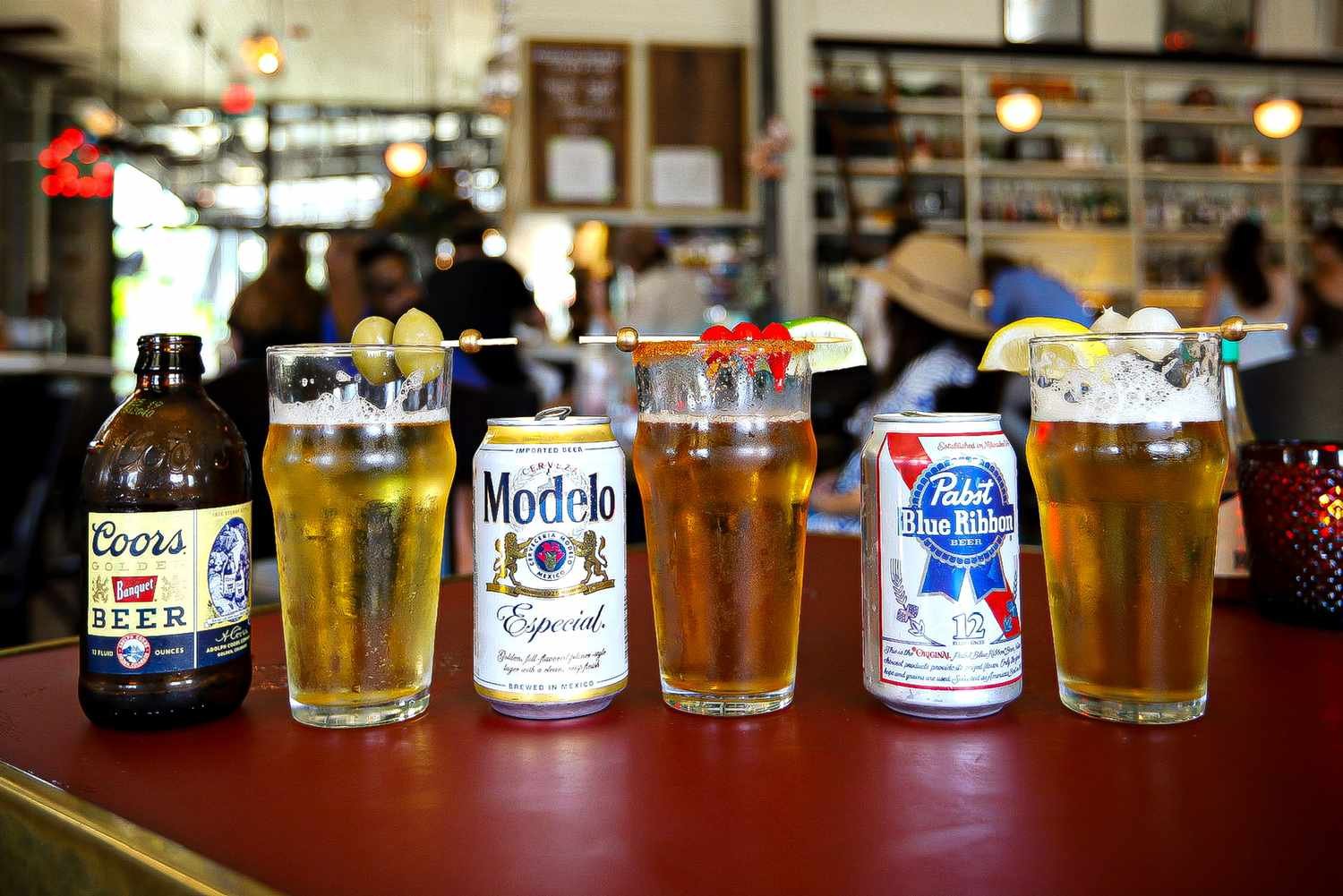
If you’re from America’s heartland, you’re likely familiar with the “Midwest Martini.” This is generally a light beer served in a pint glass, with a few green olives bobbing on top, or served alongside, to be thrown in at leisure. Sometimes, there’s a splash of olive brine or even a salted rim. Over the years, it has gone by a few different names, depending on the state it’s made in: the North Dakota, Wisconsin, or Minnesota Martini. It’s also called the “Beertini.”
In case you’ve missed it entirely, the Martini is back, and its resurgence is fueling cocktail menus across the country. Rising alongside it, is its unlikely cousin: the Midwest Martini or Beertini. Equal parts kitsch and classic, it’s a drink that’s unapologetically simple, unpretentious, and deeply regional.
“I’ve seen the Beertini evolve from a quirky Midwest bar order into something guests now request with surprising enthusiasm, especially at summer events and backyard weddings,” says Karina Silvestre, founder of Wee Mixed, a Chicago-based mobile bartending company. “In the Midwest, people love drinks that don’t take themselves too seriously, and the Beertini fits that vibe perfectly.”
Where did the Beertini come from?
At its core, a Beertini is just light beer and olives. That’s it. Think of it as a low-effort, high-reward hybrid: part beer, part salty snack. No one really knows when it was developed, or by whom — Midwesterners are just that deeply humble — but it’s been around for some time. You can find it in the more western of the Midwest states like North Dakota, Minnesota, and Wisconsin, and as far south as Oklahoma — technically not a Midwestern state, but one that enjoys a Beertini or two.
Courtesy of Nick Simonite
Like many Midwestern culinary traditions, the Beertini wasn’t born out of trends, it evolved organically. Many surmise that it originated in supper clubs and family gatherings where beer was plentiful and olives were just there, often leftover from snack trays and boards. The drink likely developed as casually as putting pretzels in a bowl.
Evan Askey, general manager, Vast, Oklahoma City
“It’s probably the most unpretentious ‘Tini you could make. It just works. Same idea as salting a cerveza. You’re adding a savory note and some bonus electrolytes to something cold, crisp, and familiar.”
— Evan Askey, general manager, Vast, Oklahoma City
Most classic versions use a cold lager, something sessionable and familiar like Miller Lite, Coors Light, or Bud Light, poured into a pint or pilsner glass and garnished with two or three green olives. Some bars splash in a bit of the olive brine, which ups the salty factor. Others may go a step further, rimming the glass with salt or pepper or another seasoning.
Despite its name, it shares very little DNA with a traditional Martini beyond the garnish. There’s no gin or vodka (though some modern riffs add spirits or a shot alongside, akin to a boilermaker), no vermouth, and certainly no Martini or cocktail glass.
“It’s probably the most unpretentious ‘Tini you could make,” says Evan Askey, general manager at Vast, in Oklahoma City, who remembers regulars dropping olives in their beers after long lake days. “It just works. Same idea as salting a cerveza. You’re adding a savory note and some bonus electrolytes to something cold, crisp, and familiar.”
Why the Beertini works, especially now
In a cocktail landscape obsessed with classic throwbacks, the Beertini fits in, almost accidentally. It has all the crisp brine and cold clarity that drinkers are chasing, but none of the fuss.
“It’s unexpected, but approachable. It hits all the right notes: light beer… and a salty pop,” says Silvestre.
That salty pop is no small thing. Salt enhances sweetness, smooths bitterness, and adds dimension, especially to an otherwise neutral lager. The olives add both umami and texture, while the brine (if included) introduces acidity. It’s a flavor trifecta, dressed down in a pint glass.
This simplicity, paired with the drink’s clear sense of place, makes it ripe for reinterpretation. (And add in that it’s affordable, and you’ve got a clear winner.)
“The Beertini reminds me of an El Camino,” says bartender Collin Minnis. “Awkwardly cool and unpretentious, kinda dumb, but makes you happy. The combination of beer and salt from the olive brine makes it completely chuggable. The ultimate crispy boi.”
At Jackie O’s Pub and Brewery in Columbus, Ohio, Minnis introduced a Beertini to the menu as a nod to the bar’s Midwestern roots. His version includes a mini Martini with gin, vermouth, and brine, topped with a golden ale. “Since the Beertini is a Midwestern staple, it seemed like a natural fit for our ‘Beer Before Liquor’ section on our cocktail menu, which includes beer cocktails and boilermakers,” he says.
The Beertini busts out of the Midwest
Beyond the Midwest, places like Biscayne Bay Brewing in Miami are exploring the Beertini. They’ve given their version a tropical makeover by featuring a house-brewed IPA with notes of citrus and stone fruit. Laced with olive brine and topped with olives for garnish, this Miami Beertini is a mashup of breezy beach bar and Midwestern chill that’s been a big hit with locals.
Courtesy of Biscayne Bay Brewing
At Aaron Franklin’s East Austin Uptown Sports Club, a beertini riff has become a fan favorite.
“At Uptown, we make them wet or dry with more or less olive juice, Filthy olives (you need a quality olive that won’t fall apart), and a salted or peppered rim if you’re feeling spicy,” says co-owner James Moody, who was introduced to the drink by his dad who called it a “Beertuni.” That name made it to the menu, where it has a permanent place.
“It was my Aunt Shirley in Tulsa, Oklahoma [who] drank Beertunis before my dad did,” says Moody. “She was a tiny lady and liked a cold beer in a small glass every now and again, but needed to ‘class it up’, so she dropped some olives in before socializing. My dad took note and started drinking them too, but his version was big beer, big glass, more olives, and more often. He liked them with a can of sardines or pretzels — definitely a salt thing.”
His dad’s beer of choice? Miller High Life or Miller Lite. “It’s so simple and stupid that it’s kind of perfect really. Like tomato toast,” says Moody. The Beertini reigns supreme really because of how simple and tasty it is. It’s familiar and refreshingly unserious.